
-
 Analytical & Elemental Instruments
-
Biotechnology Lab Items
-
Cardboard and Box Factory Lab Equipment Solution
-
Cleanroom Solution
-
Consumables & Accessories
-
Dosing Pump for Chemicals
-
Electrochemistry & Titration
-
ETP -Effluent Treatment Plant
-
Feed Quality Laboratory
-
Food & Kitchen Lab Items
-
Hygiene Testing Equipment
-
Lab Furniture




A Practical Guide to Water Quality & Process Analysis in Laboratory and Industry
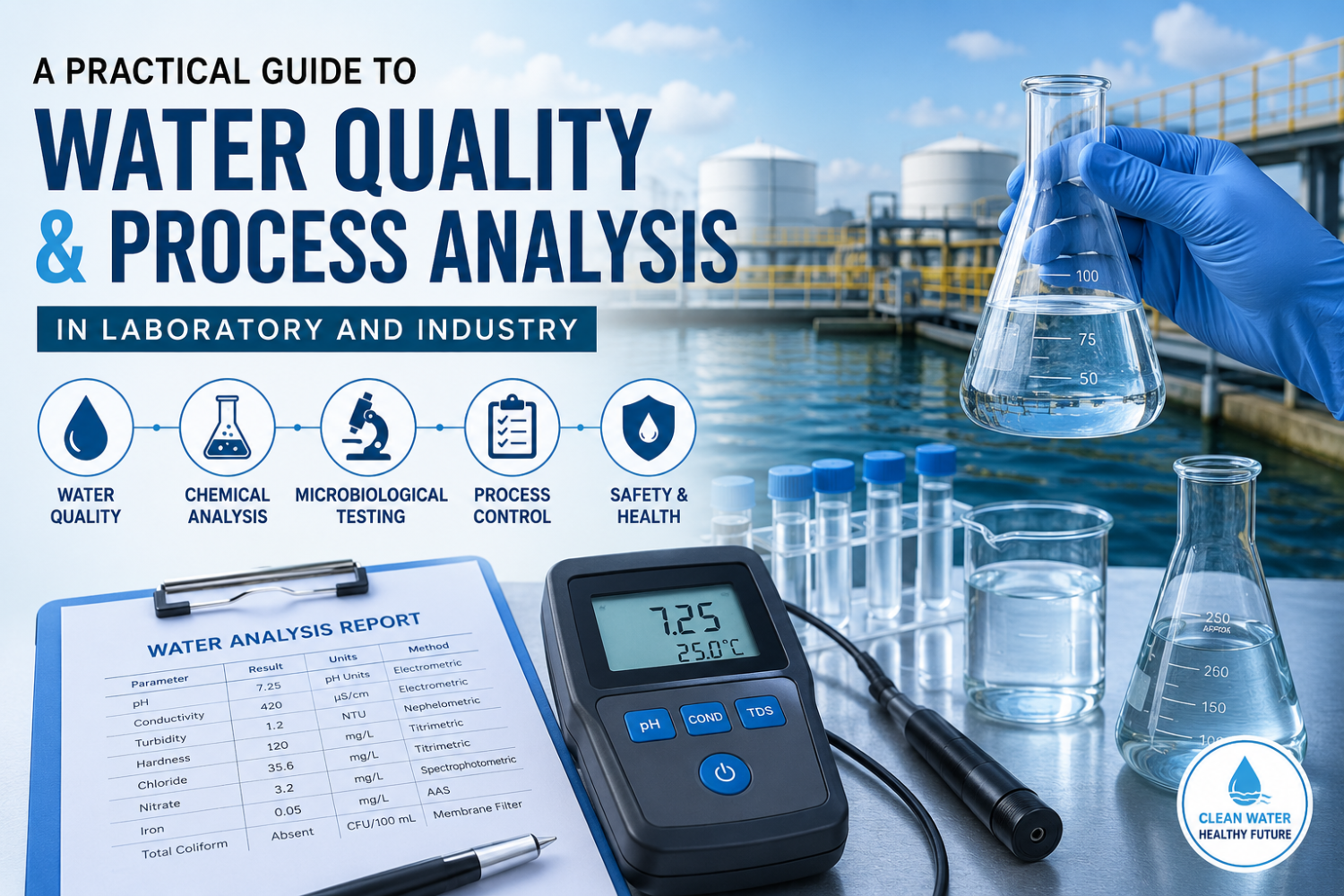
Clean drinking water is something you should be able to trust, yet that trust depends on good water quality and careful water testing. Whether water is used in homes, factories, farms, or treatment systems, its condition must be checked before people rely on it. Water can contain bacteria, chemicals, heavy metals, or other unwanted materials that create health risks and operational problems. That is why water analysis is not just a technical task. It is a practical step that helps protect people, products, and equipment. In this guide, you will learn how water quality is measured, why process analysis matters in industry, what parameters need attention, and how laboratories handle samples and testing to produce clear, useful results you can act on.
Key Highlights
Water quality matters for drinking water, industrial use, agriculture, and aquatic life, so water quality analysis helps you check if a water source is safe and suitable.
Good water quality testing looks at physical, chemical, and biological factors, including pH, conductivity, turbidity, and the presence of microorganisms.
Water analysis supports daily operations in industries by helping prevent corrosion, scaling, fouling, and product quality issues.
In Bangladesh, regular water testing is important because contaminated water and poor water quality can lead to waterborne diseases and serious health issues.
Reliable water quality analysis depends on proper sample collection, safe handling, correct laboratory equipment, and standard methods.
Process analysis gives you accurate results for quality control, better water treatment decisions, and stronger protection for public health and the environment.
Understanding Water Quality and Process Analysis
Water quality is about more than whether water looks clear. It refers to the overall condition of water and whether it is fit for a specific purpose. Water quality analysis checks physical, chemical, and biological properties so you can judge the quality of water for drinking, industrial use, irrigation, or environmental protection.
At the same time, process analysis focuses on how water behaves during treatment or use in a system. In a laboratory setting, the essential steps usually include planning the sampling work, collecting a representative sample, preserving it properly, running the needed water analysis methods, and reviewing the results through quality control checks. These two ideas work together. Next, it helps to define water quality first and then see how process analysis supports water treatment.
What Is Water Quality?
At its core, water quality describes how suitable water is for a given use. For drinking water, that means water should be safe, clean, and free from harmful substances. For industrial systems, it should not damage equipment or affect production. In simple terms, water quality reflects water’s ability to meet a purpose without causing trouble.
Several factors shape that picture. The pH value tells you if water is acidic or alkaline. Conductivity shows how well it carries an electrical current, which points to dissolved salts and minerals. Turbidity reveals how much particulate matter is suspended in the water. Temperature measurements, color, hardness, and chemical content also give valuable information. Just as important is the presence of contaminants such as bacteria, viruses, heavy metals, nitrate, phosphate, or organic matter.
To measure these factors, labs use common physico-chemical and microbiological water analysis methods. Physico-chemical testing often includes pH meters, conductivity checks, turbidity meters, and methods for ions or metals. Microbiological testing commonly looks for indicator organisms such as coliform bacteria or E. coli to show possible fecal or microbial contamination. When you combine these results, you get a much clearer view of water quality and potential risks.
The Role of Process Analysis in Water Treatment
Process analysis helps you see what is happening inside a water treatment system while it is running. Instead of checking water only at the end, you monitor important changes during treatment. That makes it easier to spot problems early and keep the system working as planned. In water treatment, that can mean checking pH, conductivity, turbidity, or contamination levels at different stages.
This matters a lot in industrial use. Many industries depend on water every day for cleaning, ingredient preparation, cooling systems, and steam generation. If the water changes and no one catches it, the result may be corrosion, scaling, fouling, reduced efficiency, or poor product quality. Process analysis supports daily operations by giving teams useful information before a small issue grows into a bigger one.
It is also important for quality control. Water analysis during treatment helps operators decide if filtration, chemical adjustment, or other process steps are working. That is why process analysis is so important in water treatment industries. It supports safer output, smoother performance, and better decisions based on accurate results rather than guesswork.
Importance of Water Quality Testing in Bangladesh
In Bangladesh, water quality testing has a very practical value. Many communities and industries depend on surface water, groundwater, and supplied water for daily needs. When water testing is missed or delayed, contaminated water can move into homes, workplaces, and production systems. Poor water quality can then affect health, operations, and trust in the water supply.
The risks are serious. Waterborne diseases and other health issues can rise when harmful microorganisms or chemical pollutants are present. For industrial settings, the most important parameters often include pH, conductivity, turbidity, hardness, nitrogen compounds, chloride, phosphate, heavy metals, and microbial contamination. These indicators help you understand if water is safe, stable, and suitable for use. To see why this matters in practice, it is useful to look at industry needs and the wider public health impact.
Industrial Applications and Regulatory Needs
Many sectors depend on water for industrial use, and each one has different risks. Food and beverage plants use water in cleaning, cooking, and ingredient preparation. Pharmaceutical manufacturing needs very pure water for product safety. Agriculture relies on suitable water for irrigation. Power generation and refineries need controlled water quality for cooling and steam generation. In every case, water contaminants can affect efficiency, safety, and product quality.
Regulatory needs make testing even more important. Industries have to show that incoming water is suitable and that industrial effluents do not create environmental harm. When water quality is poor, you may face equipment damage, process failure, or trouble meeting expected standards. Regular checks help companies respond before those issues become costly.
Typical challenges in industrial water process analysis include:
Changing water composition from one water source to another, or even across the same system over time.
Interference from organic compounds, salts, and particulate matter that can affect testing and interpretation.
Maintaining representative sampling, proper preservation, and strong quality control during busy plant operations.
These challenges are manageable, but only when testing is planned carefully and handled with the right methods.
Environmental and Public Health Impacts
Water quality has a direct link to public health. If contaminated water enters a water supply, people may be exposed to bacteria, viruses, chemicals, or heavy metals. That can lead to serious health issues, especially for children, pregnant women, and people with weak immune systems. Poor monitoring can turn a hidden problem into a community-wide risk.
The impact also reaches the natural world. Environmental protection depends on knowing what is entering rivers, lakes, and coastal waters. Nutrients such as nitrate and phosphate can support excessive growth of aquatic plants. Suspended solids and high turbidity can reduce light penetration and disrupt aquatic life. The presence of microorganisms can also signal pollution that harms both ecosystems and human health.
For accurate quality analysis, water sampling should be done in a careful and consistent way. You should choose a representative location, use a clean sampling container, rinse it when appropriate with the same water source, avoid touching the inside, label the sample clearly, and keep it cool during transport with ice packs if needed. Good sampling is the first step in reliable testing.
Key Parameters for Monitoring Water Quality
When you review water quality, some measurements matter more than others because they quickly show if water is changing. These key parameters include pH, conductivity, turbidity, temperature, color, hardness, ammonia, chloride, nitrite, nitrate, phosphate, and microbiological indicators. Together, they give a practical picture of the quality of the water and whether it matches the intended use.
For industrial water quality analysis, the most important parameters often depend on the process, but pH, electrical conductivity, turbidity, hardness, nutrient compounds, and microbial checks are common starting points. These values help identify scaling risks, contamination, salinity changes, and treatment failure. Each parameter tells a different part of the story. The next sections explain the physical, chemical, and biological indicators you should know first.
Physico-Chemical Indicators (pH, Conductivity, Turbidity)
Physico-chemical indicators are some of the fastest ways to understand water condition. In routine water testing, three common physical indicators are pH, conductivity, and turbidity. They are simple to measure, but they reveal important changes in chemistry and clarity. If these values shift, they can point to contamination, treatment problems, or changes in the water source.
The pH shows whether water is acidic or alkaline. Conductivity reflects the amount of dissolved ions and the water’s electrical conductivity. Turbidity measures how much suspended matter blocks or scatters light. High turbidity often means more sediment, algae, or organic particles, and that can interfere with disinfection. These checks are used widely in physico-chemical water analysis because they are practical and informative.
Indicator | What it shows | Why it matters in water testing |
|---|---|---|
pH | Acidity or alkalinity of water | Abnormal pH levels can affect treatment performance, corrosion, and water safety |
Conductivity | Amount of dissolved salts, minerals, and ions | Higher electrical conductivity may signal salinity, contamination, or process change |
Turbidity | Suspended particles in water | High turbidity can affect appearance, filtration, and disinfection effectiveness |
Common methods for physico-chemical testing include pH meters, conductivity probes, and turbidity meters. These are often paired with microbiological checks such as tests for coliform bacteria and E. coli when a fuller picture is needed.
Microbiological Indicators (Bacteria, Viruses, Protozoa)
Microbiological indicators tell you whether water may carry living organisms that threaten safety. The main concern is the presence of microorganisms such as bacteria, viruses, and protozoa. Even if water looks clean, harmful microbes may still be present. That is why microbiological indicators are a key part of any serious water quality review.
In practice, labs often focus on indicator bacteria rather than testing every possible organism. Coliform bacteria, and especially E. coli, are commonly used to show bacterial contamination linked to fecal pollution. If these indicators are found, they suggest that microbial contamination may be present and that the water may not be safe for drinking or other sensitive uses.
The essential steps in a laboratory setting start before the test itself. First, you collect the water sample correctly and prevent contamination. Then you preserve and transport it properly. After that, the lab uses suitable analytical methods, follows standard handling procedures, and checks the results through quality control steps. These basics matter because microbiological work is very sensitive to poor sample handling.
Common Methods for Water Quality & Process Analysis
Water quality work depends on reliable water analysis methods. Some methods are simple field checks, while others need laboratory instruments. In both cases, the goal is the same: measure specific properties or contaminants in a consistent way. Good analytical methods also define how samples should be collected, stored, and reported.
For process analysis, standard methods help you compare results over time and support better decisions in treatment and industry. Common physico-chemical methods include measurements for pH, conductivity, turbidity, hardness, and ions. Microbiological methods often focus on indicator organisms such as coliform bacteria and E. coli. More advanced methods are used when you need to identify metals, trace compounds, or organic contamination. The next two sections look at these chemical, physical, and biological techniques in a practical way.
Chemical Analysis Techniques
Chemical analysis helps you identify what is dissolved in water and whether those substances create risk. Labs use it to measure nutrients, salts, hardness, and pollutants. It is especially useful when you need to check for heavy metals, nitrogen compounds, chloride, phosphate, or organic compounds that can affect safety, taste, treatment, or industrial performance.
Some tests are straightforward, while others need advanced instruments. Atomic absorption spectroscopy is used to detect trace levels of different elements, including metals. Ion chromatography helps separate and measure anions and cations. Liquid chromatography is used to separate and detect trace organic compounds. These methods give a more detailed view than basic field checks and support accurate results in complex samples.
Basic and advanced equipment for chemical analysis may include:
pH meters, conductivity meters, and turbidity meters for routine screening.
Atomic absorption spectroscopy for heavy metals and elemental analysis.
Liquid chromatography and ion chromatography for ions and organic compounds.
The exact setup depends on the sample and the goal, but the principle stays the same: use the right method for the right contaminant.
Physical and Biological Testing Methods
Physical and biological testing methods add context that chemical data alone cannot provide. In water analysis, physical checks often include temperature measurements, color, turbidity, and conductivity. These tests are useful because they quickly show changes in clarity, mineral content, and general condition. They also help explain how water may affect treatment systems or natural habitats.
Biological testing methods focus on living indicators. Labs may test for bacteria such as E. coli or other microorganisms linked to waterborne diseases. In environmental work, biological observations can also help researchers understand how water conditions affect aquatic organisms. If the water is carrying too much pollution or too little oxygen, those impacts may show up in the health of the ecosystem.
Proper sample handling is essential for both kinds of testing. You should use clean containers, label each water sample clearly, protect it from contamination, keep it cool and dark during transport when needed, and follow the correct preservation step for the test you plan to run. If handling is poor, even the best method may produce weak or misleading results.
Preparing for Water Quality Testing: What You Need
Before water quality testing starts, you need a clear plan and the right tools. Good results depend on more than lab skill. They also depend on how the sample of water is collected, stored, and delivered. Water testing laboratories can only work well if the sample collection step is done carefully and the sample represents the actual water source.
You should gather clean containers, labels, gloves, and transport supplies, and you should follow safety precautions from the start. For accurate quality analysis, water sampling is best conducted by choosing a representative location, preventing outside contamination, collecting enough sample volume, recording the date and time, and keeping the sample stable until testing begins. Next, let’s look at the equipment and the handling rules that make this process work smoothly.
Essential Laboratory Equipment and Materials
Basic water quality work starts with simple but reliable laboratory equipment. You need tools for collection, measurement, labeling, and transport. Even before advanced testing begins, the choice of sampling container matters. A clean container helps protect the sample from contamination and keeps the results meaningful.
For sampling, a glass bottle or a high-quality plastic container may be used, depending on the test. Gloves, labels, and a waterproof marker are also important. Once the sample reaches the lab, routine checks may use pH meters, conductivity meters, and turbidity instruments. If deeper analysis is needed, advanced instruments may be used for metals, ions, or organic compounds.
Basic and supporting equipment often includes:
A clean sampling container, such as a glass bottle, for collecting a representative water sample.
pH meters and other routine meters for fast screening of important indicators.
Advanced instruments such as atomic absorption spectroscopy, ion chromatography, or liquid chromatography for detailed analysis.
The exact list depends on your testing goal, but these are the core items that support accurate laboratory work.
Proper Sample Collection and Handling Procedures
Proper sample collection starts with picking the right location. The point should represent the water source you want to study. If you are checking tap water, collect directly from the tap. If you are testing a river or lake, avoid obvious local contamination points when that is part of the plan. The goal is to collect a sample of water that reflects real conditions, not an accident or handling mistake.
Many tests use grab samples, which are single samples taken at one time from one place. In some situations, multiple grab samples may be taken across an area, or combined over time into a composite sample. During collection, use a clean container, avoid touching the inside, and gather enough volume for the intended tests. Good labeling with location, date, and time is essential.
After collection, protect the water sample until analysis. Keep it cool and dark, and use ice packs during transport if needed. When the test requires it, samples may be brought to room temperature before analysis. Filtration may also be used to remove particulate matter. These steps help preserve the condition of the sample and reduce the chance of false results.
Step-by-Step Guide: How to Test Water Quality in the Lab
If you want accurate results, water quality testing in the lab should follow a clear sequence. Skipping steps or rushing sample handling can affect the final report. In simple terms, the process begins with planning, then moves to sample collection and preservation, and ends with laboratory analysis and careful interpretation.
These are the essential steps to test water quality in a laboratory setting. First, define what you need to measure and where samples should come from. Next, collect and preserve the water correctly. After that, apply the right water analysis methods, record results, and check them through quality control procedures. Each stage matters because the quality of laboratory analysis depends on what happened before the sample ever reached the bench.
Step 1: Planning and Designing the Sampling Program
A good sampling program starts with clear questions. What do you need to know about the water source? Are you checking drinking water safety, industrial performance, or environmental conditions? Once you know the purpose, you can decide which parameters matter and where samples should be collected.
The main stages of a water quality monitoring programme usually begin with planning the monitoring goal, selecting the sampling points, deciding how often regular testing should happen, and choosing the analytical methods that match the purpose. You also need to think about sample volume, transport time, preservation, and documentation. These details are easy to overlook, but they shape the quality of the final data.
Quality control should be built into the plan from the start. That means using consistent procedures, proper labels, trained staff, and suitable equipment. A strong sampling program makes it easier to compare results over time and respond quickly when the water changes. In short, the planning stage sets the foundation for every step that follows.
Step 2: Collecting and Preserving Water Samples
Once the plan is ready, the next task is collecting the water sample correctly. Use a clean sampling container that fits the test you plan to run. In some cases, that may be a glass bottle. In others, high-quality plastic is suitable. The key point is cleanliness and consistency. Never let the inside of the container touch dirty surfaces or your hands.
For accurate quality analysis, sampling is best conducted at a representative point in the system or source. Rinse the container with the source water when appropriate, fill it carefully, and collect enough volume for the required analysis. If more than one point is needed, use the same method each time. A plastic bag may be used as protective outer packaging during transport, but the sample itself should remain in the correct primary container.
Preservation matters just as much as collection. Label the sample clearly with the location, date, and time. Then keep it cool, dark, and stable during transport. Ice packs are commonly used to slow changes before testing. Some samples may also need filtration or other preservation steps depending on the method. If preservation is poor, the lab may be measuring a changed sample rather than the original water.
Step 3: Performing Laboratory Analysis and Interpreting Results
In the lab, analysts choose the right tests based on the monitoring goal. Routine checks may measure pH, conductivity, turbidity, temperature, and hardness. More detailed work may target nitrate, nitrite, phosphate, chloride, heavy metals, organic compounds, or microbial indicators. The correct analytical methods help the lab identify water contaminants and measure their levels with confidence.
Accurate results depend on more than the machine. Samples must be prepared properly, instruments must be suitable for the parameter, and standard methods must be followed closely. Water testing laboratories also use quality control steps to reduce error and improve consistency. These checks help confirm that the results are dependable enough to support action.
Interpreting the data means asking a simple question: what does this say about the quality of water? A high turbidity reading may point to suspended solids. High conductivity may show elevated dissolved ions. Coliform detection may suggest possible fecal contamination. When the results are reviewed together, you can decide whether the water is safe, whether treatment is working, and what action should happen next.
Conclusion
In conclusion, understanding water quality and process analysis is essential for both laboratory settings and industrial applications. By monitoring key parameters and employing appropriate testing methods, we can ensure safe and clean water for various uses. The impact of water quality extends beyond industries; it significantly affects public health and the environment as well. By following a systematic approach to water testing and analysis, you can contribute to better water management practices in your community. If you're ready to dive deeper into water quality and enhance your knowledge, don’t hesitate to reach out for a free consultation to guide you through the process!
Frequently Asked Questions
How do laboratories ensure quality assurance in water analysis?
Water testing laboratories support quality assurance by following standard methods, using defined analytical methods, and applying quality control at each step. That includes proper sample handling, correct labeling, suitable instruments, and consistent reporting practices. These labs are designed to produce accurate results, so they also focus on trained staff and controlled procedures. When every stage is handled the same way each time, the data becomes more reliable and easier to use for treatment, compliance, and routine monitoring.
What challenges are common in industrial water process analysis?
In industrial use, common challenges include changing water composition, interference from water contaminants, and difficulty collecting representative samples during active operations. A poor sampling container or weak handling process can also distort the results. Quality control is another challenge because busy sites may test many points at once and need consistent methods every time. At the same time, new technologies can improve speed and detection, but they still depend on correct sampling, preservation, and clear interpretation.
Why is process analysis critical for water treatment industries?
Process analysis is critical because it helps water treatment teams track changes while the system is running, not just after the fact. That supports better daily operations and faster response when water quality starts to shift. By checking key indicators through the process, operators can see whether treatment steps are working and whether the quality of water is staying within the needed range. This reduces risk, improves control, and supports safer, more stable output.
What equipment is needed for basic water quality analysis?
Basic water quality analysis needs simple but dependable laboratory equipment. You usually need a clean sampling container, often a glass bottle or suitable plastic container, plus labels, gloves, and storage supplies for transport. For routine checks, pH meters, conductivity meters, and turbidity tools are common. If more detailed work is required, advanced instruments such as atomic absorption spectroscopy, ion chromatography, or liquid chromatography may be used. The right equipment depends on the sample and the target parameter.
Recent Posts
Analytical & Elemental Instruments: Empowering Accurate Analysis for Research, Quality Control, and Industrial Applications


How Viscosity, Rheometer & Texture Analyzer Shape Product Quality in R&D Laboratories?
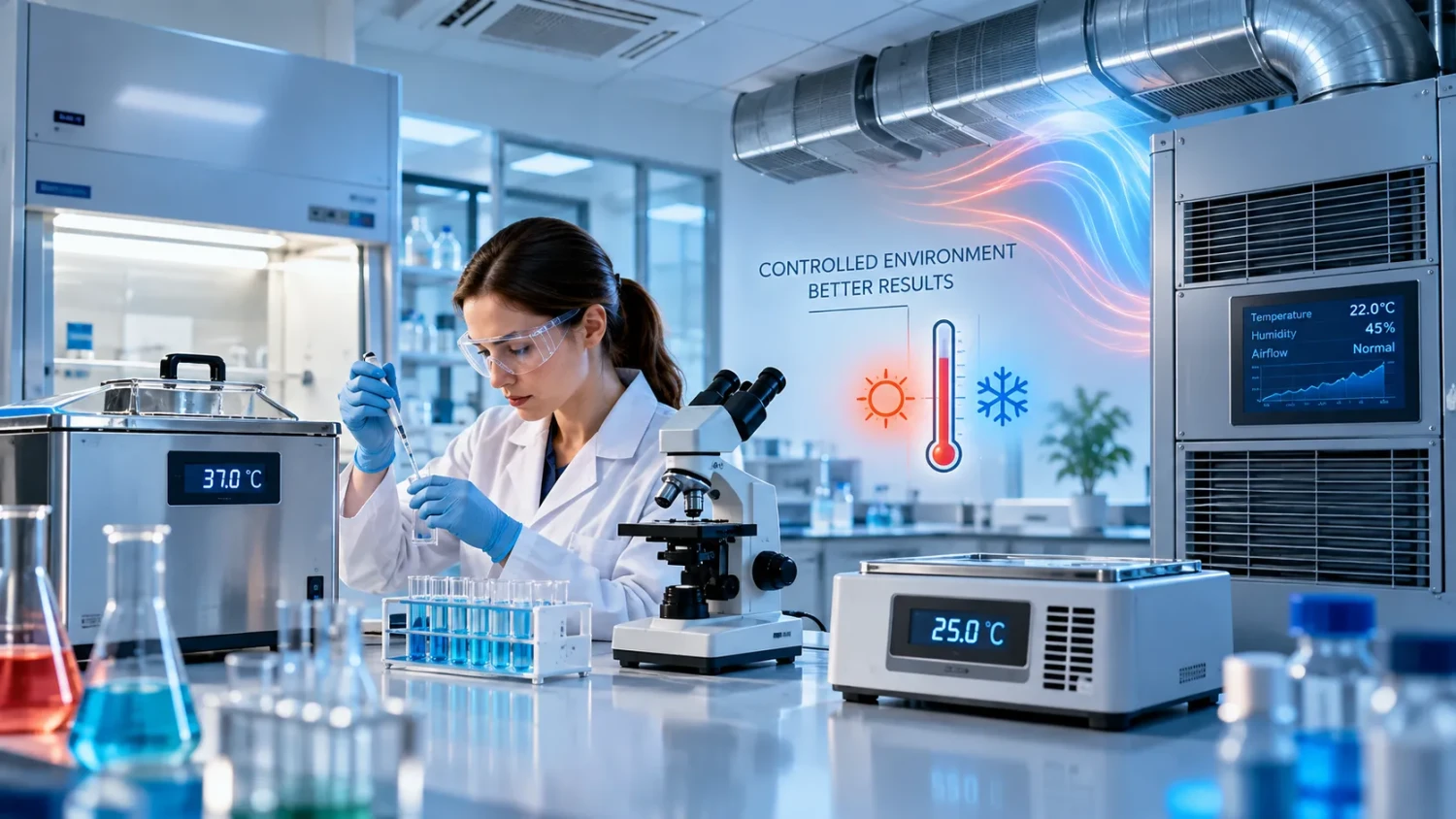
How Laboratory Heating & Cooling Equipment Improves Accuracy and Efficiency in Testing?
The Role of Laboratory Safety & Environmental Monitoring in Risk Prevention
Health and Hygiene Ware Material Testing: Ensuring Quality, Safety, and Compliance
Advancements in Sample Preparation Equipment for R&D and Quality Control
Essential Biotechnology Lab Items and Their Applications in Modern Research

Optimum Solution– Laboratory & Analytical Instruments Supplier in Bangladesh
Optimum Solution is a leading supplier of laboratory equipment, analytical instruments, and process control solutions in Bangladesh. Since our inception, we have built a strong presence in the industry, serving research labs, universities, pharmaceutical companies, and quality control laboratories nationwide. Through continuous dedication to improving our products and services, Optimum Solution has earned the trust and loyalty of our valued clients.


