
-
 Analytical & Elemental Instruments
-
Biotechnology Lab Items
-
Cardboard and Box Factory Lab Equipment Solution
-
Cleanroom Solution
-
Climatic Aging Chamber
-
Consumables & Accessories
-
Dosing Pump for Chemicals
-
Electrochemistry & Titration
-
ETP -Effluent Treatment Plant
-
Feed Quality Laboratory
-
Food & Kitchen Lab Items
-
Hygiene Testing Equipment


Health and Hygiene Ware Material Testing: Ensuring Quality, Safety, and Compliance
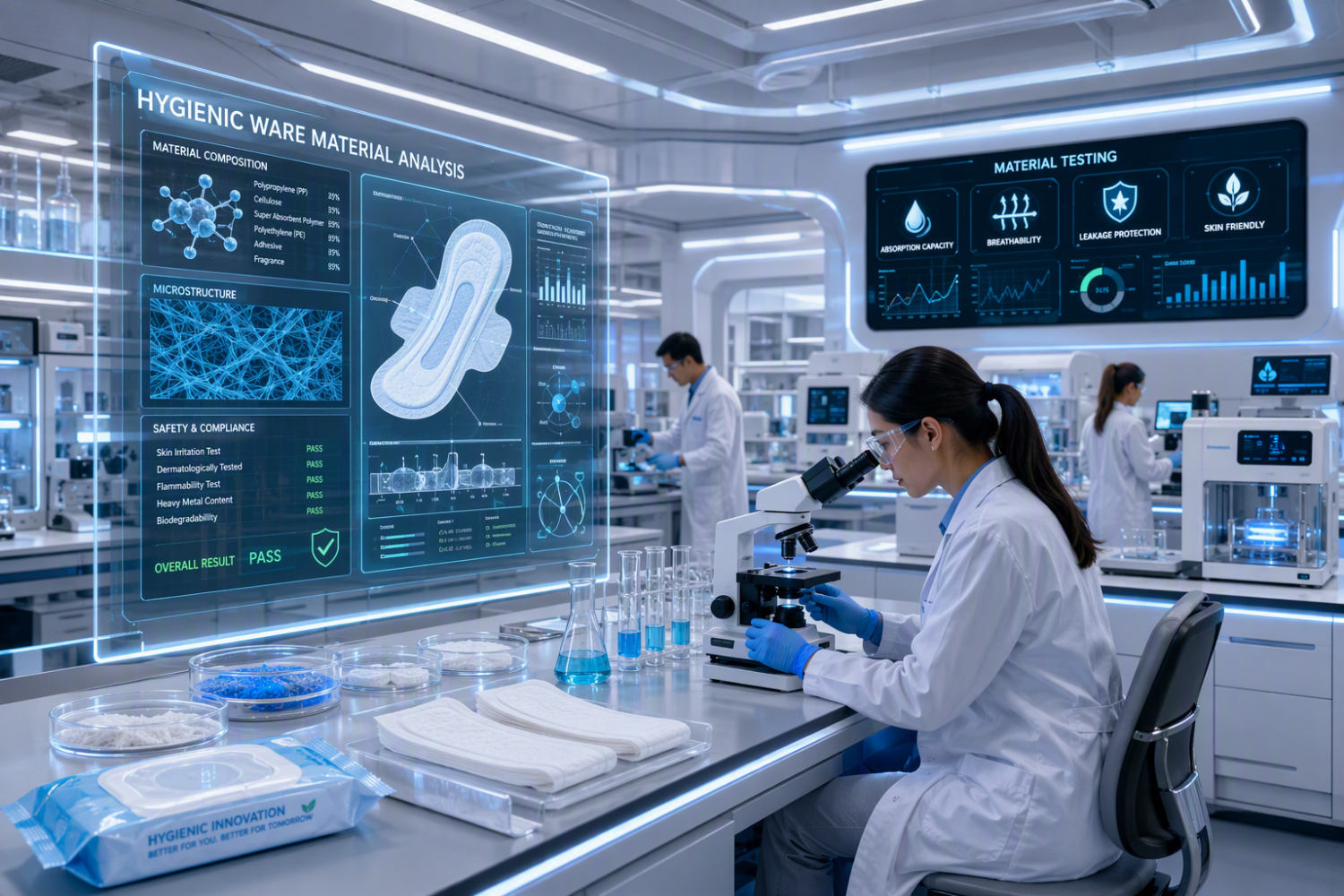
When you make or buy health and hygiene ware, safety cannot be guessed. Material testing gives you a clear way to confirm that raw materials and final products perform as expected. It supports product testing by checking strength, composition, and reliability before items move into use. This matters for products in direct contact with people, food, or sensitive settings. Just as important, it helps manufacturers meet quality standards and avoid avoidable failures, recalls, and compliance problems.
Key Highlights
Material testing helps verify product safety before health and hygiene ware reaches users.
It checks whether materials can meet quality standards under real-use conditions.
Mechanical testing measures strength, toughness, and durability for dependable performance.
Chemical and microbiological checks help screen for harmful substances and contamination risks.
Regulatory compliance depends on following recognized industry standards and test procedures.
Strong testing supports quality control, lowers failure risks, and improves confidence in final products.
Understanding Material Testing for Health and Hygiene Ware
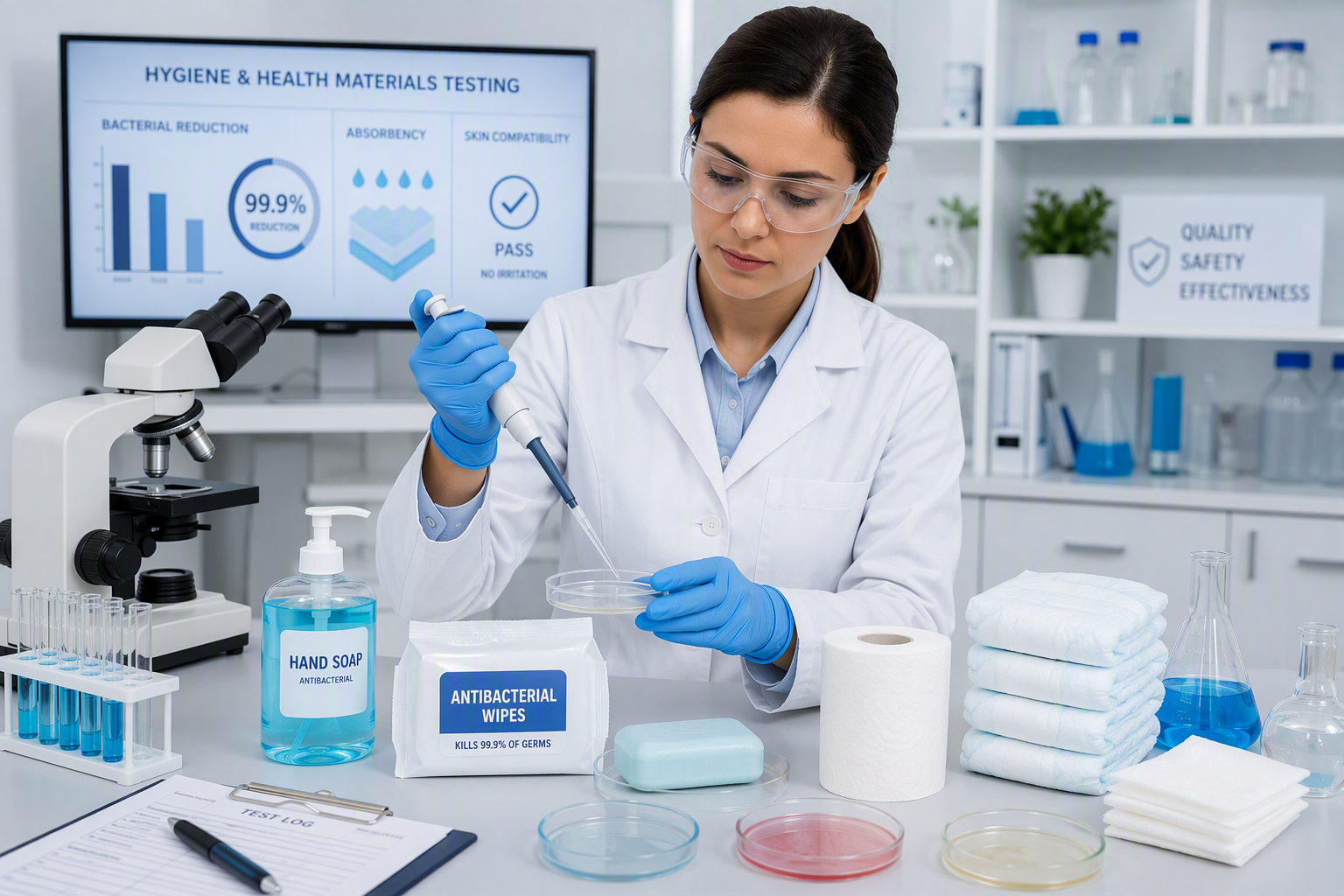
Material testing is the process of evaluating a material’s physical, mechanical, and chemical behavior. In health and hygiene ware, that means testing materials to understand material properties that affect safety, durability, and daily use. You need this because these products often have direct contact with users.
Unlike some other various industries, this field puts extra focus on product safety, cleanliness, and consistency. Laboratory testing helps confirm key features, reveal weak points, and show how materials react under stress, temperature, or various conditions before they enter the production process.
Importance of Safety and Compliance in Hygiene Products
Safety comes first when a product is used in kitchens, washrooms, care spaces, or medical settings. If a material fails, cracks, or contains unsuitable substances, product safety is at risk. That is why health and hygiene ware needs testing before it reaches the market.
For manufacturers, regulatory compliance is not just paperwork. It depends on following defined test procedures, proper sample preparation, and reliable result evaluation. Industry standards such as ASTM, ISO, and EN create a common framework, so materials testing is consistent across laboratories and regions.
To stay compliant, manufacturers should test raw materials early, verify finished goods, and use calibrated testing machines. They also need laboratories that prepare specimens according to standards and deliver accurate results. This steady approach helps products align with safety standards while reducing the chance of failure or recall.
Key Benefits of Comprehensive Material Testing
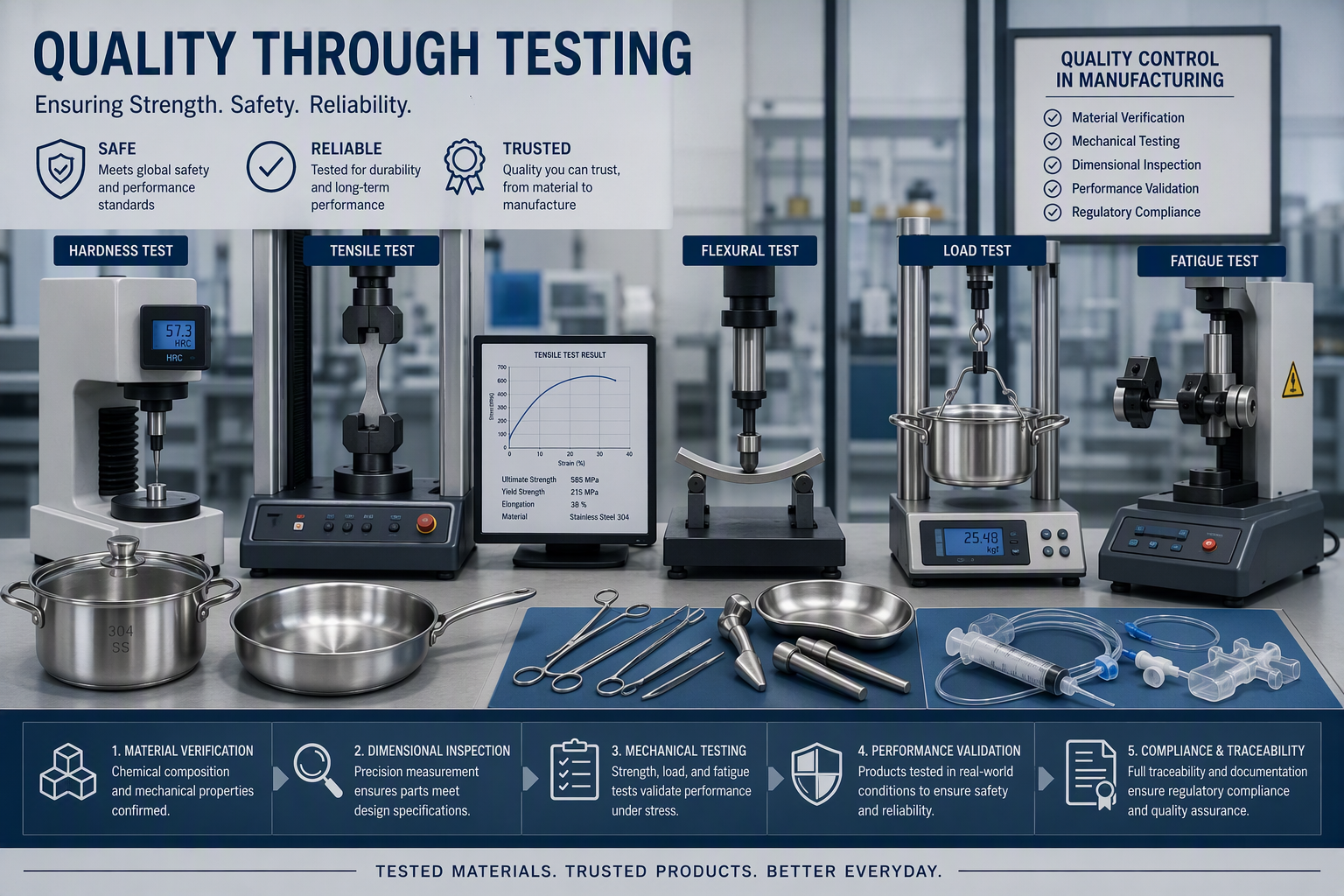
Comprehensive material testing strengthens quality control from the start of the production process. Instead of waiting for complaints or breakdowns, you can identify weak material properties before final products are released. That helps manufacturers meet quality standards and maintain more predictable performance.
It also matters for items like kitchenware and medical devices, where dependable behavior is essential. Testing materials under stress, load, and other various conditions shows whether they can handle real use. Without that step, there are higher risks of failure, durability problems, and unsafe performance.
Key benefits include:
Better control over raw materials and finished product quality
Early detection of weak strength, poor toughness, or inconsistent chemical composition
Improved ability to meet quality standards across batches
More confidence that products remain high quality during repeated use
Common Types of Material Testing Methods
Several materials testing methods are used to check whether health and hygiene ware is fit for use. The main types include mechanical testing, non-destructive testing, and chemical or thermal evaluation. Each one looks at different risks, from strength loss to unsuitable chemical composition.
In practice, the right method depends on the product and its intended use. Careful sample preparation is essential because poor specimens can distort results. Together, these methods help measure mechanical properties, assess durability, and confirm whether a material can withstand repeated handling, force, or sudden impact testing conditions.
Mechanical, Chemical, and Microbiological Testing Explained
The main types of testing each answer a different question. Mechanical testing checks whether a product can resist pulling, squeezing, repeated loading, or sudden force. That includes tensile strength, compression behavior, fatigue testing, hardness testing, and impact testing. These tests reveal important properties of materials.
Chemical testing looks at chemical composition and stability. It helps determine whether a material matches the intended formulation and can handle heat or service conditions. For health and hygiene ware, this matters because unsuitable materials may affect performance or safety.
Microbiological testing is also important when hygiene is a core product feature. It helps assess contamination concerns in sensitive applications. Together, these approaches create a fuller picture.
Test type | What it checks | Example focus |
|---|---|---|
Mechanical testing | Strength and durability under force | Tensile strength, compression, impact testing |
Chemical testing | Material makeup and stability | Chemical composition, thermal behavior |
Microbiological testing | Hygiene-related contamination concerns | Cleanliness and suitability for sensitive use |
Non-Destructive vs Destructive Testing Approaches
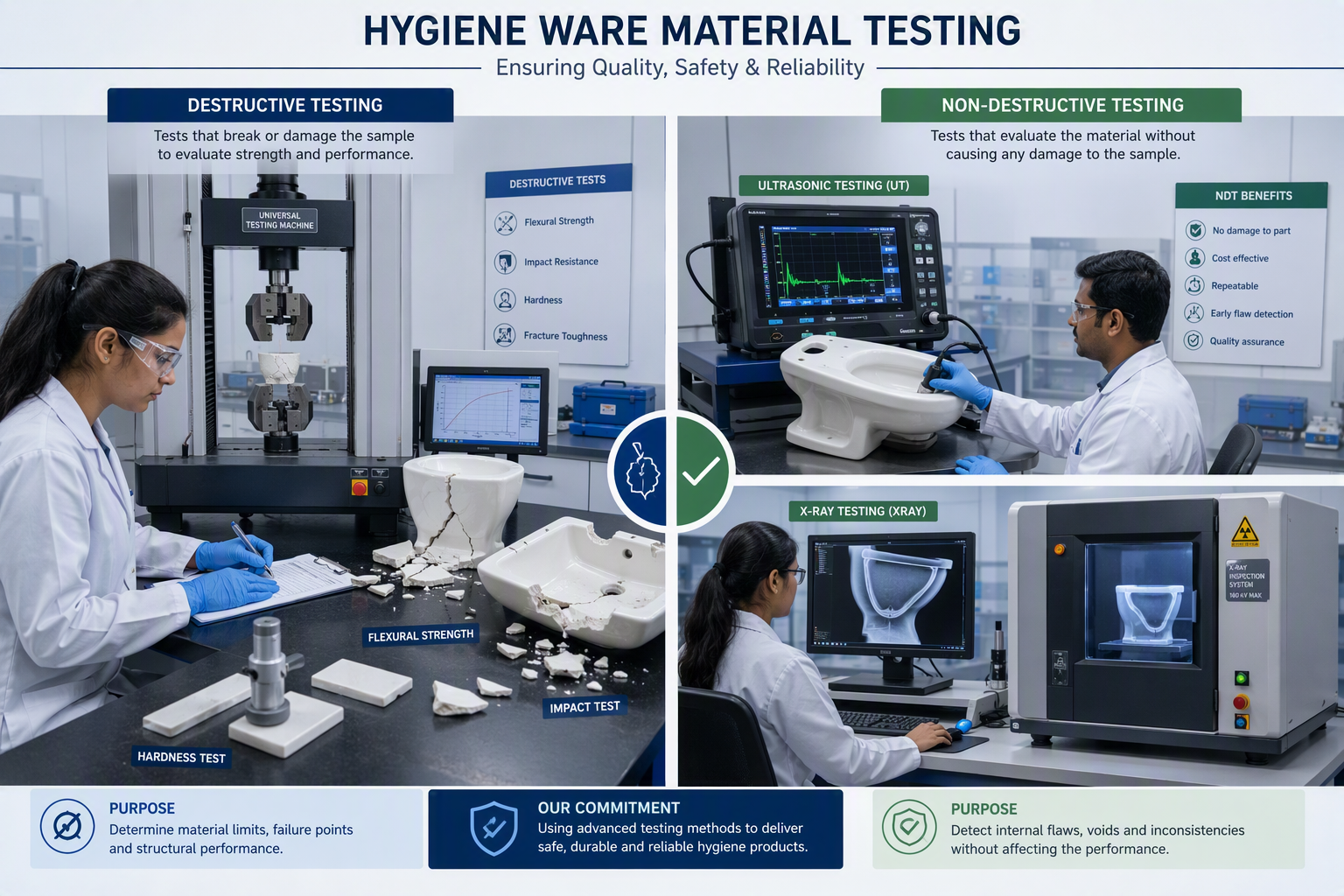
There are two core approaches in materials testing. Destructive testing pushes a sample until it breaks or permanently changes. This method is useful when you need to know the true limits of strength, toughness, or failure modes. Tensile, compression, and impact tests are common examples.
By contrast, non-destructive testing checks for flaws without damaging the sample. Methods such as ultrasound, X-ray, and dye penetrant inspection help identify internal or surface defects while keeping the item usable. That makes non-destructive testing useful for finished products or in-service inspection.
For reliable laboratory testing, look for teams that follow standards, handle sample preparation correctly, and use calibrated testing machines. Strong laboratories should provide:
Clear test procedures
Proper equipment verification
Skilled material testers and technicians
Accurate results that can be compared across batches
Safety and Compliance Standards for Health and Hygiene Products
Health and hygiene ware should be tested against recognized safety standards so results are dependable and consistent. Standards define how samples are prepared, how tests are run, and how outcomes are interpreted. That structure helps manufacturers avoid guesswork and supports better product decisions.
For regulatory compliance, companies often rely on quality standards from ASTM, ISO, and EN. These international standards and industry standards make it easier to compare results across suppliers, products, and laboratories. The next sections outline how these guidelines work and why outside verification can strengthen trust.
US and International Regulatory Guidelines Overview
In the United States, many testing programs rely on ASTM standards developed by the American Society for Testing and Materials. An ASTM standard gives detailed direction for test procedures, specimen setup, machine verification, and result reporting. That helps improve consistency in regulatory compliance work.
Internationally, ISO standards provide broader global guidance, while EN standards are widely used in Europe. These industry standards matter because they create a shared testing language. When laboratories follow the same rules, product developers can compare results with greater confidence.
Common examples include:
ASTM D638 for tensile properties of plastics
ASTM E8 for tension testing of metallic materials
ISO 178 for flexural properties of plastics
ISO 527 and ISO 7500-1 for tensile testing and testing machine verification
These international standards support safer, more reliable product decisions.
Role of Third-Party Certification in Material Testing
Third-party certification adds independent review to the testing process. Instead of relying only on internal checks, manufacturers can use outside experts to confirm that methods, records, and results align with required standards. This extra layer supports stronger regulatory compliance.
It also improves quality control. When an external laboratory or certification body reviews material testing, it can help identify gaps in sampling, equipment calibration, or result interpretation. That matters for health products because trust depends on consistency, not assumptions.
For your business, third-party certification can support reliable engineering and clearer proof that materials were tested correctly. It does not replace internal testing, but it strengthens it. In products tied to hygiene, safety, and repeat use, outside verification can make purchasing and approval decisions much easier.
Conclusion
In summary, thorough material testing for health and hygiene ware is fundamental to ensuring the safety and compliance of products that directly impact consumer well-being. By understanding the various testing methods and regulatory standards, manufacturers can effectively identify potential hazards and maintain high-quality materials. Not only does this protect consumers, but it also fosters trust and loyalty in the market. As an industry stakeholder, staying informed about these practices can help you contribute to a safer environment. If you're looking to enhance your knowledge further, feel free to reach out for more insights and resources!
Frequently Asked Questions
Can material testing detect hazardous substances in hygiene ware?
Yes. Material testing can help identify issues in chemical composition and flag harmful substances that may make a product unsuitable for use. With proper laboratory testing, manufacturers can support regulatory compliance and make better decisions before materials move into finished hygiene ware.
How do manufacturers ensure compliance and quality in their products?
Manufacturers support regulatory compliance by following quality standards, using proper testing materials methods, and checking products throughout the production process. Strong quality control includes specimen preparation, calibrated equipment, and comparing test results against recognized standards such as ASTM, ISO, and EN.
What are the main risks if hygiene materials aren’t properly tested?
Without proper testing, product safety can be compromised. Materials may contain harmful substances, perform poorly under use, or break earlier than expected. That creates higher risks of failure, weak quality control, and products that do not meet safety standards or expected performance levels.
Recent Posts
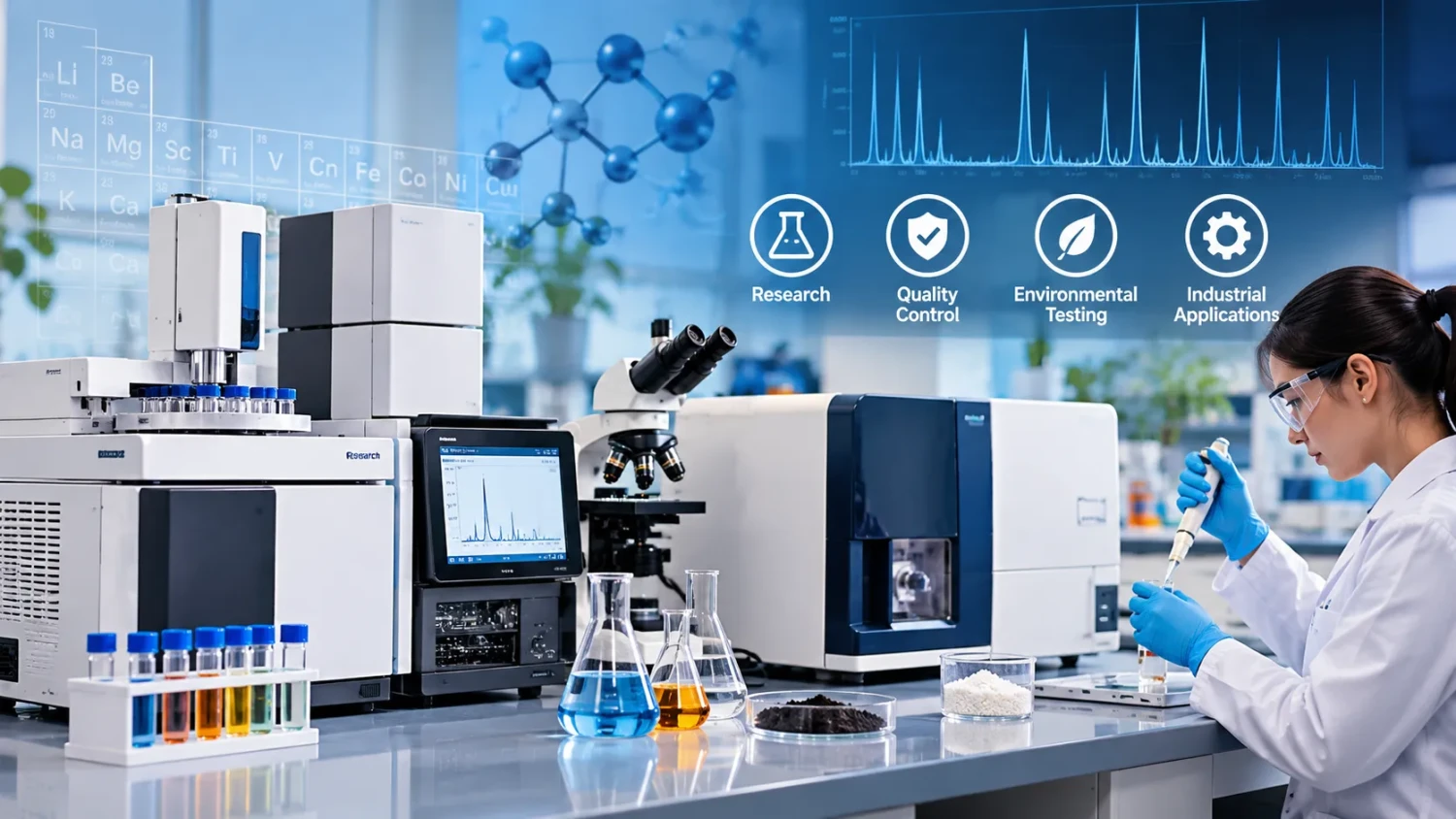
Analytical & Elemental Instruments: Empowering Accurate Analysis for Research, Quality Control, and Industrial Applications

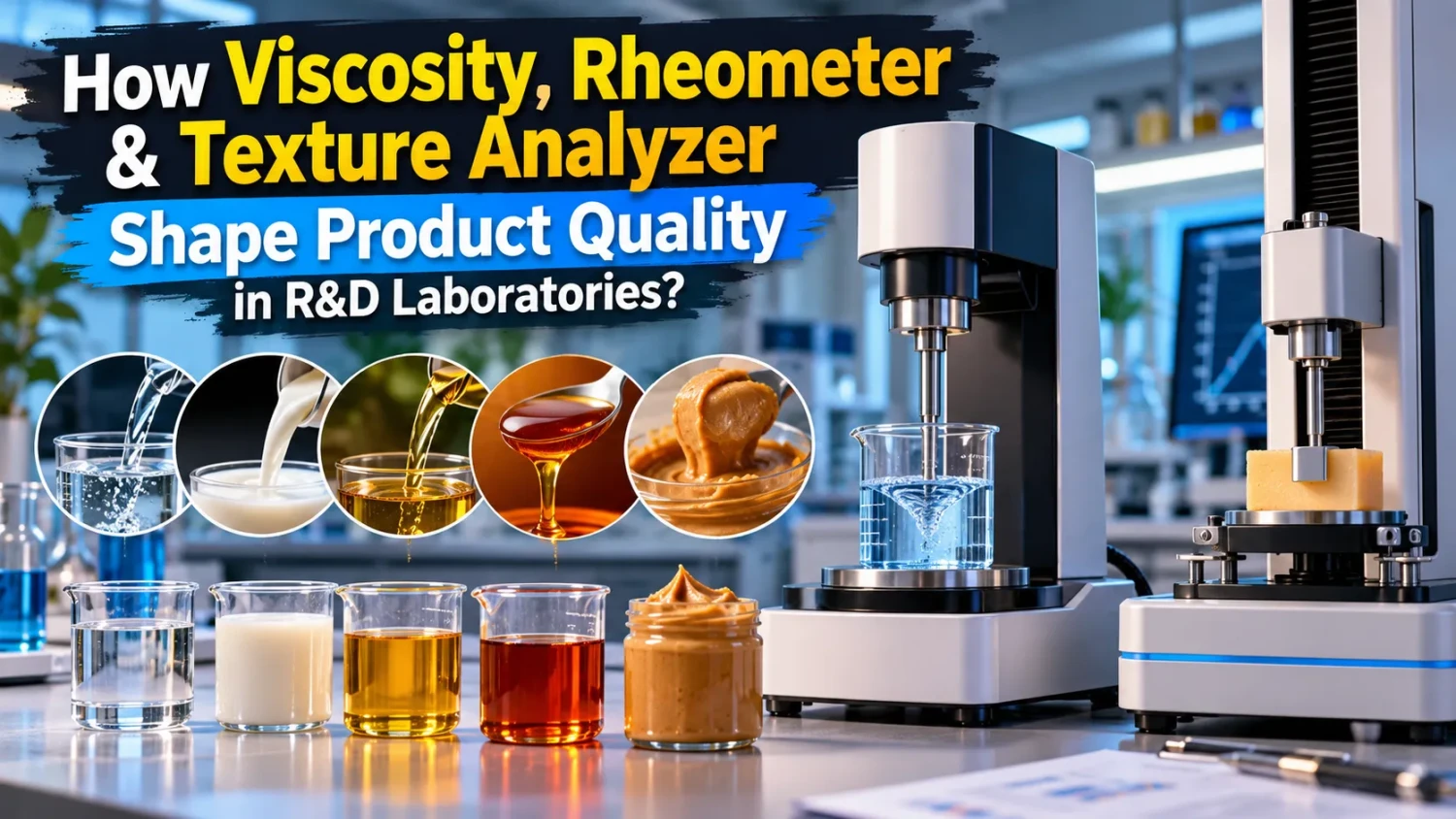
How Viscosity, Rheometer & Texture Analyzer Shape Product Quality in R&D Laboratories?
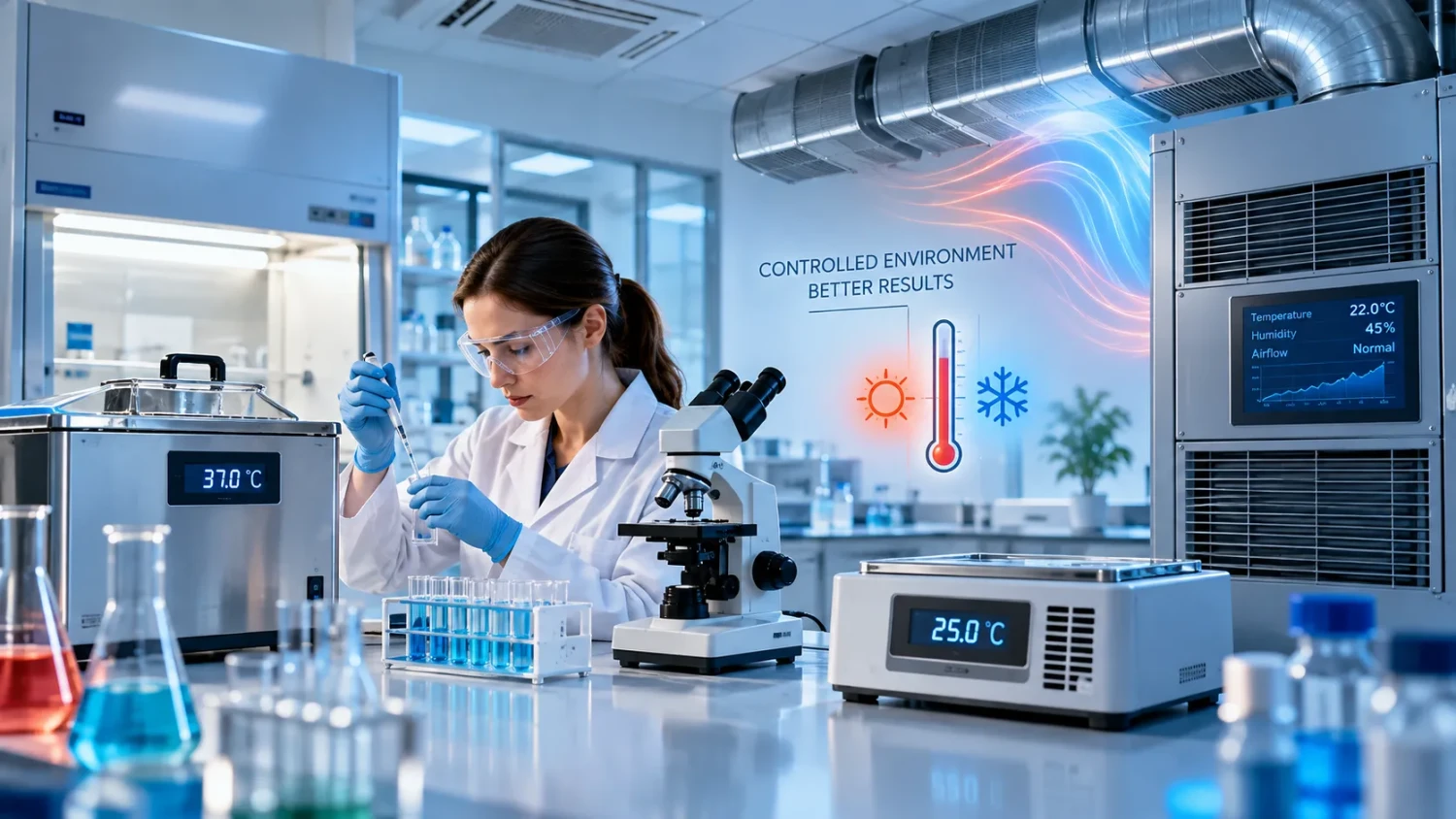
How Laboratory Heating & Cooling Equipment Improves Accuracy and Efficiency in Testing?
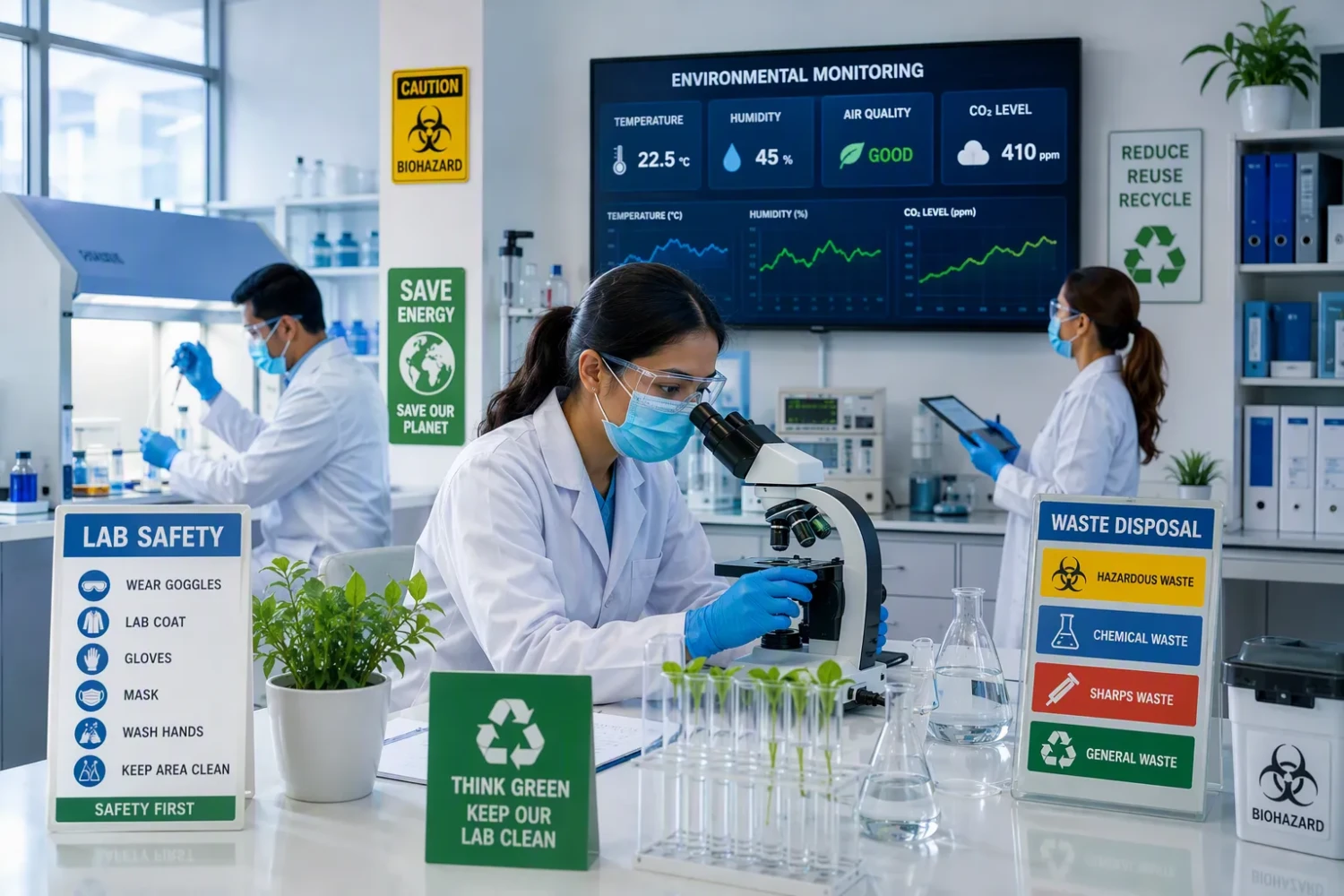
The Role of Laboratory Safety & Environmental Monitoring in Risk Prevention
Health and Hygiene Ware Material Testing: Ensuring Quality, Safety, and Compliance
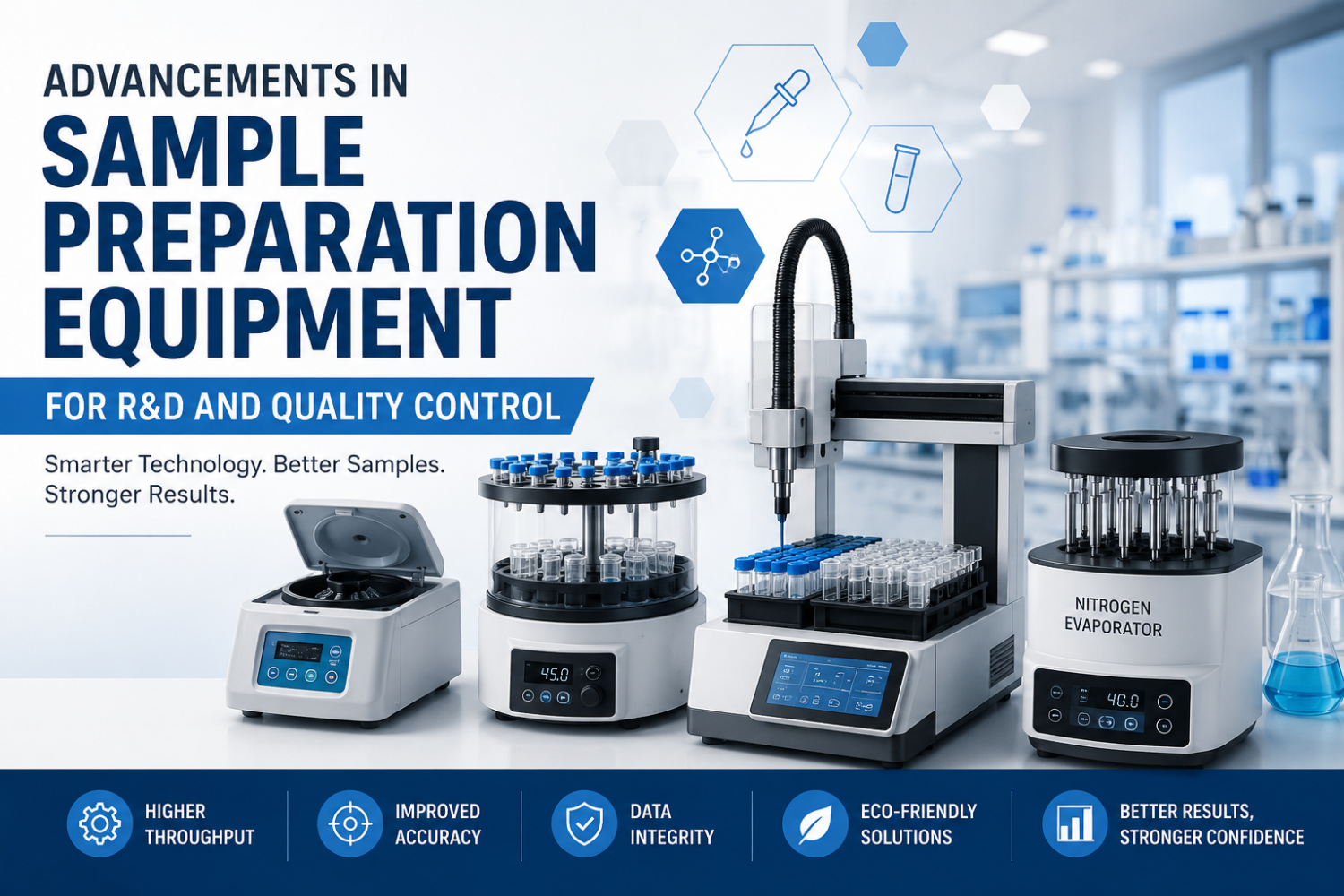
Advancements in Sample Preparation Equipment for R&D and Quality Control
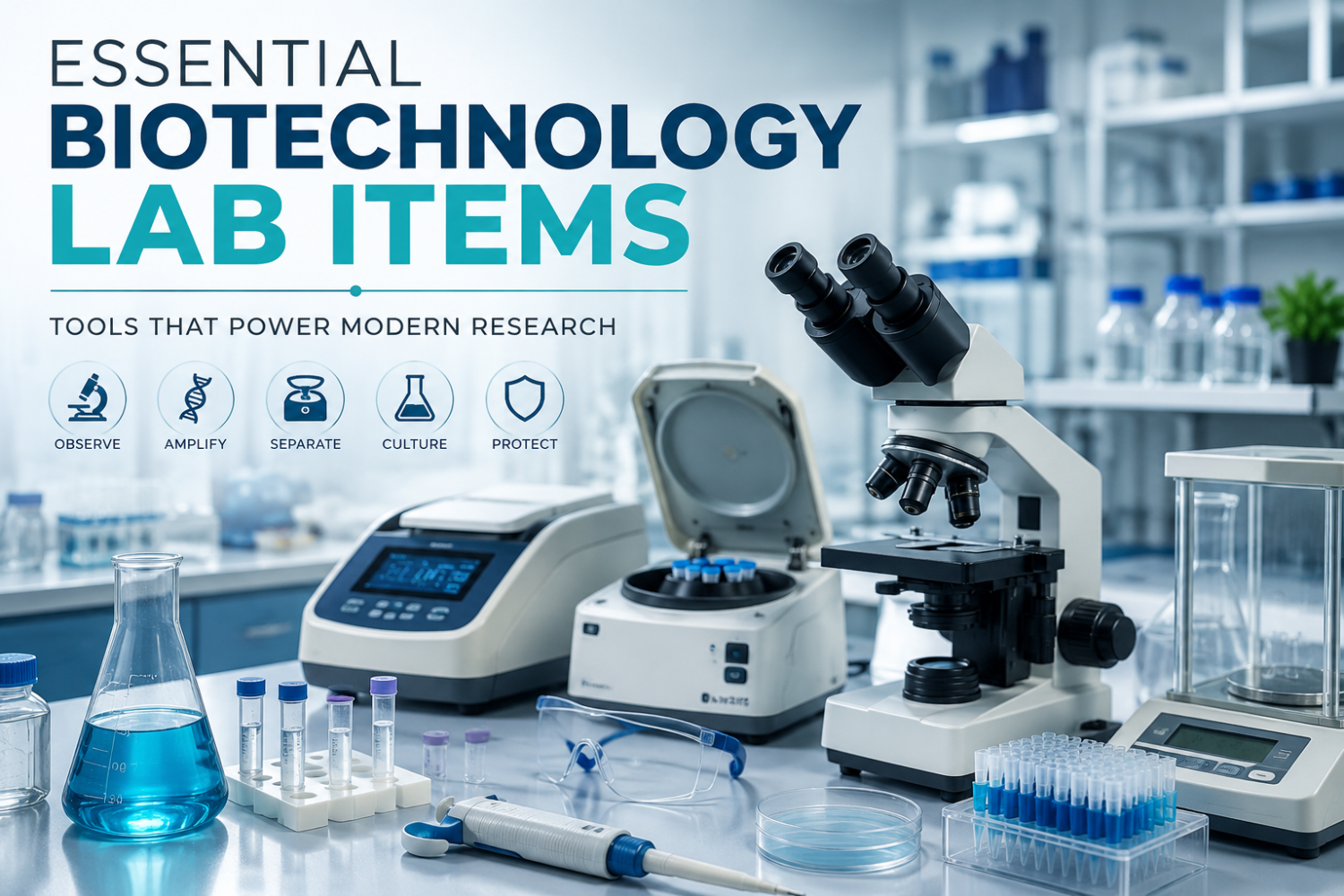
Essential Biotechnology Lab Items and Their Applications in Modern Research
Optimum Solution– Laboratory & Analytical Instruments Supplier in Bangladesh
Optimum Solution is a leading supplier of laboratory equipment, analytical instruments, and process control solutions in Bangladesh. Since our inception, we have built a strong presence in the industry, serving research labs, universities, pharmaceutical companies, and quality control laboratories nationwide. Through continuous dedication to improving our products and services, Optimum Solution has earned the trust and loyalty of our valued clients.


