
-
 Analytical & Elemental Instruments
-
Biotechnology Lab Items
-
Cardboard and Box Factory Lab Equipment Solution
-
Cleanroom Solution
-
Consumables & Accessories
-
Dosing Pump for Chemicals
-
Electrochemistry & Titration
-
ETP -Effluent Treatment Plant
-
Feed Quality Laboratory
-
Food & Kitchen Lab Items
-
Hygiene Testing Equipment
-
Lab Furniture



How Laboratory Heating & Cooling Equipment Improves Accuracy and Efficiency in Testing?
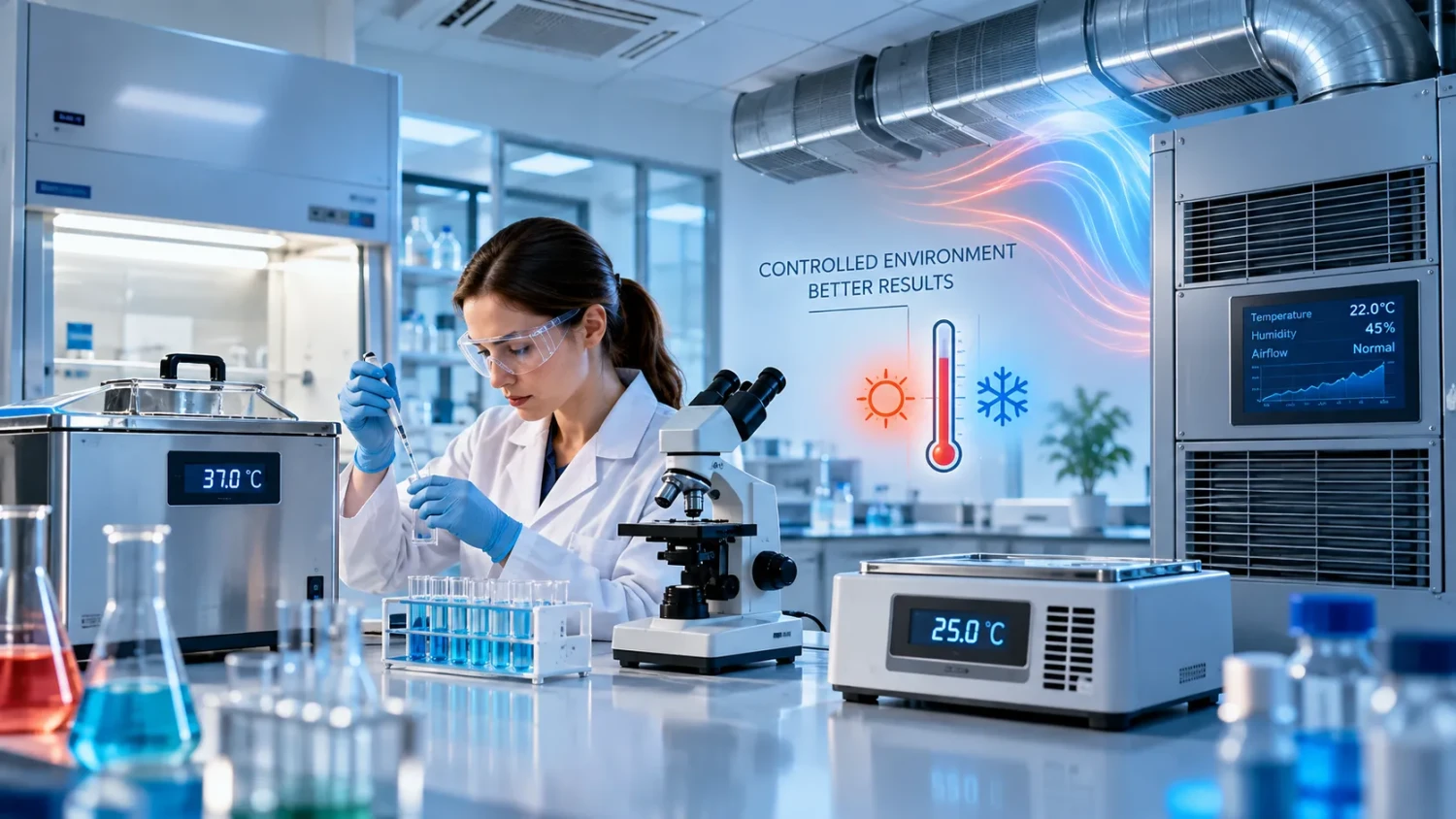
Laboratory testing depends on more than skilled staff and good instruments. Your results also rely on stable environmental conditions. Laboratory HVAC systems and other heating and cooling equipment help control temperature, airflow, and humidity so tests can run as planned. That level of temperature control protects sensitive materials, supports experimental accuracy, and reduces avoidable errors. If you want reliable testing and smoother lab operations, it helps to understand how these systems improve daily performance.
Key Highlights
Precise temperature control limits temperature fluctuations that can distort test outcomes.
Advanced heating and cooling equipment supports experimental accuracy and more dependable results.
Laboratory HVAC systems manage airflow, humidity, and contamination alongside temperature.
Energy efficiency features help labs reduce waste while supporting regulatory compliance.
Performance data tracking improves system oversight, maintenance planning, and quality management.
Modern systems serve a wide range of lab applications with better productivity and test reliability.
Importance of Temperature Control in Laboratory Testing
Even small temperature fluctuations can change chemical stability, affect instrument behavior, and weaken repeatability. That is why precise temperature control matters so much in laboratory testing. When heating and cooling equipment keeps conditions steady, you are more likely to get accurate results.
Laboratory HVAC systems support this by managing key environmental conditions across the space. Stable settings reduce variation between tests and help protect sensitive samples, equipment, and workflows. The result is better consistency and stronger confidence in every outcome.
Impact on Testing Accuracy and Reliability
Stable conditions make a direct difference in experimental accuracy. When a lab maintains temperature stability, instruments can perform closer to their intended range, and samples are less likely to react unpredictably. That gives you a better chance of producing accurate results from one run to the next.
Reliability also depends on repeatability. If one test happens under different conditions than another, comparing outcomes becomes harder. Consistent heating and cooling reduce those shifts, which helps labs avoid unexplained variation and supports more dependable decision-making.
There is also a compliance side to this. Recording performance data from HVAC and testing systems helps teams confirm that conditions stayed within required limits. That documentation supports audits, strengthens quality checks, and shows that reliable environmental control is part of the testing process.
Role of Consistent Environmental Conditions in Efficiency
A lab works better when environmental conditions stay consistent throughout the day. Staff spend less time correcting room issues, retesting samples, or adjusting equipment. An efficient HVAC system helps create that stability, which keeps work moving and reduces disruption.
Energy efficiency matters here too. Modern systems can use variable air volume controls, energy recovery, and building automation to manage demand without giving up control. That means your lab can maintain the right conditions while using less energy than older, less responsive systems.
Precision is what ties efficiency and performance together. If airflow, pressure, and temperature are accurately controlled, the HVAC system does not need to overwork to compensate for poor balance. That improves productivity, protects equipment, and supports smoother daily operation as you move into equipment options.
Key Types of Laboratory Heating & Cooling Equipment
Laboratories use several kinds of heating and cooling equipment to support controlled testing. Alongside specialized devices such as water baths and calorimeters, laboratory HVAC systems handle larger environmental needs like airflow, ventilation, humidity, and room pressure.
This mix of equipment supports a wide range of lab applications, from research and healthcare settings to industrial testing and cleanrooms. Each tool serves a different purpose, but together they help create the stable conditions needed for safe, accurate, and efficient work.
Water Baths, Calorimeters, and Their Testing Applications
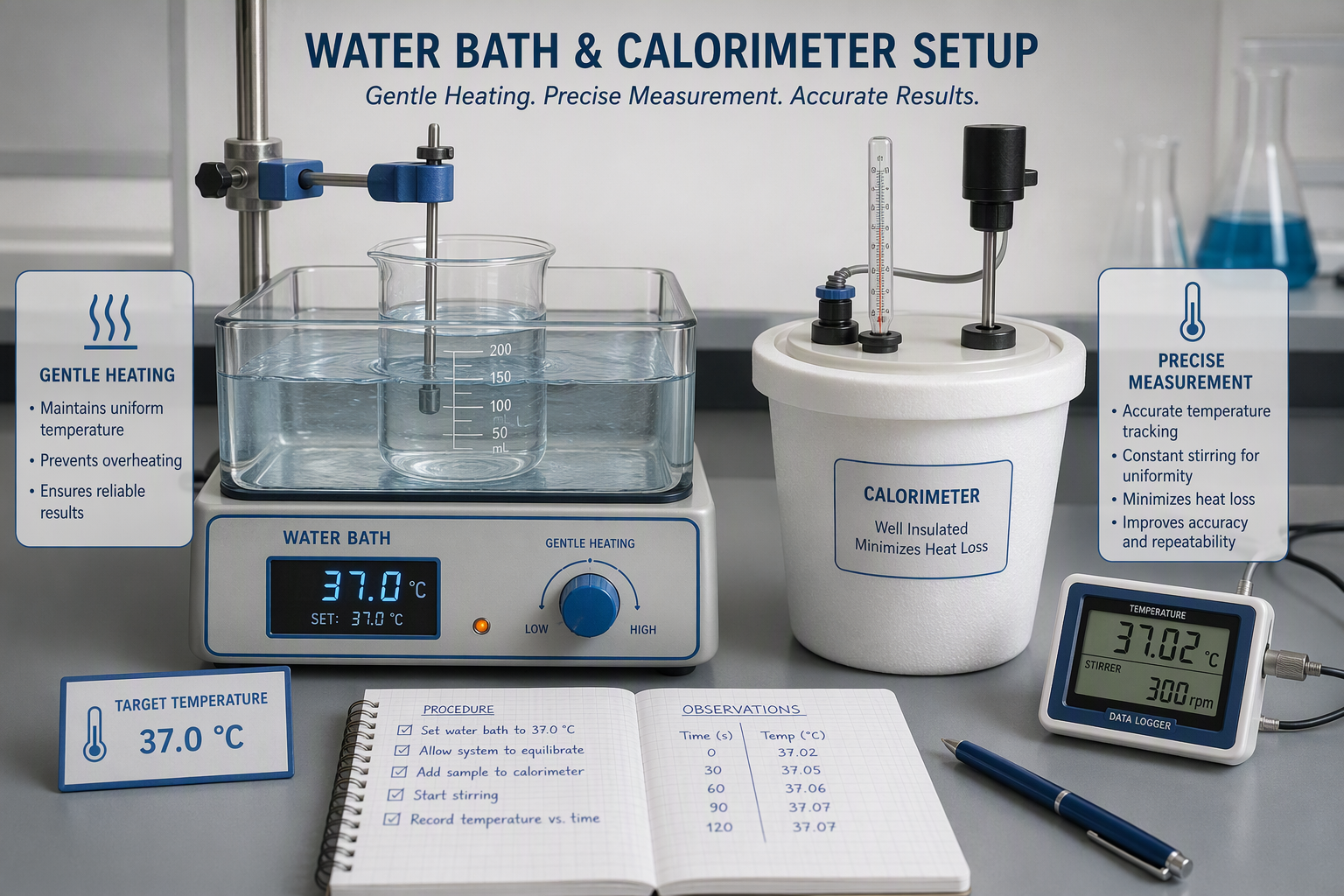
Water baths and calorimeters support tests that depend on controlled heat. Water baths are useful when samples need steady warming through uniform heat distribution. Calorimeters are used in performance testing where careful heat measurement supports accurate evaluation.
These tools help across different workflows, including product development and comparison testing:
Water baths provide gentle, stable heating for samples that need consistent temperatures.
Uniform heat distribution helps reduce hot spots that may affect test quality.
Calorimeters support balanced heat measurement during performance testing.
Both tools can improve repeatability across laboratory applications.
In practical terms, this means fewer avoidable shifts in results. When heat is applied evenly and measured carefully, labs gain better control over outcomes. That strengthens accuracy and gives teams more confidence in the testing data they collect.
Core Features to Look for in Modern Lab HVAC Systems
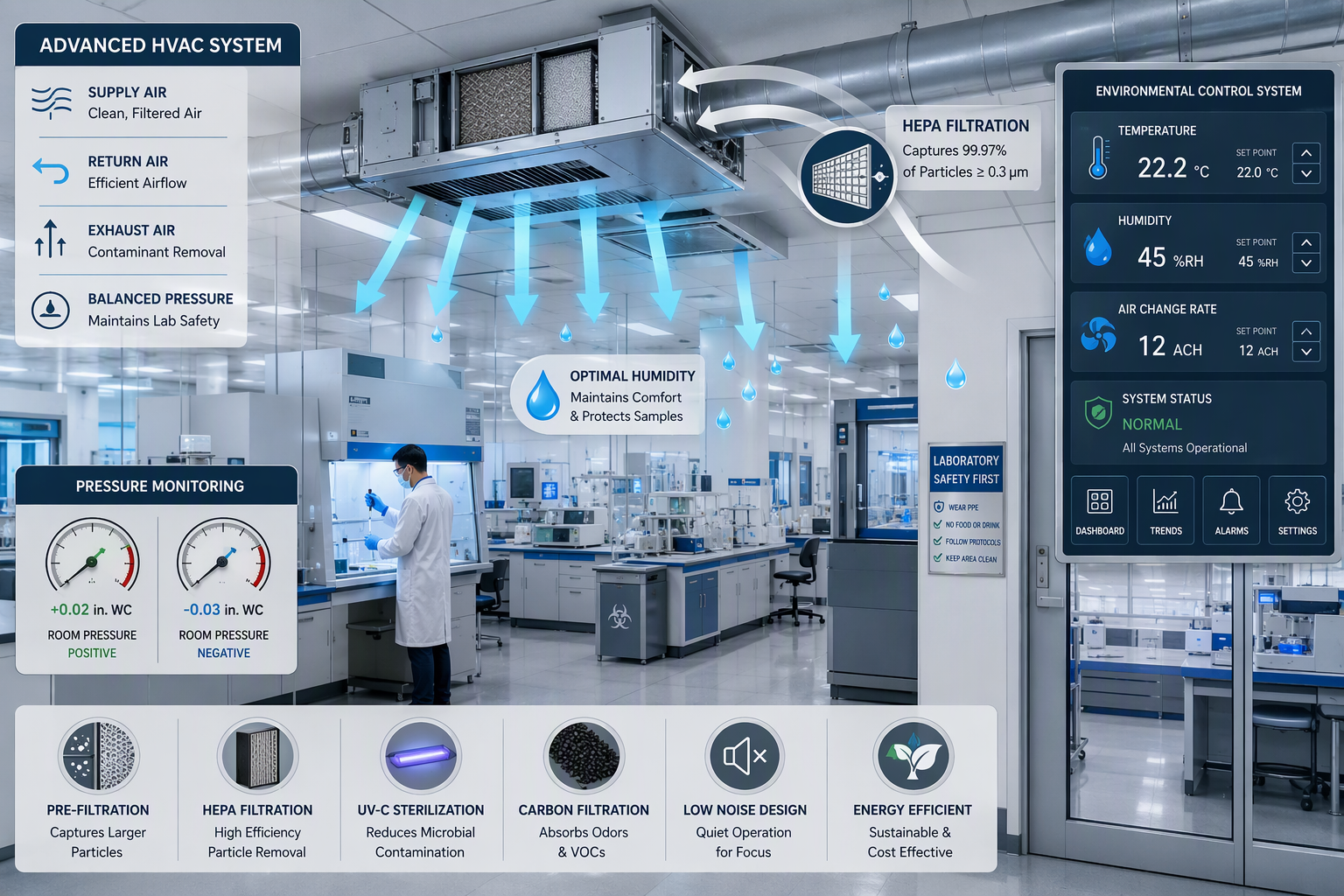
When choosing a lab HVAC system, focus on features that support control, safety, and long-term performance. Temperature accuracy matters, but so do airflow, humidity regulation, pressure control, and filtration. These functions work together to reduce contamination risks and protect sensitive processes.
Here is a simple text table showing core features and benefits:
Feature | Benefit |
|---|---|
Variable air volume | Adjusts airflow to match demand and improve energy efficiency |
Humidity control | Protects materials, reduces electrostatic issues, and limits microbial growth |
Pressure control | Helps separate zones and reduce contamination transfer |
High-efficiency filtration | Improves air quality in scientific environments |
Verified ductwork and CFM performance | Supports accurate airflow delivery and dependable ventilation |
These features are important because laboratory operations are more demanding than standard commercial spaces. A well-designed HVAC system gives you stronger environmental control, better serviceability, and more reliable performance as lab needs change.
Advanced Technologies Enhancing Laboratory Performance
Laboratory heating and cooling are becoming more accurate through smarter controls and better monitoring. Newer systems use automation to track conditions in real time, helping labs respond faster when readings move outside target ranges. That adds precision to everyday testing.
At the same time, integrated controls support regulatory compliance by recording system behavior and operating conditions. For labs that need dependable documentation and steady performance, these technologies make environmental management easier and more consistent.
Automated Temperature Monitoring for Precision Testing
Automated temperature monitoring helps labs maintain precision without relying on manual checks alone. Sensors and control systems watch conditions continuously, which makes it easier to keep temperatures within the required range. That supports accurate results and reduces hidden variation.
Another clear benefit is faster response to temperature fluctuations. Instead of discovering a problem after a test is complete, automated systems can identify changes as they happen. This allows equipment or controls to be adjusted before the issue grows into a larger testing problem.
Efficiency improves as well. Staff spend less time on repeated readings and manual correction, while the system produces a clearer record of operating conditions. That strengthens data validity, supports better workflow, and helps labs maintain dependable performance over time.
Integration of Quality Management Systems with Biomedical Equipment
When quality management is connected with biomedical equipment, labs gain a better view of how systems are performing. Instead of treating testing devices and environmental controls as separate pieces, teams can review them together. That helps identify issues that may affect diagnostic accuracy.
Real-time performance data is a major advantage. Continuous tracking shows whether equipment and environmental settings are staying within expected limits. If a problem appears, the lab has a clearer record to investigate what changed and when it happened.
This kind of integration also supports regulatory compliance. Documented conditions, maintenance activity, and operating trends help labs show that testing took place in a controlled environment. For you, that means stronger oversight, better consistency, and more confidence in the final results.
Conclusion
Having reliable laboratory heating and cooling equipment is crucial for ensuring the accuracy and efficiency of your testing processes. These systems not only help maintain consistent environmental conditions but also enhance the reliability of your results. By investing in advanced technologies and understanding the key features that contribute to optimal performance, laboratories can significantly improve their operational effectiveness. Regular maintenance and timely upgrades also play a vital role in sustaining the integrity of your testing environment. If you're ready to elevate your lab's performance, consider exploring the latest innovations in laboratory heating and cooling solutions.
Frequently Asked Questions
How does regular maintenance of lab heating and cooling systems impact test results?
Regular maintenance keeps laboratory HVAC systems working as intended by protecting airflow, filtration, and temperature control performance. Clean filters, calibrated controls, and checked components reduce drift and system strain. That improves heating and cooling stability, which supports better accuracy and more reliable test outcomes.
Can upgrading older laboratory HVAC systems improve efficiency and accuracy?
Yes. In the HVAC industry, older systems often lack modern controls and may struggle with airflow and temperature control. Upgrades can improve energy efficiency, restore dependable operation, and provide stronger performance data. That leads to more stable lab conditions and better testing consistency.
What are the most effective features for boosting efficiency in lab temperature control equipment?
The most effective features include precise temperature control, variable air volume capability, and verified ductwork and CFM performance. Good humidity and pressure control also help. Together, these features improve energy efficiency, reduce wasted airflow, and support stable environmental conditions for dependable laboratory work.
Recent Posts
How Laboratory Heating & Cooling Equipment Improves Accuracy and Efficiency in Testing?

The Role of Laboratory Safety & Environmental Monitoring in Risk Prevention
Health and Hygiene Ware Material Testing: Ensuring Quality, Safety, and Compliance
Advancements in Sample Preparation Equipment for R&D and Quality Control
Essential Biotechnology Lab Items and Their Applications in Modern Research


Understanding ETP – Effluent Treatment Plant and Its Importance in Industry
Why a Reliable Cleanroom Solution is Critical for Laboratory and Production Safety?
Optimum Solution– Laboratory & Analytical Instruments Supplier in Bangladesh
Optimum Solution is a leading supplier of laboratory equipment, analytical instruments, and process control solutions in Bangladesh. Since our inception, we have built a strong presence in the industry, serving research labs, universities, pharmaceutical companies, and quality control laboratories nationwide. Through continuous dedication to improving our products and services, Optimum Solution has earned the trust and loyalty of our valued clients.


