
-
 Analytical & Elemental Instruments
-
Biotechnology Lab Items
-
Cardboard and Box Factory Lab Equipment Solution
-
Cleanroom Solution
-
Consumables & Accessories
-
Dosing Pump for Chemicals
-
Electrochemistry & Titration
-
ETP -Effluent Treatment Plant
-
Feed Quality Laboratory
-
Food & Kitchen Lab Items
-
Hygiene Testing Equipment
-
Lab Furniture




Analytical & Elemental Instruments: Empowering Accurate Analysis for Research, Quality Control, and Industrial Applications
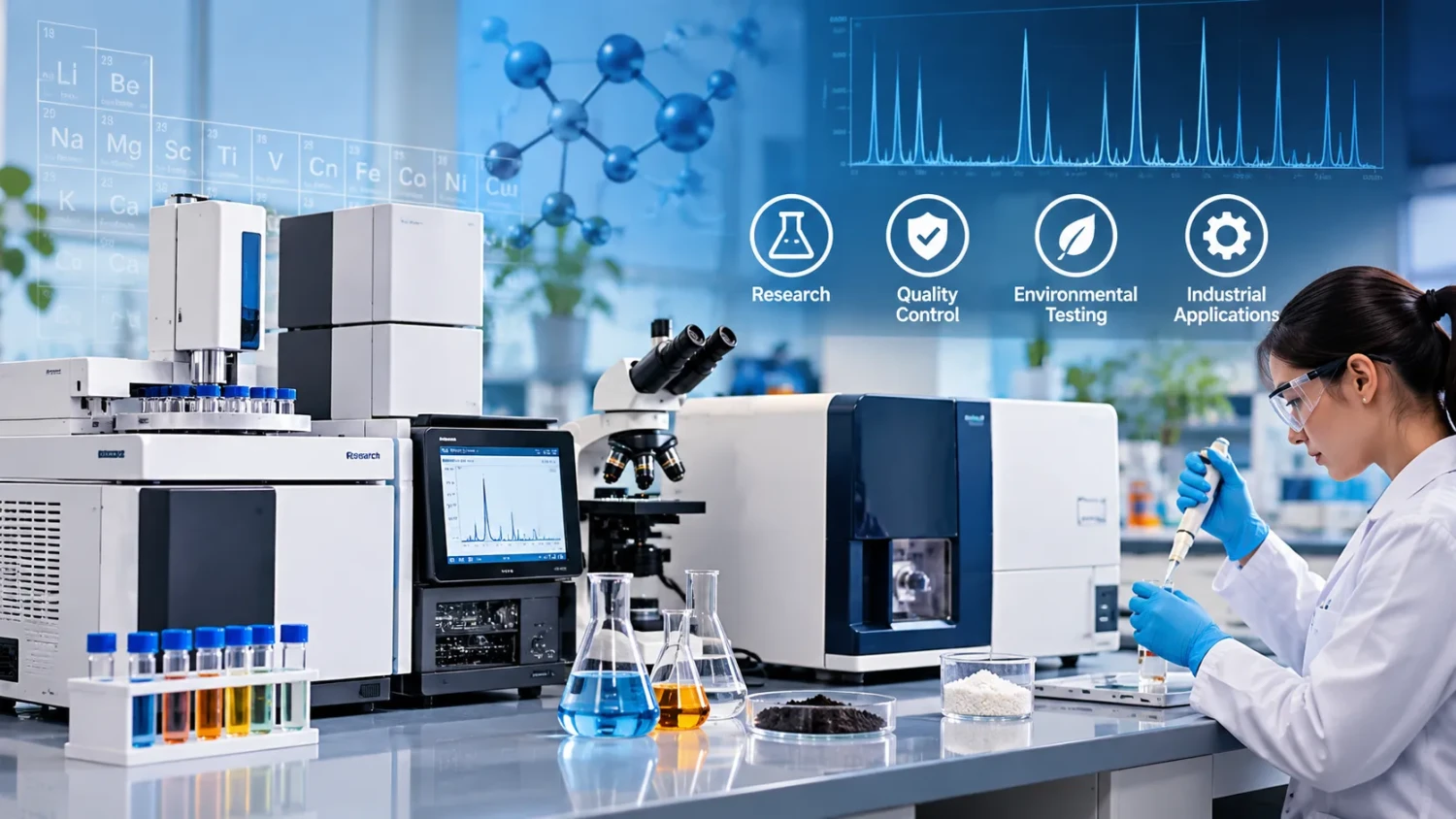
Analytical instruments support the careful work behind modern testing, measurement, and discovery. Across scientific disciplines, they help researchers study samples, monitor conditions, and collect dependable results. You see their value in chemistry labs, pharmaceutical research, and environmental science, where precise readings shape decisions every day. From tracking gases to checking temperature or pressure, these tools make complex work easier to manage. To understand their value fully, it helps to look at what they are and why they matter.
Key Highlights
Analytical instruments help researchers and labs produce reliable data across many testing needs.
An elemental analyzer supports fast elemental analysis with high sensitivity for small sample amounts.
Advanced instruments improve speed, consistency, and control in research and routine laboratory work.
In modern labs, accuracy reign matters because better measurements lead to better decisions.
These systems support quality control, environmental checks, and industrial testing with confidence.
Careful instrument choice helps you match performance, workflow, and sample needs more effectively.
Understanding Analytical and Elemental Instruments
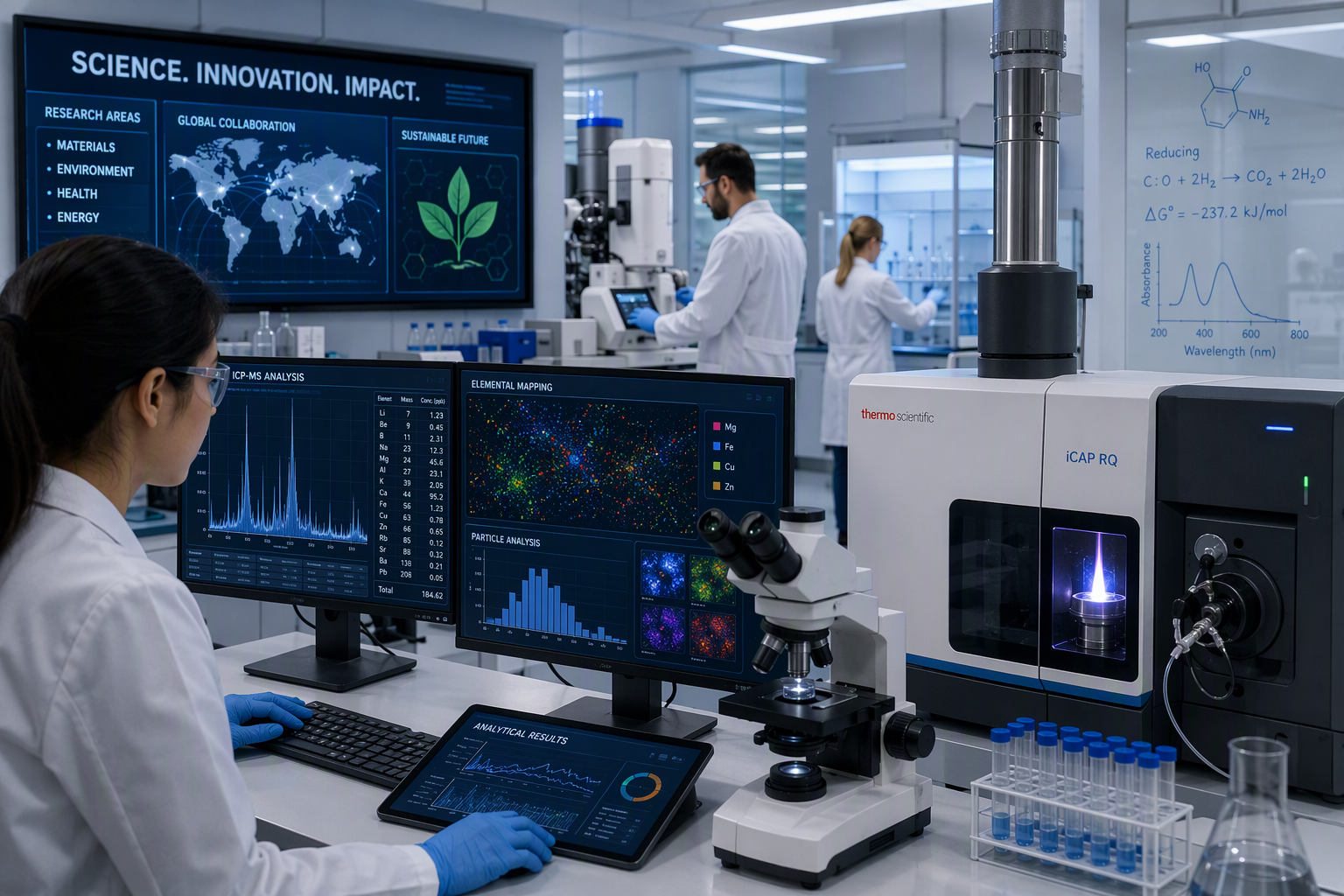
Analytical instruments are tools used to measure, monitor, and evaluate samples or conditions in laboratory and industrial settings. They support elemental analysis, process checks, and safety monitoring across many scientific disciplines.
What makes the options available today so useful is their speed, precision, and advanced features. They help scientists collect better results, compare changes in real time, and choose methods that fit specific research goals. The next sections explain the principles behind these systems and their effect on scientific work.
Definitions and Core Principles
At the most basic level, analytical instruments are devices used to examine materials, conditions, or reactions with precision. They help scientists measure factors such as temperature, pressure, flow, and composition. This makes them essential in research, testing, and process control.
An elemental analyzer is a specialized tool used to study the chemical composition of a sample. In many settings, it supports quantitative analysis by identifying how much of certain elements are present. That information is useful when researchers need clear data about organic compounds, chemical compounds, or the elemental composition of a sample.
These tools matter because science depends on measured evidence, not guesswork. When instruments produce accurate readings, researchers gain a stronger understanding of the world. That applies across laboratories, environmental monitoring sites, and industrial systems where dependable numbers guide every next step.
Evolution and Impact on Scientific Research
Scientific work has changed greatly as advanced instruments have replaced slower manual methods. Researchers who once waited hours or days for usable results can now study samples far more quickly. That shift saves time and allows more experiments, better comparisons, and faster decisions.
Just as important, automation technologies have improved consistency. Real-time monitoring lets scientists respond to changes in pressure, flow rate, temperature, or composition as they happen. This gives laboratories more control and helps reduce avoidable mistakes during testing and measurement.
The future looks even stronger with the integration of artificial intelligence into analytical systems. AI can process large sets of results and spot patterns that might otherwise be missed. With that support, scientists can push the boundaries of scientific knowledge and gain deeper insights into complex phenomena and complex mysteries.
Major Types of Analytical Instruments Used in Laboratories
Laboratories use a wide range of tools to measure, separate, detect, and monitor different sample properties. This broad field of analytical instrumentation includes systems for spectroscopy, chromatography, gas detection, calibration, pressure checks, flow measurement, and temperature control.
Many of the common types of analytical instrumentation are chosen based on sample type, speed, and required sensitivity. Some tools focus on molecular information, while others measure elemental content or process conditions. Looking at major categories helps you see how these advanced instruments support different applications across research and industry.
Spectroscopy, Chromatography, and Related Techniques
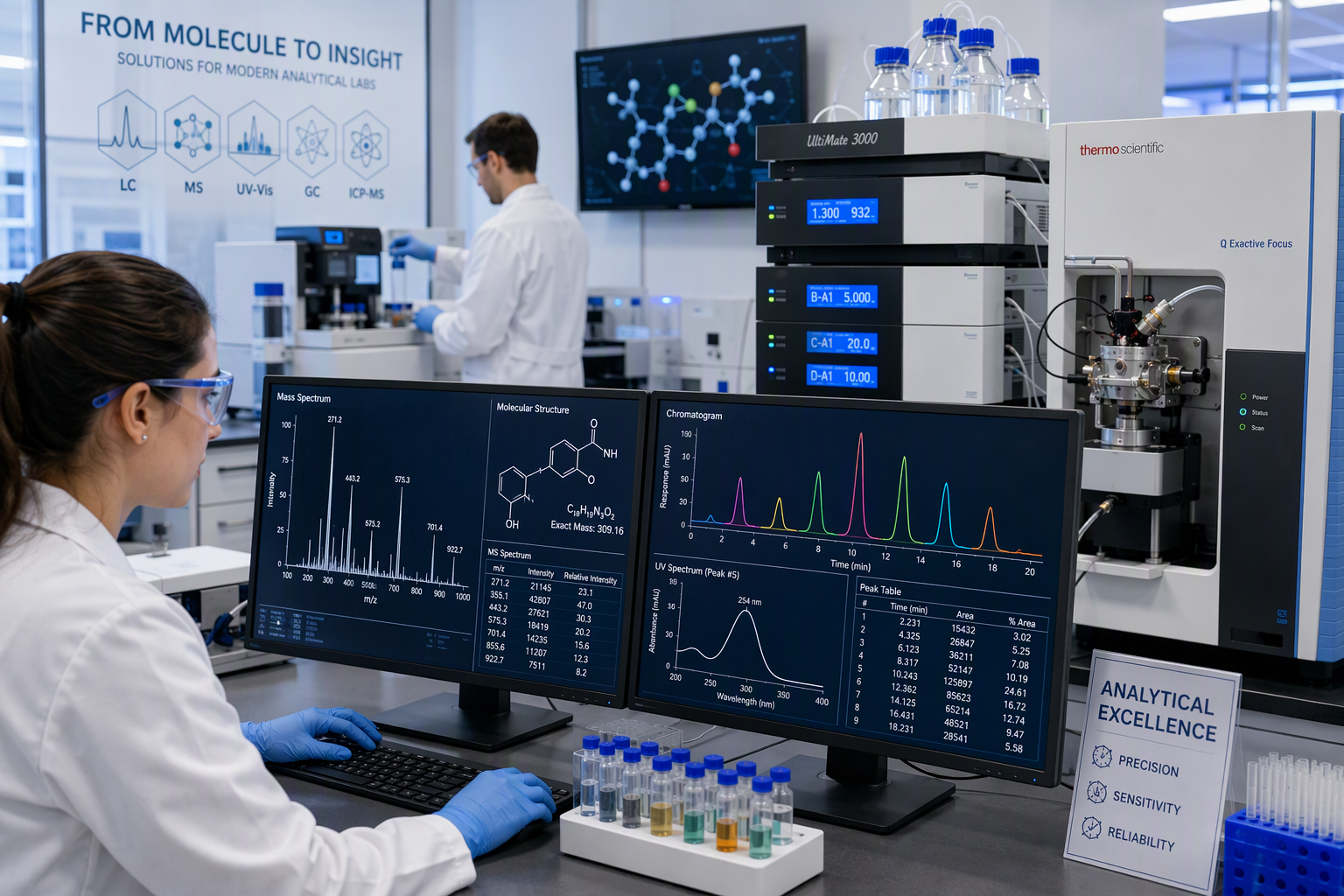
Spectroscopy and chromatography are widely used because they reveal different kinds of sample information. In spectroscopy, a sample interacts with electromagnetic radiation, helping scientists study identity, structure, or concentration. In chromatography, compounds are separated so they can be examined more clearly.
For example, infrared spectroscopy is useful when researchers need insight into molecular structures, especially in organic chemistry. Atomic emission spectroscopy helps identify elements by measuring light emitted from excited atoms. Gas chromatography and liquid chromatography are valuable when mixtures must be separated before analysis.
Spectroscopy helps measure how samples respond to electromagnetic radiation.
Infrared spectroscopy supports the study of molecular structures in organic compounds.
Atomic emission spectroscopy is used for elemental detection in different fields.
Gas chromatography and liquid chromatography separate substances for clearer testing.
Together, these methods improve laboratory accuracy by giving researchers cleaner, more detailed information.
Instrumentation for Elemental Analysis (e.g., ICP-MS, AAS, XRF)
When your goal is elemental analysis, instrument choice depends on the detail you need and the sample you are testing. Common methods of elemental analysis include ICP-MS, AAS, XRF, and combustion-based systems such as an elemental analyzer used for CHNS analysis.
Among these options, ICP-MS is often chosen when very low detection limits and high sensitivity matter most. Because it uses mass spectrometry, it is well suited for precise determination of elemental concentrations. AAS and XRF are also important tools, each serving different laboratory needs.
Instrument | Main Use |
|---|---|
ICP-MS | Measures very low elemental concentrations with high sensitivity and strong detection limits |
AAS | Determines elemental levels in samples where targeted metal analysis is needed |
XRF | Supports quick elemental analysis of materials without complex preparation in many cases |
Elemental analyzer | Performs CHNS analysis and helps define the elemental composition of a sample |
Each method offers strengths, so the best fit depends on the testing objective.
Applications in Research and Quality Control
Analytical instruments support work across pharmaceutical research, materials science, and environmental monitoring. They help laboratories measure samples, track process conditions, and study results that shape product quality and scientific progress.
You can see their value in water quality testing, chemical manufacturing, patient care, and drug development. Easy-to-use systems often improve workflow because researchers spend less time correcting errors and more time interpreting results. In both research institutions and production sites, these tools also support regulatory compliance. The next sections focus on measurement reliability and industrial value.
Role in Accurate Measurement and Data Reliability
Accurate analysis starts with accurate measurement. When instruments are well selected and properly calibrated, they can track variables such as pressure, temperature, flow rate, and composition with high accuracy. That gives researchers a stable foundation for laboratory decisions.
Another benefit is the speed of modern systems. Real-time readings allow scientists to see changes as they occur instead of waiting for delayed results. This helps them respond quickly, protect sample integrity, and improve the quality of collected data during testing.
Reliable data also supports a better understanding of complex phenomena. With astounding precision, scientists can compare samples, confirm trends, and reduce uncertainty in their work. Whether the setting is research, environmental checks, or quality control, dependable instruments make results more trustworthy and more useful.
Industrial and Regulatory Significance in Quality Control
In industry, analytical instrumentation is central to quality control because products and processes must stay within defined limits. Reliable testing helps teams confirm that chemical compounds meet expected standards and that systems operate safely from batch to batch.
This matters across different disciplines, including pharmaceuticals, food processing, wastewater treatment, and manufacturing. It also matters in settings that use medical devices or closed systems where pressure, level, and temperature must be carefully monitored to avoid performance problems.
Gas detectors help identify dangerous levels of gases, including carbon monoxide.
Calibration supports regulatory compliance by keeping measurements aligned with known standards.
Process instruments help manufacturers monitor conditions that affect product consistency.
When instruments are easy to use and maintain, research outcomes and production results often improve because fewer errors interrupt the workflow.
Conclusion
Analytical and elemental instruments play a pivotal role in enhancing the accuracy and reliability of scientific research and quality control across various industries. By understanding the different types of instruments, from spectroscopy to chromatographic techniques, researchers can make informed choices that drive innovation and ensure compliance with regulatory standards. These tools not only facilitate precise measurements but also contribute to breakthroughs that shape our understanding of complex phenomena. As you explore the world of analytical instruments, remember that the right choice can empower you to achieve greater clarity and insight in your work. If you're ready to elevate your research or quality control processes, consider reaching out for a free consultation to discover the best solutions for your needs.
Frequently Asked Questions
What factors should researchers consider when choosing an analytical instrument?
Researchers should match the instrument to the sample, goal, and workflow. Look at high sensitivity, detection limits, ease of calibration, and whether advanced features support your different processes. Cost and maintenance also matter, especially in labs where accuracy reign and consistent performance are essential.
Which analytical technique is best for elemental concentration analysis?
For precise elemental analysis, ICP-MS is often preferred because mass spectrometry offers very low detection limits and strong sensitivity. Atomic emission spectroscopy is also valuable for elemental work, while combustion analysis is useful when an elemental analyzer is needed for CHNS testing and routine composition checks.
How do advanced analytical instruments influence scientific discoveries?
Advanced instruments help scientists study various substances faster and with better consistency. Automation technologies reduce manual effort and support real-time monitoring, which improves decision-making. That leads to deeper insights, helps researchers investigate complex mysteries, and expands what laboratories can learn from each experiment or process.
Recent Posts
Analytical & Elemental Instruments: Empowering Accurate Analysis for Research, Quality Control, and Industrial Applications


How Viscosity, Rheometer & Texture Analyzer Shape Product Quality in R&D Laboratories?
How Laboratory Heating & Cooling Equipment Improves Accuracy and Efficiency in Testing?

The Role of Laboratory Safety & Environmental Monitoring in Risk Prevention
Health and Hygiene Ware Material Testing: Ensuring Quality, Safety, and Compliance
Advancements in Sample Preparation Equipment for R&D and Quality Control
Essential Biotechnology Lab Items and Their Applications in Modern Research

Optimum Solution– Laboratory & Analytical Instruments Supplier in Bangladesh
Optimum Solution is a leading supplier of laboratory equipment, analytical instruments, and process control solutions in Bangladesh. Since our inception, we have built a strong presence in the industry, serving research labs, universities, pharmaceutical companies, and quality control laboratories nationwide. Through continuous dedication to improving our products and services, Optimum Solution has earned the trust and loyalty of our valued clients.


