
-
 Analytical & Elemental Instruments
-
Biotechnology Lab Items
-
Cardboard and Box Factory Lab Equipment Solution
-
Cleanroom Solution
-
Consumables & Accessories
-
Dosing Pump for Chemicals
-
Electrochemistry & Titration
-
ETP -Effluent Treatment Plant
-
Feed Quality Laboratory
-
Food & Kitchen Lab Items
-
Hygiene Testing Equipment
-
Lab Furniture





Why Quality Lab Furniture Matters in Research and Industrial Labs?
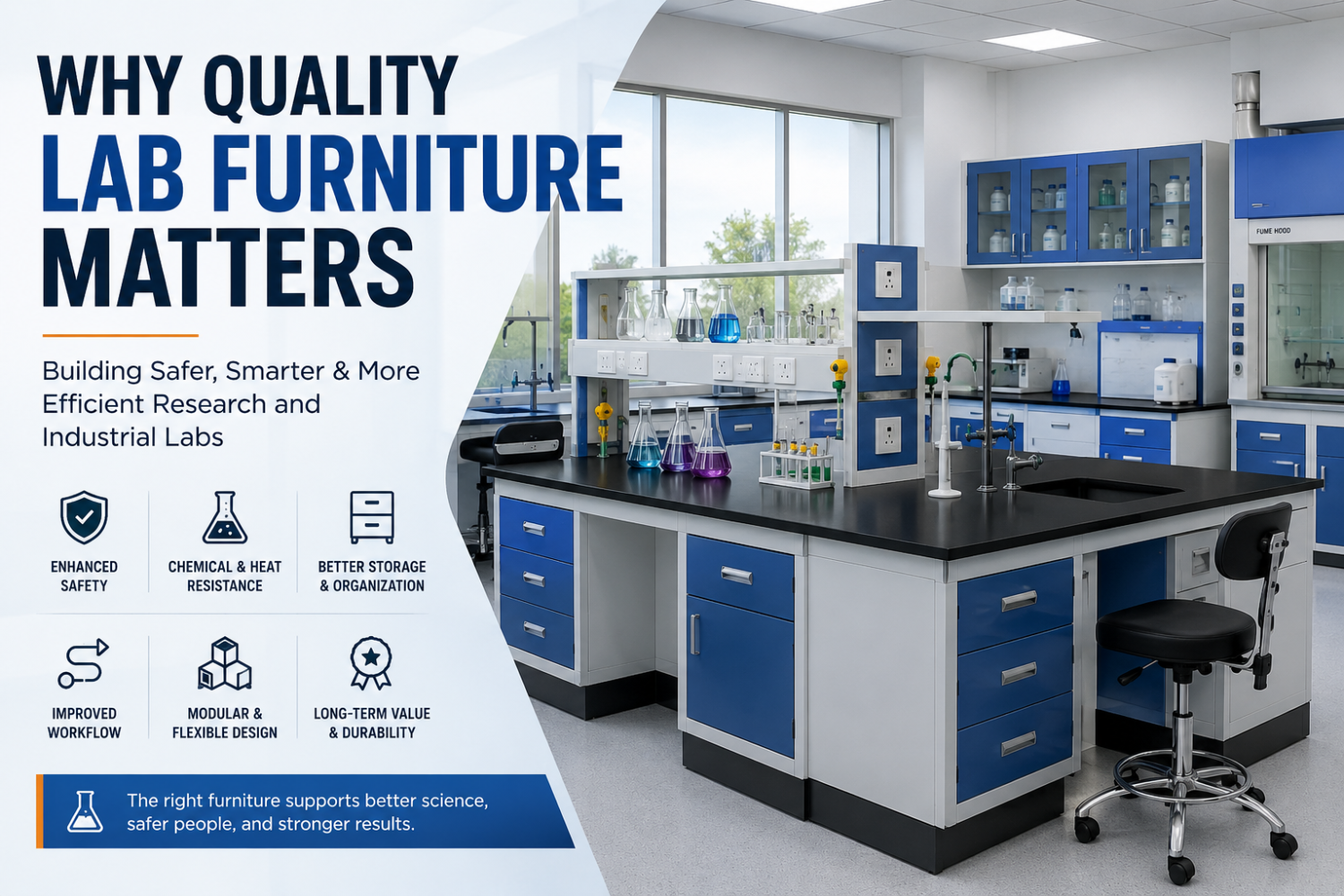
Laboratory furniture does more than fill a room. It shapes how your team works, moves, stores materials, and stays safe. In research environments, even small issues in lab space can slow work, create clutter, and increase daily stress. That is why the right benches, storage, seating, and utility access matter so much. Good laboratory furniture supports better organization, cleaner movement, and a more comfortable setup for long hours of work. It also helps your lab adjust when equipment, staff size, or testing needs change. If you are planning a new facility or upgrading an existing one, furniture choices should never be an afterthought. They play a crucial role in how well your lab performs, and the next sections explain why that matters in practical terms.
Key Highlights
Quality laboratory furniture supports safer work, smoother tasks, and better use of your laboratory space every day.
Strong laboratory furniture helps resist chemical exposure, heat, and heavy equipment, which lowers repair and replacement issues.
Good lab design improves movement, storage, and easy access to tools, utilities, and work surfaces in busy labs.
Built-in safety features and compliance with safety standards help protect lab personnel from accidents and hazardous substances.
Modular furniture systems give your lab furniture flexibility, so you can adapt layouts as research needs change.
Choosing the right materials, layout, and manufacturer can improve comfort, workflow, and long-term value in research and industrial settings.
The Role of Quality Furniture in Modern Laboratories
In modern laboratories, furniture affects almost every task. Your team depends on strong work surfaces, safe storage, and well-placed utilities to carry out daily work without delays. When laboratory furniture is designed well, it supports a logical flow, keeps essential items close, and reduces clutter that can interrupt testing or analysis.
Quality laboratory furniture is worth the investment because it improves both performance and protection. Better materials, smarter lab design, and built-in safety features help your lab handle chemical exposure, heavy use, and changing research demands. This means fewer disruptions, better comfort, and a lower chance of damage or accidents. Before looking at specific benefits, it helps to understand why strong furniture decisions are not optional in research or industrial settings.
Why Investing in High-Quality Lab Furniture is Essential
High-quality lab furniture gives your team a stable and dependable place to work. In research or industrial labs, people handle sensitive tasks, expensive tools, and materials that may be corrosive or hazardous. If benches, storage units, or seating are poorly made, small failures can quickly turn into bigger problems. Good quality furniture supports daily use without adding unnecessary risk.
Another reason to invest is flexibility. Labs rarely stay the same for long. Your research needs may change, new equipment may arrive, or your team may grow. Furniture that is built for unique needs can adapt more easily. Modular units, adjustable work areas, and smart storage options help your lab respond without costly redesigns. That keeps your operation practical and ready for future demands.
User comfort matters too. Many lab personnel work for long hours, often repeating the same tasks. Well-made lab furniture can reduce physical strain through better height, reach, posture support, and layout. This improves focus and helps people work more efficiently. When you invest in furniture that fits your work, your people, and your research needs, you create a stronger foundation for safety, accuracy, and long-term performance.
Key Challenges with Substandard Laboratory Furniture
Substandard laboratory furniture creates problems that show up fast. Weak frames, poor finishes, and low-grade work surfaces can fail under daily pressure. In a scientific or industrial lab, that is not just inconvenient. It can interfere with testing, slow staff, and increase the risk of damage to tools or samples. Poor furniture often leads to frequent replacements, which adds cost and disrupts operations.
The safety issue is even more serious. When furniture cannot handle chemical exposure, heat, or heavy equipment, the risk of accidents goes up. Damaged surfaces may trap spills. Unstable units may shift during use. Poor storage can also make hazardous materials harder to control. If your setup does not support safety regulations, your lab may face avoidable operational and safety concerns.
Common challenges include:
Weak materials that wear out quickly and force frequent replacements
Poor chemical resistance that can lead to surface damage after chemical exposure
Unstable units that increase the risk of accidents during routine work
Bad storage design that makes hazardous materials harder to organize and access safely
Limited compliance support for safety regulations and safe lab practices
Core Benefits of Quality Lab Furniture for Research and Industrial Labs
Quality laboratory furniture improves how your lab works from one end of the room to the other. Strong work surfaces, better storage, and useful layouts help lab personnel move faster and stay organized. When tools, samples, and utilities are placed well, tasks become easier to complete with fewer interruptions. That directly supports research efficiency.
Just as important, good furniture protects both people and equipment. Safety features, durable frames, and proper chemical resistance help your lab handle spills, harsh use, and demanding workflows. This reduces downtime and helps maintain a cleaner, safer workspace. In research and industrial labs, furniture is not just a fixture. It is part of your operating system. The next two sections look at how smart design improves workflow and how better furniture reduces risk in the lab environment.
Improved Research Efficiency Through Smart Design
Smart design improves workflow efficiency by making daily work more direct. When lab benches are planned around actual tasks, your team spends less time walking, searching, and adjusting. Frequently used items stay within reach, and utility points such as water, gas, or power can be positioned where they support the work instead of interrupting it. That saves time throughout the day.
The quality of furniture design also affects how well lab equipment fits into the space. Benches must support weight, resist damage, and allow enough room for proper use. If workstations are too cramped or poorly arranged, processes slow down and mistakes become more likely. A better setup creates smooth transitions between preparation, testing, recording, and storage.
Smart design also helps labs change when needs shift. Mobile or modular elements can support new equipment and new task flows without forcing a full rebuild. That matters in active research settings where projects evolve over time. When furniture works with your process instead of against it, your lab runs more efficiently, and your team can focus on results rather than workarounds.
Enhanced Safety and Risk Mitigation in the Lab Environment
Lab safety depends on more than rules and training. Your physical setup has a direct effect on risk. If furniture is poorly built or badly arranged, it can make spills harder to manage, block movement, and expose staff to avoidable hazards. Good furniture supports safer habits by keeping tasks stable, organized, and easy to perform.
Strong safety features make a real difference in labs that handle hazardous substances. Chemical-resistant surfaces, stable frames, and correctly placed storage help reduce exposure and control materials more effectively. Proper ventilation support is also important, especially where fume hoods or extraction systems are part of the workflow. Furniture should work with these systems, not crowd them or reduce access.
Important safety points to look for include:
Chemical-resistant work surfaces that support daily lab safety
Stable units that reduce tipping, shifting, and handling errors
Layouts that support proper ventilation and safe access to fume hoods
Designs that align with safety standards for safer movement and storage
When furniture supports safe practice, your team can work with more confidence and fewer avoidable risks.
Critical Features to Look for in Laboratory Furniture
Choosing laboratory furniture is easier when you focus on a few key considerations. Start with strength, chemical resistance, ease of cleaning, and stability under heavy use. Good material selection matters because different labs face different risks. Some need better moisture resistance, while others need surfaces that can handle harsh chemicals or frequent cleaning.
You should also check how well the furniture supports safety standards and industry standards. That includes proper utility integration, safe layouts, and compatibility with ventilation or extraction systems. Reputable furniture manufacturers usually provide better control over build quality, service, and long-term support. If you are selecting furniture for an industrial lab, the next sections will help you compare materials and understand the compliance features that matter most in Bangladesh and similar operating conditions.
Durability and Materials Suitable for Bangladesh’s Climate
Material choice has a direct effect on how long your laboratory furniture lasts. In Bangladesh, labs may deal with heat, moisture, and demanding daily use, so surfaces and frames must stay stable in tough conditions. Materials also need to handle cleaning, spills, and contact with harsh chemicals without breaking down too quickly. That is why durability should be one of your first checks.
Three materials appear often in reliable lab setups: stainless steel, epoxy resin, and phenolic resin. Each one serves a different purpose. Stainless steel is valued for easy cleaning, corrosion resistance, and hygienic use. Epoxy resin stands out in labs where strong chemical resistance matters most. Phenolic resin offers a balanced option for durable worktops and practical daily performance.
Here is a simple comparison:
Material | Main Strengths | Best Use |
|---|---|---|
Stainless steel | Easy to clean, resists rust, non-porous, durable | Pharmaceutical labs, clean areas, sinks |
Epoxy resin | Strong resistance to harsh chemicals and stains | Wet labs, chemical work surfaces, sinks |
Phenolic resin | Durable, chemical-resistant, practical for daily use | General laboratory furniture and worktops |
If your lab handles moisture, corrosive materials, or frequent cleaning, these materials are among the safest and most efficient choices.
Safety Standards and Industry Compliance
Safety standards are a core part of good lab planning. It is not enough for furniture to look strong. It must also support safe use, utility access, and correct placement of equipment. In industrial settings, furniture should fit the task, the room, and the materials being handled. That is how you support better lab safety from the start.
Industry standards also matter because they help guide how furniture works with extraction, utilities, and movement paths. Proper ventilation is especially important where fumes, vapors, or chemical processes are involved. If benches, cabinets, or equipment block airflow or reduce access to safety systems, the room becomes harder to manage safely. Good furniture should support the full environment, not just one task.
Look for features such as:
Compliance with safety regulations for hazardous work areas
Support for proper ventilation and safe access to extraction equipment
Safe integration of power, water, or gas connections
Layouts and materials that align with industry standards and routine lab safety
When furniture follows safety standards, your lab is easier to operate, easier to maintain, and safer for everyone using it.
The Impact of Furniture on Workflow and Productivity
Laboratory design shapes how quickly and smoothly work gets done. If your lab furniture is arranged well, staff can move between steps without wasting time. Clear work zones, smart storage, and easy access to utilities help reduce delays. Small details such as power outlets near benches and proper cable management can also keep workstations cleaner and safer.
Productivity improves when furniture supports both individual tasks and team activity. A well-planned setup makes it easier to share space, use equipment, and communicate without crowding. In modern labs, layout affects more than movement. It also influences how people collaborate, troubleshoot, and adapt to new projects. The next sections explain which design choices support smoother operations and how furniture layout can help teams work together more effectively.
Design Aspects That Streamline Lab Operations
Good furniture design removes friction from daily work. When benches, sinks, shelving, and utilities are placed with purpose, your team can move through tasks in a logical order. That improves speed and reduces confusion. Easy access to tools, samples, and supplies matters more than many labs expect. If people spend too much time reaching, searching, or walking, operations slow down.
Storage solutions also play a big role. Organized drawers, cabinets, and under-bench systems keep the lab space clean and reduce clutter on worktops. This makes equipment easier to find and safer to use. Better storage also helps reduce damage and unnecessary replacement costs, since items are less likely to be misplaced or left exposed.
Modular furniture adds another layer of efficiency. It allows your lab to adjust layouts without major construction when projects, team sizes, or equipment needs change. Mobile units and adaptable benching can support different workflows over time. That flexibility is useful in labs where demands shift often. When furniture design supports movement, storage, and access, it becomes a practical tool for smoother and more efficient lab operations.
How Furniture Layout Encourages Effective Collaboration
Furniture layout affects how people interact in shared work areas. In modern labs, teamwork often depends on how easily staff can gather around equipment, move between stations, and access shared tools. If the laboratory space is too rigid or crowded, communication suffers. A better lab design creates room for discussion, observation, and task sharing without blocking movement.
Modular systems are especially useful here. They make it easier to reshape areas for group work, teaching, analysis, or equipment changes. Shared benches, mobile units, and flexible workstations can help teams work side by side while still keeping order. Integrated data ports and utility access also support collaboration by letting people connect devices and review information where the work happens.
Layout features that support effective collaboration include:
Open paths that allow easy movement around shared equipment
Modular systems that can be adjusted for team size or project type
Shared work areas with nearby data ports for digital tools and records
Clear zoning that supports both focused work and group discussion
Flexible laboratory space that can respond to changing workflows
When layout supports teamwork, your lab becomes more productive and easier to manage.
Customizing Laboratory Furniture for Specialized Needs
Not every lab can use the same setup. Different laboratory environments handle different materials, processes, and equipment, so furniture should reflect those specific needs. A chemical lab, for example, may need chemical storage and resistant worktops, while a dry lab may focus more on ergonomics, cable routing, and equipment support.
That is where customizable solutions matter. Bespoke layouts and modular laboratory furniture help you build around the work instead of forcing the work to fit the room. This can improve comfort, storage, safety, and daily use. If your lab supports specialized research areas, custom planning often makes the space more effective from the start. The next sections explain the benefits of bespoke and modular setups, then look at how different disciplines call for different furniture choices.
Advantages of Bespoke and Modular Laboratory Setups
Bespoke and modular lab furniture gives you more control over how the lab works. Instead of using a one-size-fits-all layout, you can match furniture to your processes, team size, and equipment. This is helpful when your lab has unique needs or when work methods change often. A better fit usually means fewer workarounds and a more organized room.
Modular furniture systems are especially useful for future changes. Traditional fixed setups can be stable, but they are harder to adjust. Modular units allow reconfiguration with less disruption. That helps when new projects begin, equipment changes, or departments grow. For growing labs, this flexibility protects your investment and makes the space easier to manage over time.
Main benefits include:
Bespoke planning that fits unique needs and task flow
Modular lab furniture that can be moved or reconfigured more easily
Better use of space without major rebuilding
More practical support for changing staff, equipment, or research direction
In simple terms, customized furniture helps your lab work better now and stay useful later. That is a major advantage over rigid traditional setups.
Custom Solutions for Different Research Disciplines
Different research disciplines need different furniture features. Wet laboratories often require surfaces and storage units that can resist water, spills, and chemical contact. Chemical labs may need corrosion-resistant worktops, chemical storage cabinets, and support for extraction systems. In contrast, dry laboratories usually focus more on workstation comfort, computer use, and organized support for electronic tools.
Other laboratory environments have their own demands too. Pharmaceutical and cleanroom spaces often favor stainless steel because it is non-porous and easy to sanitize. Physics labs may need heavy-duty tables with vibration control. Electronics labs may require static-control surfaces and protected storage. In each case, the furniture must support the work without introducing new risks or delays.
The key point is simple: specialized research areas should not rely on generic setups. Your research needs and unique needs should shape the layout, materials, and storage approach. When furniture is matched to the discipline, the lab becomes safer, more efficient, and easier to maintain. That is why custom solutions are often the smarter choice for focused scientific work.
Choosing Materials for Laboratory Furniture
Material selection has a major effect on how your laboratory furniture performs. The right surface must handle daily use, cleaning, spills, and sometimes the weight of heavy equipment. In many labs, strength alone is not enough. You also need chemical resistance, moisture control, and a finish that stays reliable over time.
Ease of cleaning is another important factor. In busy labs, surfaces should be simple to sanitize and maintain without losing performance. Stainless steel, epoxy resin, and phenolic resin are often chosen because they meet these practical needs in different ways. The next two sections compare corrosion-resistant and chemical-proof options, then look at sustainable materials that can help reduce your lab’s environmental footprint without giving up function.
Corrosion-Resistant and Chemical-Proof Options
When your lab handles liquids, fumes, or aggressive substances, corrosion-resistant materials are a must. Furniture that breaks down under chemical contact can quickly become unsafe and expensive to replace. That is why chemical resistance should be a top priority for benches, sinks, and worktops in demanding laboratory areas.
Stainless steel is a strong option where hygiene, rust resistance, and easy maintenance are important. Epoxy resin is often preferred for spaces exposed to harsh chemicals because it offers excellent resistance to stains and chemical attack. Phenolic resin also performs well in many laboratory settings and provides a durable, practical surface for routine work. The best choice depends on what your lab handles most often.
Here is a simple material guide:
Material | Resistance Profile | Typical Benefit |
|---|---|---|
Stainless steel | Resists rust, stains, and regular cleaning wear | Easy cleaning and hygienic performance |
Epoxy resin | Handles harsh chemicals and staining very well | Strong chemical-proof work surfaces |
Phenolic resin | Good chemical resistance with durable daily use | Reliable general lab worktop option |
If safety, durability, and maintenance matter to your operation, these materials are among the most efficient choices for laboratory furniture.
Selecting Sustainable and Eco-Friendly Materials
Sustainability is becoming a bigger part of lab planning. Furniture choices can affect waste, replacement cycles, and the long-term environmental footprint of your facility. If materials wear out too fast, they create more disposal and more cost. Durable furniture reduces that problem by staying useful longer and lowering the need for repeated purchases.
Eco-friendly planning is not just about materials alone. It also includes reusable layouts and efficient systems. Modular pieces can help reduce waste because they can be adapted instead of thrown away when needs change. This is a practical way to support both operations and sustainability at the same time. Smart material selection helps your lab stay useful without creating unnecessary waste.
When reviewing options from furniture manufacturers, consider:
Durable materials that reduce replacement frequency
Eco-friendly or recycled input materials where practical
Modular designs that lower waste during future changes
Finishes and surfaces that support long service life and easy maintenance
A sustainable choice should still meet safety and performance needs. The best option is one that supports your work well while helping reduce long-term environmental impact.
Working with Trusted Lab Furniture Manufacturers in Bangladesh
The right manufacturer can make a big difference in how well your lab furniture performs. Good lab furniture manufacturers understand materials, workflow, safety needs, and the practical demands of scientific spaces. Their manufacturer expertise helps ensure that benches, storage, seating, and utilities are built to fit the job properly from the start.
For labs in Bangladesh, this matters even more because local service, climate awareness, and project support can affect long-term results. Reliable furniture manufacturers and local suppliers can also make communication, installation, and after-sales support easier. If you are comparing options for your facility, the next sections explain why technical experience matters and what to weigh when choosing between local and international partners, including providers such as Optimum Solution.
Importance of Manufacturer Expertise and After-Sales Support
Working with experienced furniture manufacturers improves the quality and fit of your lab setup. A knowledgeable supplier understands how laboratory workflows, materials, and safety needs come together. That means your benches, storage cabinets, and workstations are more likely to suit the actual tasks performed in the room. Strong manufacturer expertise often leads to better planning and fewer design mistakes.
After-sales support is just as important. Even good furniture may need adjustment, maintenance, or replacement parts over time. If your supplier is hard to reach after installation, small issues can become larger disruptions. Good support helps your lab stay functional with less downtime. This is especially useful when your operation depends on continuous use.
Key things to value include:
Proven manufacturer expertise in laboratory projects
Reliable after-sales support for maintenance and service
Consistent build quality in quality furniture and storage cabinets
Clear communication during design, delivery, and installation
In short, the right manufacturer does more than sell furniture. They help make sure your lab works well now and keeps working well later.
Evaluating Local vs International Suppliers: What to Consider
Choosing between local suppliers and international providers depends on your priorities. Local suppliers may offer faster communication, easier site visits, and better understanding of regional needs. That can be helpful during planning, delivery, and service. International suppliers may bring broader product ranges, but support can sometimes be slower or less direct if adjustments are needed after installation.
Your decision should also consider how the furniture will be used. Labs that run for long hours need dependable service and practical designs that are easy to maintain. Storage solutions, bench layouts, and utility access should fit your real workflow, not just a catalog image. Good furniture design must respond to your room size, staff movement, and equipment load.
Points to compare include:
Response time and accessibility from local suppliers
Technical range and specialization from lab furniture manufacturers
Fit of furniture design to your actual lab operations
Ongoing support for storage solutions, repairs, and changes
For many labs in Bangladesh, a trusted local partner with strong technical ability can offer better long-term value than a distant supplier with limited support access.
Conclusion
Investing in quality lab furniture is not just a matter of aesthetics; it significantly impacts research outcomes, safety, and efficiency in laboratory settings. High-quality furniture tailored to the specific needs of your lab can enhance workflow, promote collaboration, and mitigate risks associated with substandard options. Whether you’re considering bespoke solutions or seeking materials that withstand Bangladesh’s climate, prioritizing quality ensures your lab environment supports innovative research. Remember, the right lab furniture can pave the way for scientific success. If you’re ready to upgrade your space, don’t hesitate to reach out for expert guidance and explore tailored solutions that fit your requirements!
Frequently Asked Questions
How does lab furniture quality impact research outcomes?
Laboratory furniture affects research outcomes by shaping how smoothly your team can work. Quality furniture improves research efficiency through better organization, stronger work surfaces, safer storage, and easier movement between tasks. Good lab design also reduces clutter and physical strain, which helps staff stay focused during long procedures. When furniture supports the workflow instead of slowing it down, your lab can work more accurately, more safely, and with fewer interruptions that may affect results.
What are the risks of choosing low-quality lab furniture?
Low-quality lab furniture can wear out fast, creating frequent replacements and unnecessary downtime. It may also fail to support safety standards, especially in areas handling hazardous materials or chemical processes. Weak surfaces, unstable units, and poor storage can increase the risk of accidents and make spills or exposure harder to manage. In busy labs, these problems affect both safety and performance. Over time, cheap furniture often costs more because it does not provide the strength or reliability the lab needs.
What makes modular laboratory furniture a good option for growing labs?
Modular laboratory furniture works well for growing labs because it is easier to adjust when teams, equipment, or projects change. Modular systems allow you to reconfigure layouts without major rebuilding, which saves time and reduces disruption. This flexibility is useful when your lab has unique needs or expects future expansion. It also supports customizable solutions, so the space can be updated as research priorities shift. For growing labs, that means better long-term value and a setup that stays practical over time.
Recent Posts

How Viscosity, Rheometer & Texture Analyzer Shape Product Quality in R&D Laboratories?

How Laboratory Heating & Cooling Equipment Improves Accuracy and Efficiency in Testing?

The Role of Laboratory Safety & Environmental Monitoring in Risk Prevention

Health and Hygiene Ware Material Testing: Ensuring Quality, Safety, and Compliance

Advancements in Sample Preparation Equipment for R&D and Quality Control

Essential Biotechnology Lab Items and Their Applications in Modern Research


Understanding ETP – Effluent Treatment Plant and Its Importance in Industry
Optimum Solution– Laboratory & Analytical Instruments Supplier in Bangladesh
Optimum Solution is a leading supplier of laboratory equipment, analytical instruments, and process control solutions in Bangladesh. Since our inception, we have built a strong presence in the industry, serving research labs, universities, pharmaceutical companies, and quality control laboratories nationwide. Through continuous dedication to improving our products and services, Optimum Solution has earned the trust and loyalty of our valued clients.


