

The Total Cost of Ownership (TCO) for a Pharma QC Lab in Bangladesh: A 5-Year Breakdown
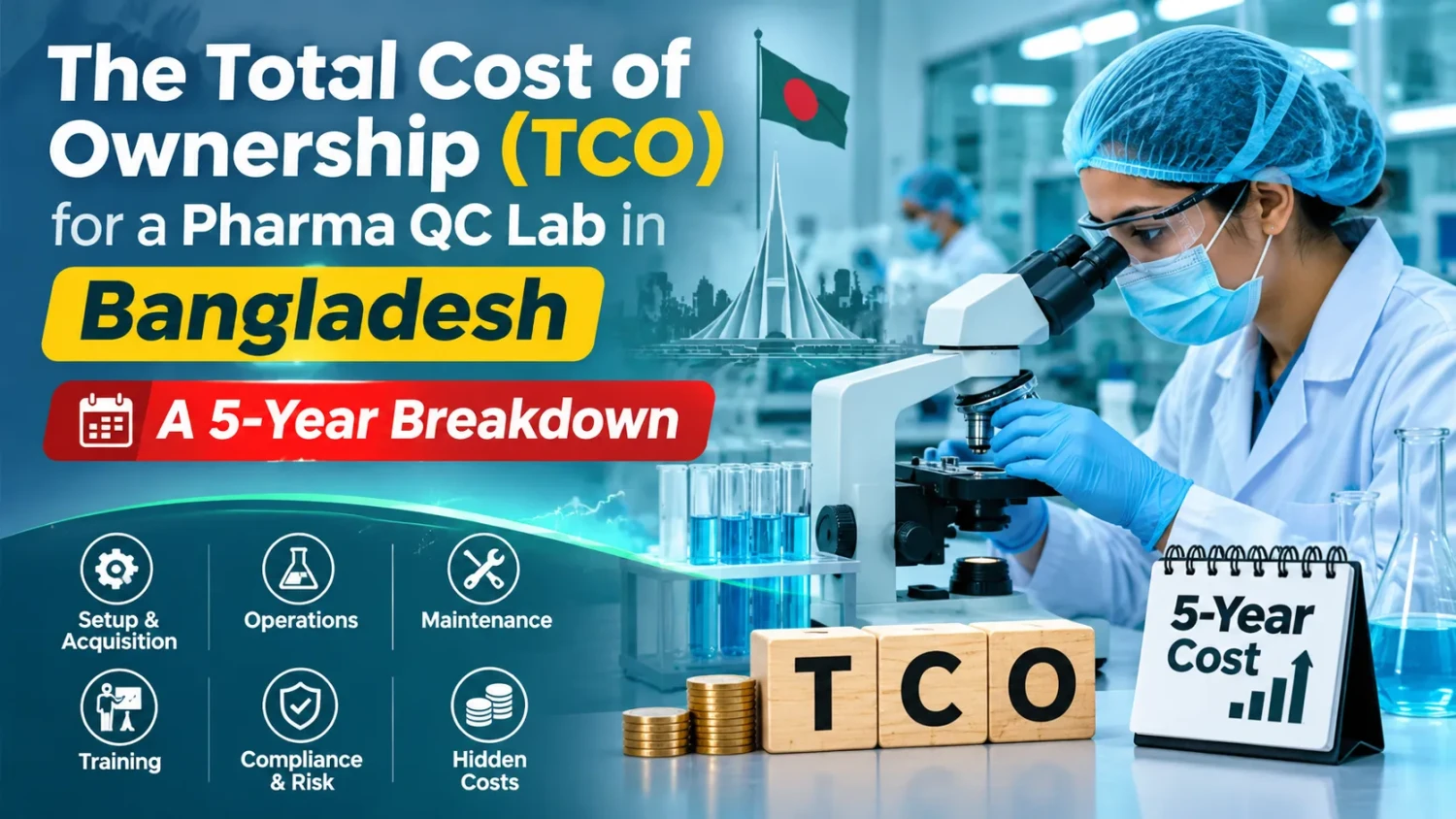
In the pharmaceutical industry, setting up a quality control lab can look straightforward if you focus only on the upfront bill. Yet the total cost of ownership is much broader. It includes acquisition, operation, maintenance, training, risk, and even end-of-life costs across the lab lifecycle. If you are planning a Pharma QC lab in Bangladesh, this fuller view helps you avoid surprises, compare options fairly, and understand what your lab may really cost over five years.
Key Highlights
A five-year total cost of ownership review goes far beyond the initial purchase price.
For a pharma quality control lab, major cost categories include setup, operations, maintenance, training, downtime, and risk.
Good TCO analysis supports cost savings and stronger operational efficiency over time.
Regulatory compliance and quality control needs can raise the real cost of ownership.
Hidden costs, such as support gaps and productivity losses, matter.
Continuous improvement helps labs control spending and plan smarter investments.
Understanding Total Cost of Ownership (TCO) in Pharma QC Labs
Total cost of ownership is a comprehensive approach that measures all relevant costs linked to a lab asset or service over its useful life. It looks past the purchase price and captures the real financial impact of a decision.
For Pharma QC labs, that means reviewing setup, operating, maintenance, training, downtime, and risk costs over five years. When you organize those costs clearly, you can make informed decisions, compare alternatives, and see which choice supports better long term value.
Definition and Key Concepts of TCO
At its core, total cost of ownership is a way to calculate the full total cost of an asset, not just its purchase price. For a Pharma QC lab, that means asking a simple question: what will this equipment, system, or setup really cost over five years?
A practical formula is straightforward: purchase price plus maintenance cost, operating cost, risk cost, training cost, downtime cost, and other relevant costs. Some organizations also include disposal costs and subtract any residual value at the end. This gives a clearer picture of the true cost of ownership.
To make the analysis stronger, many teams convert future expenses into present value using a discount rate linked to the cost of capital. This helps compare options fairly. A net present value view is useful when one option has a lower initial price but much higher costs later.
Why Assess TCO for QC Labs in Bangladesh?
If you are evaluating a QC lab in Bangladesh, TCO helps you move beyond the sticker price. That matters because quality control environments depend on stable operations, reliable support, and well-managed quality processes over time.
A structured TCO review supports informed decisions by showing direct and indirect costs across the full lifecycle. It can reveal where cost savings are possible, where risk is building, and where a cheaper option may create higher costs later through downtime, support issues, or quality failures.
This matters for pharmaceutical companies because better data improves investment decisions. Instead of guessing, teams can compare suppliers, assess lifecycle spending, and align lab choices with business needs. In simple terms, TCO turns scattered cost data into a practical planning tool.
Main Components of a 5-Year TCO for Pharma QC Labs
A five-year TCO for a Pharma QC lab usually starts with the initial purchase price and setup costs. From there, you add the spending needed to run and support the lab over time.
The main components often include acquisition, implementation, operational costs, maintenance, training, downtime, risk, and end-of-life considerations. When these cost categories are linked to quality management needs, you get a more realistic view of what the lab will require financially. The next two sections break those pieces down.
Initial Capital and Setup Costs
The first layer of TCO is the acquisition cost. This includes the purchase price of lab equipment and systems, along with freight, taxes or duties, installation, commissioning, and initial setup. These are the costs of getting the lab ready to operate.
For a Pharma QC lab tied to a manufacturing facility, setup can also include configuration and integration work. Even when two options look similar, one may need more work to become fully usable. That raises the real starting cost and can affect operational efficiency from day one.
Another point often missed is initial user training. While it may seem minor next to the equipment bill, it is still part of the setup phase. If you ignore these early expenses, your TCO model will understate the true financial commitment.
Recurring Operational Expenses
Once the lab is running, recurring operational costs usually become a major part of five-year spending. These include energy consumption, consumables, utilities, and routine operating labor needed to keep daily testing activities on track.
Over time, maintenance costs add another heavy layer. Preventive service, corrective repairs, spare components, calibration, updates, and technical support all affect the budget. In many cases, these ongoing costs can outweigh the initial purchase price, especially when equipment is complex or heavily used.
Supply chain issues also influence costs. If parts or support take longer to arrive, downtime rises and operations suffer. That is why operational and maintenance spending should never be treated as secondary. They are central to a realistic TCO analysis for a QC lab.
Equipment and Technology’s Role in TCO
Equipment choices shape the long term cost of ownership more than many buyers expect. The right equipment can improve quality assurance, reliability, and budget predictability across the lab lifecycle.
Selection criteria should cover more than basic performance. You also need to think about support, maintenance, training, and future technology upgrades. A lower upfront option may create higher costs later, while a stronger fit can support better control over spending. The following sections explain how these choices affect TCO.
Selection Criteria for QC Lab Equipment
Choosing QC lab equipment should never depend on price alone. A solid TCO review looks at reliability, support burden, lifecycle needs, and how the equipment affects quality costs over time. If a system is hard to maintain or often unavailable, appraisal costs and hidden losses can rise quickly.
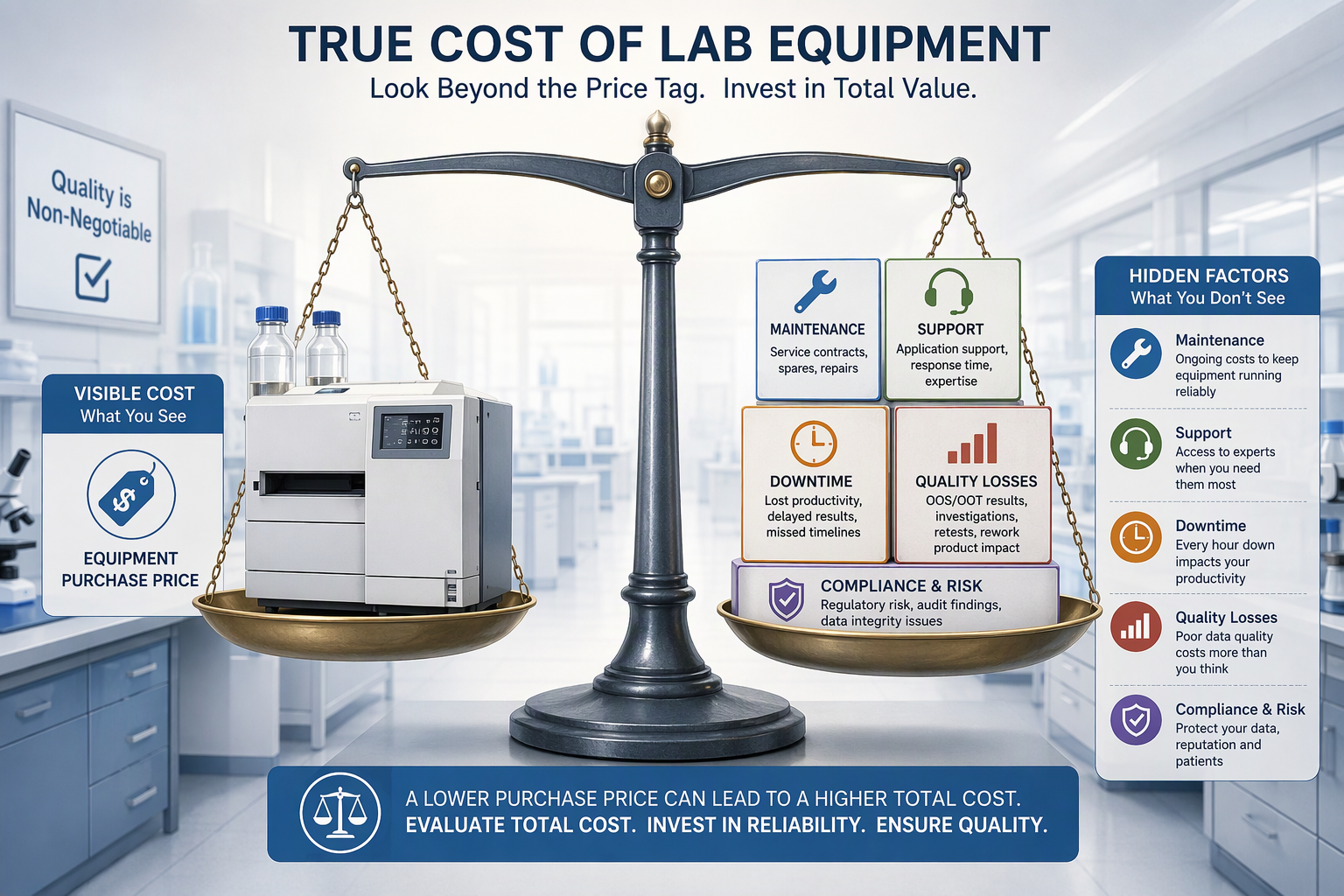
You should also assess supplier support conditions. Spare parts access, service response, and overall lead time matter because delays increase downtime and disrupt quality assurance work. This is especially important when you depend on consistent lab output.
Key selection checks include:
Availability of spare parts and technical support
Expected maintenance effort and downtime risk
Lead time for installation, service, and replacements
When you compare these factors together, you get a better picture of the real cost of ownership, not just the invoice amount.
Technology Upgrades and Associated Costs
Technology decisions do not end after purchase. Over five years, many labs face upgrade needs related to software, systems integration, support tools, or performance improvements. These costs belong in your cost categories from the start.
A practical TCO model should include both one-time and recurring upgrade expenses. That may involve updates, added technical services, or changes needed to keep systems effective and manageable. If you skip this step, the budget may look better on paper than it does in practice.
There is also a strategy angle here. Labs focused on continuous improvement often plan technology changes in advance and pair them with preventive maintenance. When those future costs are modeled in present value terms, you can compare options more clearly and avoid poor short term decisions.
Regulatory Compliance and Its Impact on TCO
Regulatory compliance has a direct effect on QC lab spending. It shapes how labs document work, maintain systems, and support quality assurance over the full asset lifecycle.
For TCO, that means certification, audits, training, documentation, and compliance-related controls should be included from the start. Regulatory requirements are not side costs. They are a core part of the budget. The next sections look at how Bangladeshi and international expectations can affect the real cost of running a Pharma QC lab.
Meeting Bangladeshi and International Regulations
Pharma QC labs operate in a regulated part of the life sciences sector, so regulatory requirements influence more than paperwork. They affect the way labs select systems, train staff, maintain records, and manage ongoing support.
That has a clear TCO impact. A lab must budget for the resources needed to keep quality processes consistent and auditable over time. If equipment or workflows are not well suited to regulatory demands, the lab may face more rework, more oversight effort, and higher operating pressure.
There is also a link to production processes. QC labs support broader manufacturing decisions, so weak compliance control can affect performance beyond the lab itself. In TCO terms, regulation changes the real cost profile by adding structure, oversight, and risk management needs to everyday operations.
Costs of Certification, Audits, and Documentation
Certification and audit readiness create real and recurring expenses in a QC lab. These are part of appraisal costs and should be treated as a normal element of the cost of quality, not as occasional surprises.
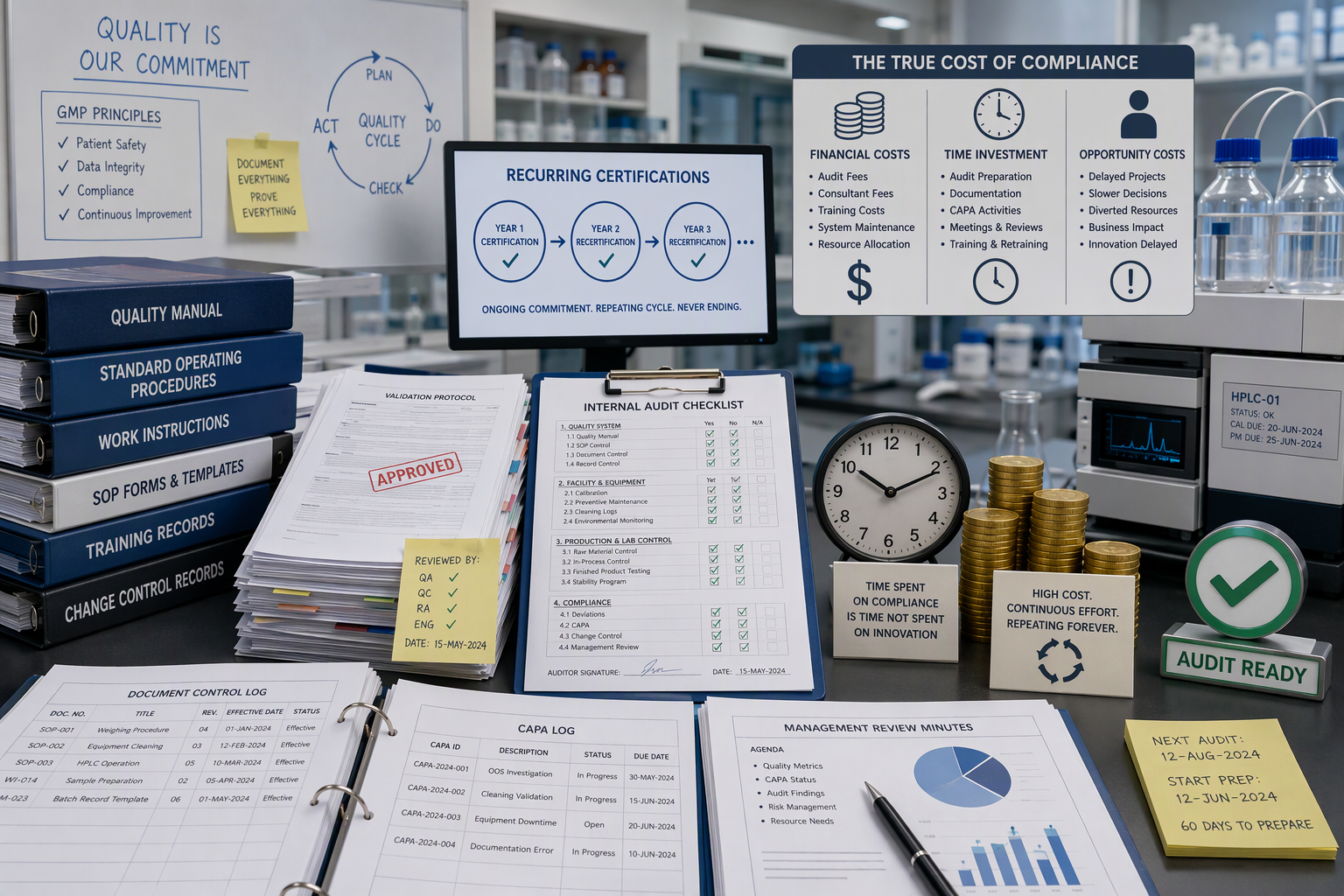
Documentation is another major piece. Quality management systems rely on controlled records, evidence trails, and consistent updates. That means time, labor, and support resources must be reflected in a five-year TCO model.
Common compliance-related cost items include:
Audit preparation and certification activities
Documentation control and record maintenance
Staff time spent on quality management tasks
When these areas are ignored, the TCO picture becomes incomplete. A lab may look affordable at purchase but costly in operation once compliance work is added back into the analysis.
Uncovering Hidden and Indirect Costs
Hidden costs can quietly change the economics of a QC lab. These indirect cost categories often sit outside the purchase order, yet they still affect budgets and performance.
Examples include downtime, support delays, training gaps, and the cost of poor quality. Even missed preventive maintenance can trigger much higher costs later. If you want a reliable TCO model, you need to capture these less visible items early. The next sections focus on two of the biggest sources of hidden spending.
Maintenance, Downtime, and Support
Maintenance expenses do more than keep instruments running. They shape uptime, reliability, and service continuity across the lab. A five-year TCO should include preventive work, corrective maintenance, service contracts, updates, and technical support.
Downtime is one of the most common hidden costs. When equipment is unavailable, productivity drops and schedules slip. In some cases, support delays or missing parts can make a short issue much more expensive. That damages operational efficiency and can create pressure across connected lab activities.
There is also a quality risk. Repeated breakdowns or unstable systems increase the chance of quality failures and unplanned work. That is why maintenance and downtime are not just technical concerns. They are core financial drivers in the total cost of ownership.
Staff Training, Turnover, and Productivity Losses
People-related costs are easy to overlook in lab budgeting. Yet staff training, learning time, and turnover can materially raise the five-year cost of ownership. These items belong in prevention costs because they influence stable performance and fewer future mistakes.
A well-run lab usually needs structured staff training and ongoing support for continuous improvement initiatives. If knowledge is weak or turnover is high, productivity falls and error risk grows. That can lead to repeated work, delays, and higher operating strain.
Often-missed workforce cost items include:
Initial and recurring staff training time
Productivity losses during onboarding or system changes
Cost impact of employee turnover and re-learning
When these hidden costs are measured, TCO becomes more realistic and more useful for planning.
Optimizing and Reducing the 5-Year TCO in QC Labs
Reducing TCO does not mean cutting corners. It means making smarter choices across the full lab lifecycle. With the right best practices, you can improve control over spending while protecting lab performance.
The biggest gains usually come from efficient resource allocation, better supplier comparison, and stronger planning around maintenance and support. These actions can create meaningful cost savings without weakening quality. The next two sections show practical ways to lower five-year ownership costs in a QC lab environment.
Strategies for Efficient Resource Allocation
Better resource allocation starts with complete cost visibility. If you know where money goes across the value chain, you can compare alternatives with more confidence and avoid decisions based only on upfront price.
A good process groups spending into clear cost categories, then tests how each option performs over time. Looking at present value is useful here because it shows the true weight of future operating, support, and risk expenses. This helps you choose solutions that are cheaper over five years, not just cheaper today.
Practical steps include:
Standardize cost categories before comparing suppliers
Include direct and indirect lifecycle costs in reviews
Assess options using present value, not only initial price
These habits make TCO analysis stronger and improve long term budgeting.
Leveraging Preventive Maintenance and Digital Solutions
Preventive maintenance is one of the clearest ways to reduce higher costs later. Regular servicing lowers the risk of breakdowns, limits downtime, and helps labs avoid expensive corrective work that interrupts daily operations.
Digital solutions can strengthen that effect when they improve visibility and control. TCO thinking is often used in digital transformation planning because software, platforms, and support tools should be assessed on full lifecycle cost, not just the initial bill. That same logic applies in QC labs.
When preventive maintenance and digital solutions are planned together, operational efficiency improves. Labs can track support needs earlier, organize resources better, and support continuous improvement without reacting to every problem at the last minute. Over five years, that can make a meaningful difference to total cost.
Sample 5-Year TCO Breakdown for a Pharma QC Lab in Bangladesh
A sample tco analysis helps turn theory into something practical. The goal is not to predict one exact budget, but to show how the cost of ownership can be organized into a clear expense overview for five years.
Below is a simple text table showing major cost areas used in cost calculation. It reflects the lifecycle approach discussed throughout this article.
Year-by-Year Expense Overview
A year-by-year expense overview makes TCO easier to understand. In most cases, Year 1 carries the largest burden because it includes the purchase price and setup. Later years tend to shift toward operational costs, maintenance, support, and compliance work.
That pattern matters because many buyers underestimate recurring spend. Looking only at the first invoice hides how costs accumulate across the remaining years. A simple five-year view makes those trends visible and supports better planning.
If needed, you can convert these annual costs into net present value for a more accurate comparison between alternatives.
Illustrative Cost Calculation Example
A simple cost calculation starts with the purchase price, then adds all expected costs over the five-year period. These usually include operating, maintenance, training, downtime, risk, and any end-of-life charges, minus residual value if the asset can be sold.
In practice, a tco calculator can be a spreadsheet with fields for each cost category. You define the time horizon, add one-time and recurring expenses, and model likely future costs as carefully as possible. This gives you a nominal five-year ownership figure.
To improve the comparison, discount future cash flows into present value using a chosen discount rate. That step helps when one option is cheaper upfront but more expensive to run. The result is a clearer basis for procurement choices and smarter long term evaluation.
Using TCO Insights for Strategic Decision Making
TCO is not only a costing method. It is a decision tool that helps teams understand the financial impact of setting up and running a QC lab over time. That wider view improves planning and reduces budget surprises.
When you compare options on lifecycle cost, you make more informed decisions about equipment, support models, and future spending. This is especially useful for investment decisions where the lowest upfront price may not deliver the best long term result. The next sections show how this supports strategy.
Investment Evaluation and ROI in QC Labs
TCO improves investment decisions by showing the full economic picture, not just the opening cost. For pharmaceutical companies, that means lab choices can be reviewed against operating burden, support needs, downtime risk, and likely future spending.
This also helps with ROI thinking. While TCO focuses on costs, it can be paired with financial tools such as net present value to compare alternatives more clearly. If one option costs more upfront but creates cost savings through lower maintenance and fewer disruptions, it may support stronger financial performance over time.
That is the real value of TCO in investment planning. It helps companies avoid short term decisions that look cheap but prove expensive later. Instead, teams can evaluate options with better data and choose what fits long term business goals.
Planning for Future Growth and Innovation
A useful TCO model does more than explain current costs. It helps you prepare for future growth by showing how spending may change as the lab evolves over time. That is important when equipment, support needs, or technology requirements are likely to shift.
It also supports innovation decisions. New tools may seem affordable at the start, but long term success depends on operating cost, upgrade demands, maintenance effort, and training impact. TCO brings those questions into the decision before money is committed.
A growth-focused TCO review should consider:
Expected technology changes over the long term
Resource needs for continuous improvement
Support and training required for innovation adoption
This leads to steadier planning and fewer surprises as the lab expands.
Conclusion
In summary, understanding the Total Cost of Ownership (TCO) for a Pharma QC lab in Bangladesh is crucial for strategic decision-making. By breaking down both visible and hidden costs over a five-year period, you can better allocate resources and optimize operations. This comprehensive approach not only aids in evaluating investments but also prepares your lab for future growth and innovation. With the right strategies, you can navigate the complexities of TCO and ensure that your QC lab remains competitive in the ever-evolving pharmaceutical landscape. If you're ready to dive deeper into TCO insights and improve your lab's efficiency, don’t hesitate to get in touch for a free consultation!
Frequently Asked Questions
What are the most overlooked costs when calculating TCO for pharma QC labs?
The most overlooked items are usually hidden costs and indirect costs, such as downtime, staff training, support delays, productivity loss, and unplanned maintenance expenses. Many teams also miss the cost impact of quality failures, which can raise real ownership costs even when the initial purchase looks attractive.
How does TCO help pharmaceutical companies in Bangladesh make better investment decisions?
TCO improves investment decisions by showing the full financial impact of a lab choice across its lifecycle. This helps companies make informed decisions, compare alternatives fairly, plan continuous improvement, and identify cost savings that would stay hidden if they looked only at upfront price.
Is there a recommended process for budgeting TCO over five years for a QC lab?
Yes. Set a five-year budget horizon, define all lifecycle cost categories, gather data with the procurement team, and build a cost calculator or spreadsheet. Then model one-time and recurring costs, and where useful, convert future spending to present value for a clearer long term comparison.
Recent Posts
The Total Cost of Ownership (TCO) for a Pharma QC Lab in Bangladesh: A 5-Year Breakdown
Understanding Pharmaceuticals Tablet Testing: Methods, Standards, and Instruments
Understanding Process Control Instruments and Their Role in Industrial Efficiency
How Petroleum Testing Instruments Improve Fuel Quality and Compliance Standards?

Analytical & Elemental Instruments: Empowering Accurate Analysis for Research, Quality Control, and Industrial Applications


How Viscosity, Rheometer & Texture Analyzer Shape Product Quality in R&D Laboratories?

How Laboratory Heating & Cooling Equipment Improves Accuracy and Efficiency in Testing?
Optimum Solution– Laboratory & Analytical Instruments Supplier in Bangladesh
Optimum Solution is a leading supplier of laboratory equipment, analytical instruments, and process control solutions in Bangladesh. Since our inception, we have built a strong presence in the industry, serving research labs, universities, pharmaceutical companies, and quality control laboratories nationwide. Through continuous dedication to improving our products and services, Optimum Solution has earned the trust and loyalty of our valued clients.


