
-
 Analytical & Elemental Instruments
-
Biotechnology Lab Items
-
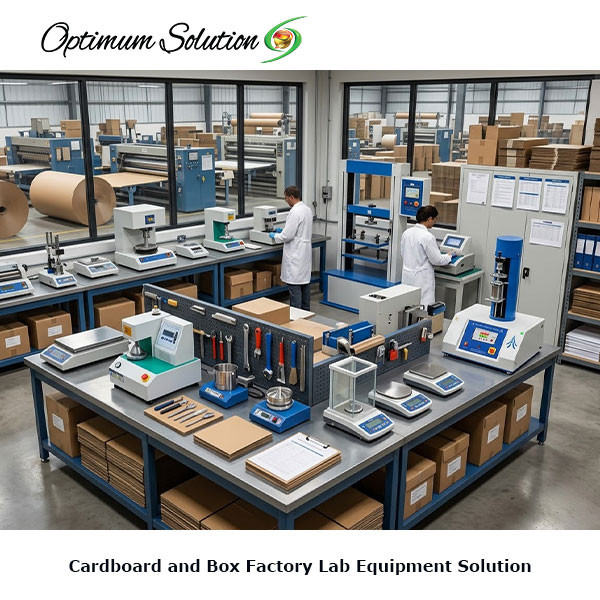
Cardboard and Box Factory Lab Equipment Solution
-
Cleanroom Solution
-
Consumables & Accessories
-
Dosing Pump for Chemicals
-
Electrochemistry & Titration
-
ETP -Effluent Treatment Plant
-
Feed Quality Laboratory
-
Food & Kitchen Lab Items
-
Hygiene Testing Equipment
-
Lab Furniture



What is an Optimum Solution in Operation Research? A Guide
Have you ever wondered how large companies make big decisions, like how to ship products most efficiently or schedule employees for maximum coverage? They often turn to a field called operations research (OR). This powerful discipline uses a scientific approach to solve complex problems and support decision-making. At its core, OR is all about finding the "best" way to do something. This "best" way is known as the optimal solution. By applying various optimization techniques, businesses can navigate challenges and achieve their goals, whether that means boosting profits or cutting down on waste. This guide will walk you through what an optimum solution is and why it's so important in today's data-driven world.
Key Highlights
Here are the key takeaways from our guide on finding the optimum solution in operations research:
An optimum solution in operations research represents the best possible result for a problem, like maximizing profit or minimizing cost.
Identifying an optimal solution involves using optimization techniques and mathematical models to analyze all possible choices.
Finding the best solution is crucial for smart resource allocation and making effective strategic decisions in business.
Operations research uses various optimization methods, such as the Simplex Method and algorithms, to solve complex problems.
The quality of the optimum solution depends heavily on accurate data and the specific constraints of the problem.
There's a key difference between a feasible solution (one that works) and an optimal solution (the best one that works).
Defining an Optimum Solution in Operations Research
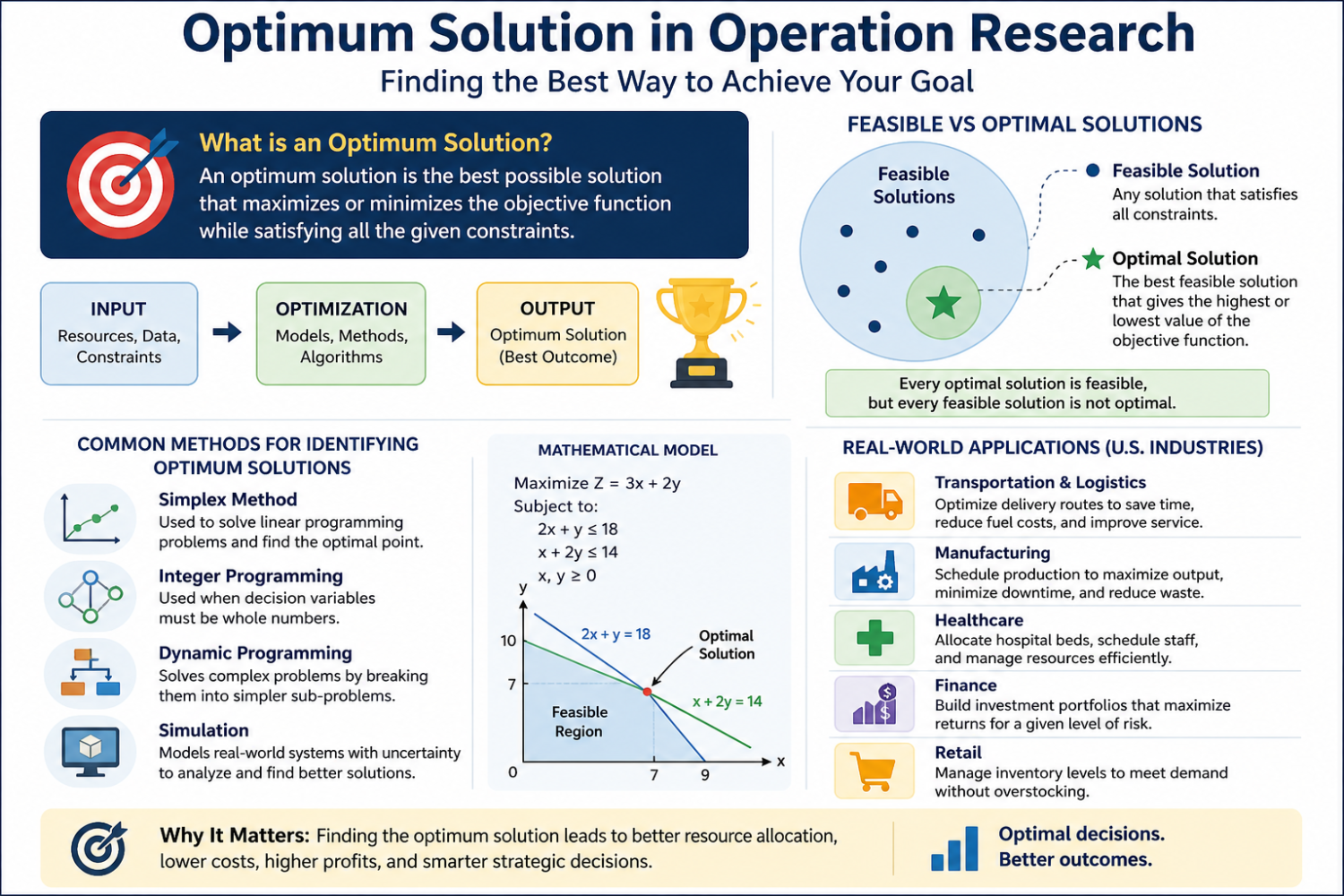
So, what exactly is an optimum solution in the context of operations research? Think of it as the single best possible solution to an optimization problem. Every OR problem has an "objective function," which is just a mathematical way of stating your goal. This goal could be to maximize something good, like revenue, or minimize something bad, like expenses. An optimum solution is the choice that achieves this goal perfectly under a given set of constraints or rules.
To identify this best possible solution, you can't just guess. It requires a structured approach. Operations research provides the tools to systematically evaluate all potential answers and pinpoint the one that delivers the best outcome for your objective function. It’s not just about finding a solution that works; it's about finding the one that works better than all the others. Now, let's look closer at what makes a solution "optimal."
Meaning and Core Characteristics of Optimum Solution
An optimum solution is the peak of efficiency in an optimization problem. It's the point where your objective function is either at its highest possible value (maximization) or its lowest possible value (minimization), without violating any of the problem's rules or constraints. For example, if a company wants to maximize profit, the optimum solution would be the production level and pricing strategy that yields the most money.
The search for an optimum solution is one of the key characteristics of operations research. This pursuit of the best outcome is what distinguishes OR from other forms of decision-making that might settle for a "good enough" answer. It relies on a quantitative and scientific approach, using data and mathematical models instead of just intuition. This focus on optimization ensures that decisions are as effective and efficient as possible.
Ultimately, the core of an optimum solution lies in its relationship with the objective function. It is the definitive answer that satisfies the goal you set out to achieve. The characteristics of operations research—being systems-oriented, data-driven, and focused on optimization—all come together to help you find this single best answer among many possibilities.
Feasible vs Optimal Solutions Explained
When you're solving a problem in operations research, you'll come across two important terms: feasible solutions and optimal solutions. It's easy to confuse them, but they represent very different things. Understanding the distinction is fundamental to grasping the characteristics of operations.
A feasible solution is any solution that satisfies all the constraints of a problem. Think of it as a valid or possible option. For a given problem, there can be many, sometimes even infinite, feasible solutions. For example, if a delivery truck has a weight limit, any combination of packages that doesn't exceed that limit is a feasible solution.
The optimal solution, however, is a step above. It's not just any feasible solution; it's the best one. Among all the possible solutions that work, the optimal solution is the one that maximizes or minimizes your objective.
Feasible Solution: Any solution that meets the basic requirements and constraints.
Optimal Solution: The single best feasible solution that achieves the ultimate goal (e.g., lowest cost, highest profit).
Relationship: Every optimal solution must first be a feasible solution, but not every feasible solution is optimal.
Using optimization techniques, operations research helps you sift through all the feasible options to find that one, singular optimal solution.
Importance of Finding the Optimal Solution
Finding the optimal solution isn't just an academic exercise; it has a massive impact on a company's success. In a competitive world, "good enough" often isn't enough. Striving for the optimum solution helps organizations make the smartest strategic decisions, ensuring they get the most out of their available resources. This focus on efficiency is one of the key characteristics of operations research.
Whether it's minimizing transportation costs, scheduling staff effectively, or managing inventory, the optimal solution directly translates to improved productivity and a stronger bottom line. Effective resource allocation is critical, and OR provides a scientific way to ensure that time, money, and materials are used in the best way possible. This leads to reduced waste and enhanced performance across the board. The next sections will explore how this pursuit of optimality influences decision-making and is applied in the real world.
Impact on Decision Making and Outcomes
The concept of optimality is at the very heart of decision-making in operations research. Instead of relying on gut feelings or past experiences alone, OR equips managers with tools for quantitative analysis. This allows them to base their strategic decisions on hard data and mathematical evidence, which significantly reduces risk and uncertainty. By aiming for the best possible outcome, you can transform complex operational problems into manageable challenges with clear solutions.
When you use optimization techniques, you are essentially creating a roadmap to success. For instance, a retail company can determine the perfect inventory level that avoids stockouts while minimizing storage costs. A factory can create a production schedule that maximizes output without overworking its machinery. These decisions are not just minor tweaks; they can have a profound impact on profitability and customer satisfaction.
Ultimately, the search for an optimal solution changes how organizations think. It fosters a culture of efficiency and continuous improvement. It encourages leaders to ask, "Is this the absolute best we can do with what we have?" By answering this question with data-driven methods, businesses can solve operational problems more effectively and achieve consistently better outcomes.
Real-World Applications in U.S. Industries
The quest for the optimum solution isn't confined to textbooks. It's actively used across various fields in the U.S. to solve real-world optimization problems. Operations research models are essential tools for industries looking to gain a competitive edge. From airlines to hospitals, organizations rely on these methods to improve efficiency and make smarter choices.
For example, airlines use optimization techniques for complex tasks like flight scheduling, crew assignments, and fuel management. By finding the optimal routes and schedules, they can save millions of dollars in fuel costs and reduce delays. In the manufacturing sector, OR helps with production planning and resource allocation to ensure that factories run as smoothly as possible. This leads to less waste and faster delivery times.
These applications demonstrate how powerful finding the optimum solution can be. The table below highlights a few examples of how different industries apply operations research to achieve their goals.
Industry | Application of Operations Research |
|---|---|
Transportation & Logistics | Optimizing delivery routes to save time and fuel costs. |
Manufacturing | Scheduling production to maximize output and minimize machine downtime. |
Healthcare | Allocating hospital beds and scheduling staff for efficient patient care. |
Finance | Creating investment portfolios that maximize returns for a given level of risk. |
Retail | Managing inventory levels to meet demand without overstocking. |
Common Methods for Identifying Optimum Solutions
So, how do experts actually find the optimum solution to an optimization problem? They use a variety of proven optimization methods that are designed to handle different types of challenges. These methods rely on the use of mathematical models and powerful algorithms to process complex information and identify the best possible course of action.
These tools take a real-world problem, translate it into a mathematical framework, and then systematically search for the solution that best meets the stated objective. Because many of these problems involve a huge number of variables and constraints, solving them by hand is often impossible. That's where computers and specialized algorithms come in, doing the heavy lifting to find the optimal result efficiently. Let's explore some of these specific approaches in more detail.
Role of Mathematical Models and Algorithms
Mathematical models are the foundation of optimization in operations research. A mathematical model is a simplified representation of a real-world problem using equations and variables. It captures the essential elements: the objective you want to achieve (like maximizing profit), the decisions you can make (like how much to produce), and the constraints you must follow (like limited resources). This model provides the structure needed to analyze the problem systematically.
Once the model is built, algorithms come into play. An algorithm is a step-by-step procedure or set of rules used to solve the model and find the optimum solution. Different optimization methods use different algorithms, each suited for specific types of problems. For instance, some algorithms are great for problems where relationships are linear, while others can handle uncertainty using probability.
The influence of fields like machine learning is also growing, providing new ways to build more accurate models and develop smarter algorithms. The effectiveness of these optimization methods depends on the quality of the mathematical model and the data used. Factors like inaccurate data or poorly defined constraints can significantly influence the final solution, highlighting the importance of careful model-building.
Simplex Method and Other Approaches
Among the many optimization techniques, the Simplex Method is one of the most famous and widely used algorithms, especially for linear programming problems. Linear programming deals with optimizing a linear objective function, subject to a set of linear constraints. The Simplex Method provides a systematic way to navigate the corners of the feasible region to find the optimal solution.
How does it work? The algorithm starts at an initial feasible corner point and checks if any adjacent corner provides a better value for the objective function. If it does, it moves to that new corner and repeats the process. It continues this "hill-climbing" approach until it reaches a corner where no adjacent point offers a better solution. At that stage, the optimal solution has been found.
Of course, the Simplex Method is just one tool in the OR toolbox. There are many other approaches used for different kinds of optimization problems:
Integer Programming: Used when decision variables must be whole numbers (e.g., you can't build 2.5 cars).
Dynamic Programming: Breaks a complex problem into smaller, simpler sub-problems and solves them sequentially.
Network Flow Algorithms: Applied to problems involving networks, like transportation or communication systems.
Simulation: Used to model and analyze complex systems with uncertainty, helping to find robust solutions.
Conclusion
In summary, understanding the concept of an optimum solution in operations research is crucial for effective decision-making and achieving desired outcomes. By distinguishing between feasible and optimal solutions, you empower yourself to tackle complex problems systematically. The application of mathematical models and algorithms, such as the Simplex Method, illustrates the practical methods for identifying these solutions in real-world scenarios. By embracing these strategies, you not only enhance your analytical skills but also contribute significantly to operational efficiency across various industries. If you're ready to take the next step, don’t hesitate to reach out for a free consultation to explore how optimal solutions can transform your decision-making process.
Frequently Asked Questions
What factors influence the optimum solution in operations research?
Several key factors influence the optimum solution. The most important is the accuracy of the data used, as flawed information leads to a flawed solution. The definition of the objective function and the constraints also shapes the outcome. Furthermore, the choice of optimization techniques and methods can affect the result, as some are better suited for specific problems. These factors underscore the core characteristics of operations research, which rely on precise modeling and analysis to find the best answer.
Can you give a basic example of an optimum solution in operations research?
Certainly. Imagine a bakery that makes two types of cakes, chocolate and vanilla, with limited flour and sugar. The optimization problem is to determine how many of each cake to bake to maximize profit. A mathematical model would represent profits and resource constraints. The optimal solution would be the specific number of chocolate and vanilla cakes (e.g., 15 chocolate, 10 vanilla) that generates the highest possible profit without using more flour or sugar than available, demonstrating effective resource allocation.
How does optimality relate to practical problem solving?
Optimality is the bridge between theoretical operations research and practical problem solving. In the real world, businesses face constraints like limited budgets and time. The goal of optimization is to find the optimal solution that provides the best possible outcome within these real-world limits. It transforms complex challenges into clear, actionable strategies. By applying OR, a company can ensure its decisions are not just workable but are the most efficient and profitable ones possible.
Recent Posts

The Role of Laboratory Safety & Environmental Monitoring in Risk Prevention

Health and Hygiene Ware Material Testing: Ensuring Quality, Safety, and Compliance
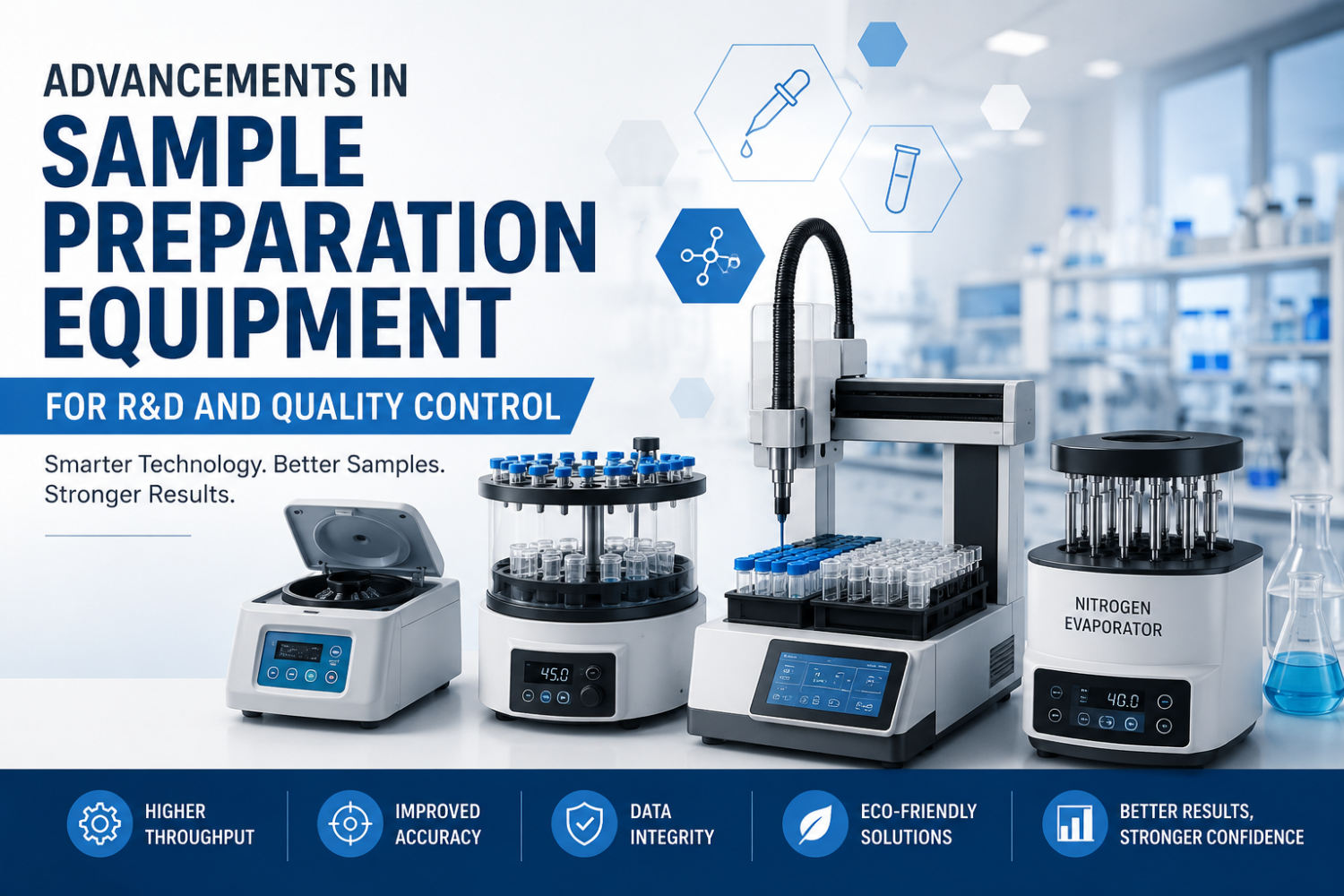
Advancements in Sample Preparation Equipment for R&D and Quality Control
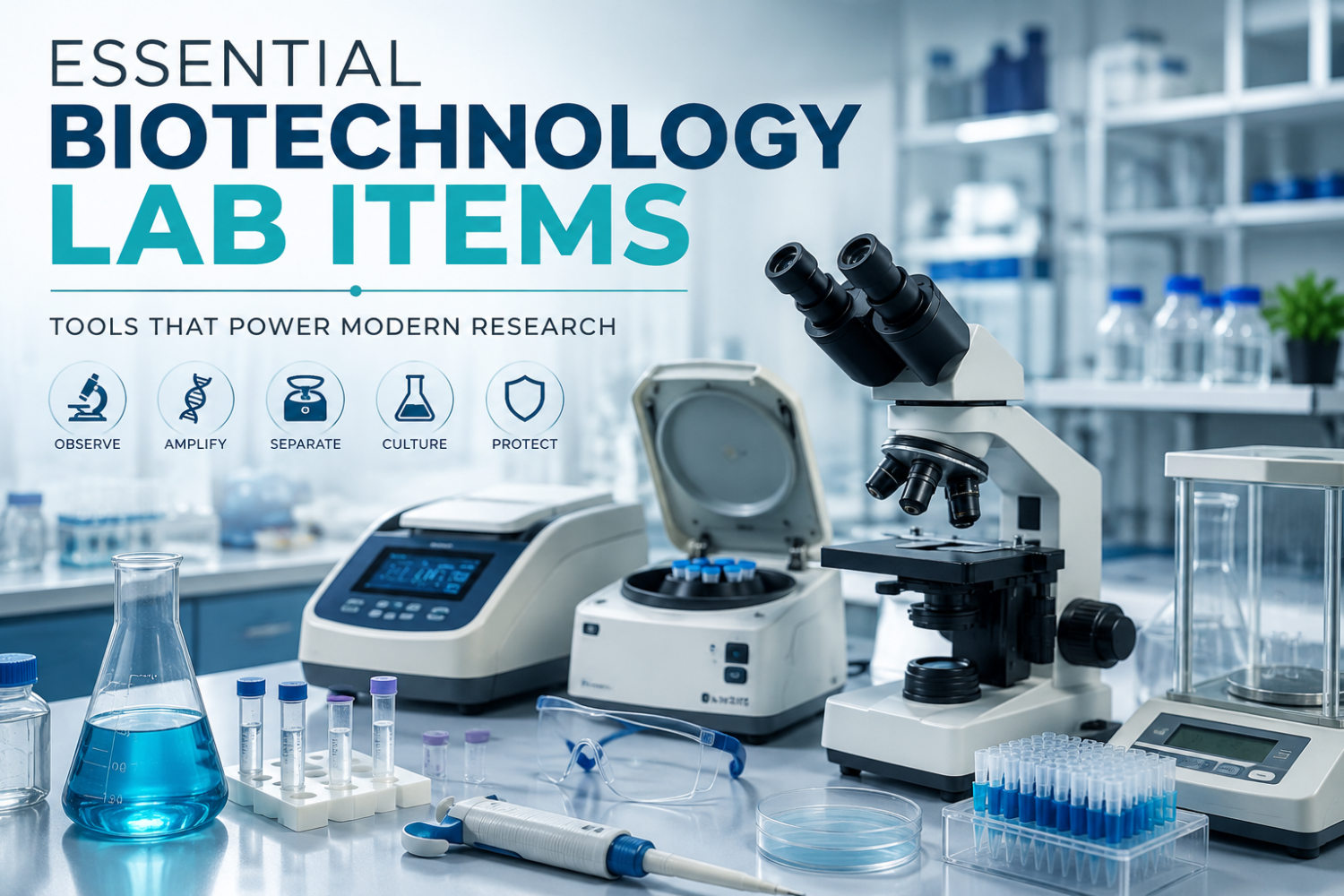
Essential Biotechnology Lab Items and Their Applications in Modern Research


Understanding ETP – Effluent Treatment Plant and Its Importance in Industry

Why a Reliable Cleanroom Solution is Critical for Laboratory and Production Safety?

The Role of Electrochemistry & Titration in Modern Analytical Chemistry
Optimum Solution– Laboratory & Analytical Instruments Supplier in Bangladesh
Optimum Solution is a leading supplier of laboratory equipment, analytical instruments, and process control solutions in Bangladesh. Since our inception, we have built a strong presence in the industry, serving research labs, universities, pharmaceutical companies, and quality control laboratories nationwide. Through continuous dedication to improving our products and services, Optimum Solution has earned the trust and loyalty of our valued clients.


