



New vs. Refurbished Lab Equipment: What Bangladeshi Lab Managers Need to Know Before Buying
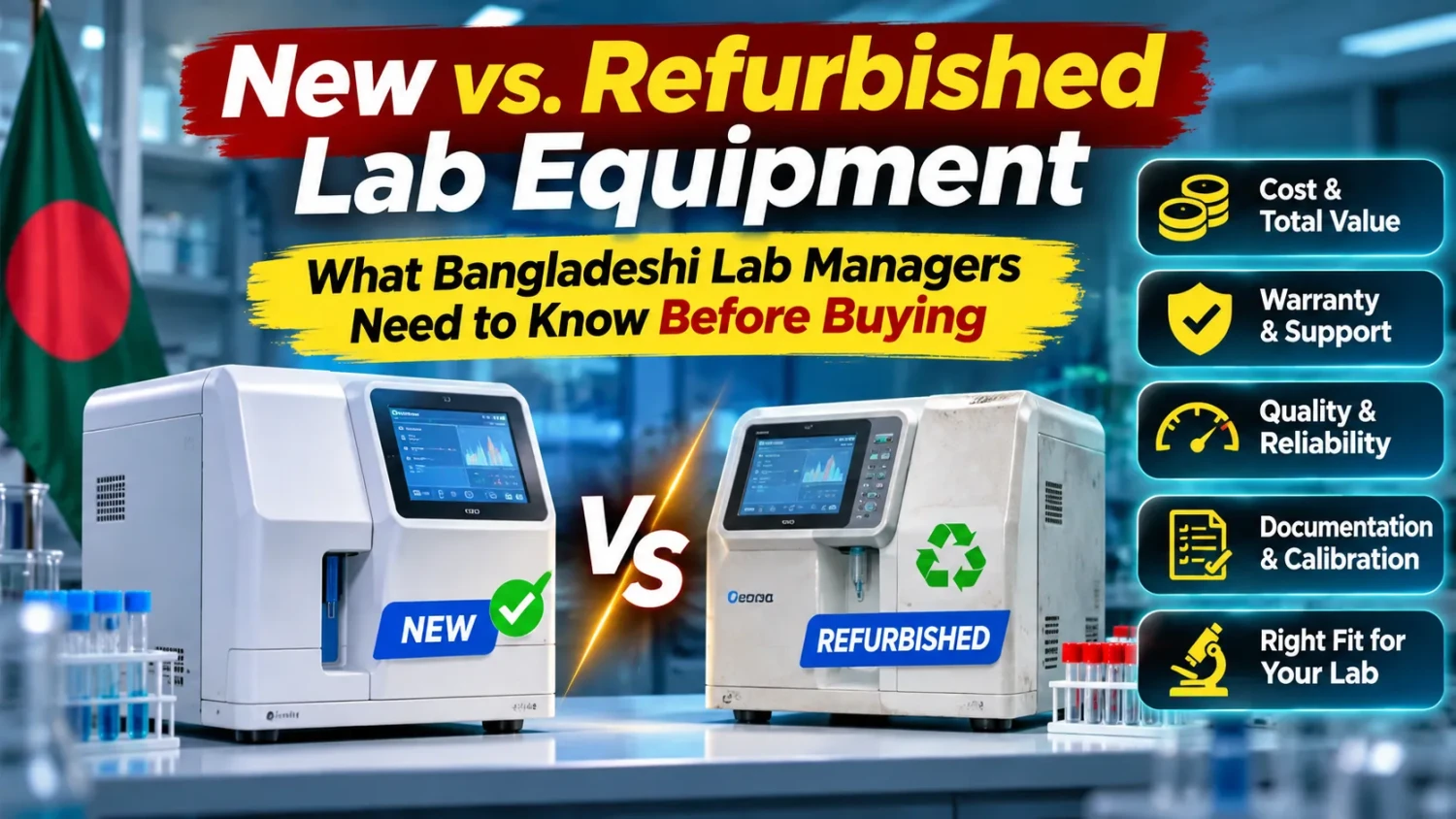
Demand for lab equipment is rising across Bangladesh as research, diagnostics, and testing capacity expand. That puts many lab managers in front of one important choice: should you buy new equipment or consider refurbished laboratory equipment instead? Each path affects your budget, timelines, service support, and long-term operational efficiency. If you want the right equipment choice, you need to look past first impressions and compare value, risk, documentation, and reliability in a practical way.
Key Highlights
New equipment gives you current features, full manufacturer support, and stronger warranty coverage.
Refurbished equipment can bring major cost savings, often well below the purchase price of comparable new equipment.
Your real financial decision should include total cost of ownership, not only the sticker price.
Quality assurance matters because refurbished equipment should be tested, calibrated, and checked against original specifications.
Many lab managers in Bangladesh assume refurbished equipment is unreliable, but risk depends heavily on the supplier and documentation.
Smart procurement starts with validation, support terms, service access, and lab workflow fit.
Overview of Lab Equipment Options for Bangladeshi Labs
Bangladeshi labs generally have two main procurement paths for lab equipment: buy new equipment from manufacturers or dealers, or buy refurbished equipment from specialist resellers. Both options are now more visible in the market because budget pressure and faster expansion needs are shaping purchasing decisions.
For many labs, refurbished equipment has become attractive because it can widen access to important instrumentation at a lower purchase price. Still, lower upfront costs do not automatically mean lower risk. That is why the next sections break down what these options really mean.
Defining New and Refurbished Lab Equipment
New equipment is factory-fresh laboratory equipment that has not been previously used. It usually arrives with current software, full documentation, manufacturer warranties, and support tied directly to the original maker. For many lab managers, that creates peace of mind, especially when the instrument will support important daily workflows.
Refurbished equipment is different. It is not simply secondhand equipment sold as-is. In a proper refurbishment process, the unit is inspected, serviced, repaired where needed, cleaned, tested, and recalibrated before resale. Good providers also replace wear parts and confirm performance against original specifications.
That said, the biggest difference is not just age. It is the level of verification, support, and documentation behind the product. New equipment starts at the top tier for assurance. Refurbished equipment can still be a strong option, but only when the seller can prove what refurbishment actually included.
Current Trends in Lab Equipment Procurement in Bangladesh

Procurement decisions are shifting because many labs want to expand capability without stretching capital budgets too far. In that setting, refurbished lab equipment is gaining acceptance. It helps labs access analyzers, balances, microscopes, centrifuges, and other instrumentation at a lower initial purchase level than new lab equipment.
Several factors are shaping this change:
Strong interest in cost savings when budgets limit major new equipment purchases
Closer attention to financing pressure and the need to spread available funds across more priorities
Growing interest in sustainability through longer equipment lifecycles and reduced waste
Even so, acceptance is not the same as blind trust. Lab managers in Bangladesh can decide between new and refurbished options by matching the instrument to their workflows, checking validation needs, and comparing support, calibration, and total cost, not just headline pricing.
Key Differences Between New and Refurbished Lab Equipment
The main differences between new equipment and refurbished lab equipment come down to condition, support, and proof of performance. New units offer unused components, current features, and manufacturer-led quality assurance. Refurbished units may still deliver reliable results, but that depends on how well they were restored and tested.
Another major divider is documentation. With laboratory equipment, calibration records, service history, and warranty terms matter as much as appearance. Those practical differences shape how suitable each option is for your lab’s daily use.
Functionality and Performance Considerations
When you compare functionality, new equipment usually gives you the latest software, current automation features, and direct factory calibration status. That makes new equipment purchases attractive when your lab needs the newest capabilities or wants fewer unknowns during setup and early use.
Refurbished laboratory equipment can still provide reliable results if the work was done properly. Professional refurbishment should include functional testing, replacement of wear items, software or firmware review where applicable, and calibration before resale. If those steps are missing, the equipment should be treated more like used stock than a dependable refurbished unit.
Suitability depends on your use case. Mature technologies with stable performance needs may work well in refurbished form. But for regulated, safety-critical, or highly validated work, performance validation and documented proof become much more important than simple price comparisons.
Visual Condition, Branding, and Documentation

A clean exterior and strong branding can make equipment look trustworthy, but appearance alone tells you very little. A polished instrument with a known manufacturer name may still have gaps in calibration, service history, or component replacement. You should treat cosmetics as secondary.
What matters more is documentation that shows the unit can meet original manufacturer specifications. Before buying, ask for:
Calibration records or a current calibration certificate
Service or refurbishment documentation showing what was inspected, repaired, or replaced
Written warranty terms with clear coverage and duration
Brand reputation still matters because well-known manufacturers often have broader parts availability and stronger support networks. Yet even then, you need paperwork. For Bangladeshi lab managers, the safest approach is simple: do not rely on looks or labels when documentation can confirm actual quality.
Essential Factors to Consider Before Buying Lab Equipment
Before buying lab equipment, start with the purpose of the instrument in your lab. Is it for routine research, backup use, teaching, or a workflow where downtime creates serious problems? That answer changes the level of risk you can accept in procurement.
You should also weigh purchase price against cost savings over time, not just on day one. Funding limits matter, but so do compliance needs, support access, and compatibility with your existing setup. The next factors make that comparison easier.
Budget Constraints and Funding Sources in Bangladesh
For many laboratories, budget is the first filter. New equipment often requires higher upfront costs, which can limit how much capability you add at one time. Refurbished equipment is appealing because it can reduce the purchase price by a meaningful margin, sometimes around 30% to 70% below comparable new units.
That price gap can support better capital planning. It may help a lab:
Acquire more than one instrument instead of only one
Keep cash available for consumables, validation, or facility improvements
Reduce financing pressure during expansion or replacement projects
Still, low pricing should not end the conversation. If refurbished equipment lacks calibration, service support, or a usable warranty, later repair and validation costs can eat into the savings. In Bangladesh, the smartest budget decision is to compare full buying costs, not just initial quotes.
Compatibility with Lab Needs and Regulatory Requirements
Start by checking compatibility with your actual workflows. A lower-cost instrument is not a good buy if it does not fit your sample volumes, methods, accessories, software needs, or consumables supply. You also need to confirm that parts remain available and the model is not at end-of-life.
Regulatory requirements add another layer. If the equipment supports diagnostics, clinical use, or any regulated environment, validation can be a major cost and timeline factor. A calibration certificate helps, but it may not replace installation, operational, or performance qualification requirements.
This is where certification and quality systems matter. Ask whether calibration came from a competent lab, whether ISO-linked processes are involved, and whether the documentation will satisfy your internal standards. For many Bangladeshi labs, workflow fit and validation readiness are as important as price.
Cost Analysis: New vs. Refurbished Lab Equipment
A useful cost analysis compares more than the price tag. New equipment usually carries higher pricing but includes stronger support, longer warranty coverage, and fewer immediate unknowns. Refurbished equipment lowers the barrier to purchase, which is why it attracts labs with tighter budgets.
Yet the smarter comparison is total cost of ownership. Service, maintenance, calibration, downtime, and remaining useful life all influence what you really pay. The next two sections break those costs into practical terms.
Purchasing Price Breakdowns
The clearest advantage of refurbished equipment is the lower purchase price. In many cases, it costs far less than new equipment while still offering usable performance. That can improve access to instrumentation for labs that need capability now but cannot absorb a premium sticker price.
Still, a low quote can hide missing items. You may need to budget separately for shipping, independent calibration, installation, validation, or replacement accessories. That is why pricing should always be reviewed line by line.
Total Cost of Ownership Over Time in Bangladesh
Total cost of ownership goes beyond the initial deal. Over time, you need to consider maintenance, service contracts, calibration, consumables, repair frequency, and the cost of downtime. A cheaper instrument is not a bargain if it disrupts operations or needs repeated servicing.
New equipment often has an advantage in the early years because manufacturer support and warranty coverage reduce surprise expenses. It may also come with more predictable service planning. That can be valuable for labs that rely on continuous output and cannot absorb operational delays.
Refurbished equipment can still deliver strong cost savings over time when bought from a reliable source. If the model has available parts, stable technology, and good service backing, long-term costs may remain manageable. In Bangladesh, the better option depends on support quality and expected use, not age alone.
Quality Assurance and Risk Management
Buying on price alone exposes your lab to unnecessary risk. Quality assurance means confirming the instrument is in good working condition, can produce dependable results, and has records to support that claim. This matters even more in diagnostics and other sensitive settings.
Good risk management starts before payment. You need a clear validation path, a defined return window, and written service obligations. The next sections show what to check and how to reduce procurement problems.
Assessing Quality Standards in Refurbished Equipment
Refurbished equipment should not be accepted on trust alone. Ask the seller to show evidence that the instrument was tested and restored properly. The best sign is proof that it was checked against original specifications, not merely powered on or visually cleaned.
Use a short checklist when reviewing quality standards:
Calibration evidence, ideally linked to recognized quality practices such as ISO-based laboratory work
Service records showing repairs, replaced wear parts, and completed refurbishment steps
Written warranty terms that explain what is covered and who provides the service
Performance validation is the deciding point. If the supplier cannot demonstrate tested functionality, certification details, and traceable documentation, you should treat the equipment as ordinary used stock. For Bangladeshi buyers, strong paperwork is often the clearest protection against avoidable procurement mistakes.
Identifying and Managing Potential Risks in Procurement
Yes, there are real risks associated with buying refurbished lab equipment, and lab managers in Bangladesh should be aware of them. The biggest ones include hidden wear, incomplete records, expired calibration, discontinued parts, and weak service support. These issues can lead to downtime and unplanned spending after delivery.
Some equipment categories carry even more risk. Safety-critical units, pressure-based systems, and instruments used in regulated or diagnostic work may require additional validation regardless of whether they are sold as refurbished. In those cases, an undocumented history can become a serious obstacle.
You can manage these risks by asking for written refurbishment details, warranty scope, a return or inspection window, and proof of current calibration. Also confirm that future repairs, consumables, and support are realistically available. Good procurement is really careful risk management in practice.
Warranty, After-Sales Support, and Supplier Selection
Warranty and after-sales support often separate a good purchase from a stressful one. New equipment usually comes with stronger manufacturer warranties, while refurbished products may offer shorter or more limited coverage. That difference affects both cost predictability and your confidence after installation.
Supplier choice matters just as much as the product itself. A responsive supplier with clear service support can make refurbished equipment a workable option. The next sections explain how to compare both warranties and vendors.
Comparing Warranties for New and Refurbished Equipment
The warranty and after-sales support differ most in scope and duration. New equipment generally includes stronger manufacturer warranties, often covering both parts and labor for a longer period. That usually gives buyers clearer recourse if performance problems appear soon after installation.
Refurbished equipment can still come with warranty coverage, but terms vary widely by seller. Common ranges run from about 90 days to one year. Some policies cover only parts, while others include labor. That difference matters, especially when repair logistics are expensive or slow.
Do not stop at the word warranty. Ask who performs the service, what exclusions apply, and whether service contracts are available after the initial period. A short but meaningful warranty from a capable supplier may be more valuable than a vague promise with no practical support behind it.
How to Evaluate Supplier Reputation and Support Services
There can be reputable suppliers for refurbished lab equipment in Bangladesh, but reliability depends on what they can prove, not just what they claim. A serious supplier should explain its refurbishment process clearly, provide documents quickly, and answer questions about support services without hesitation.
When you assess a supplier, check for:
A responsive sales representative who can explain warranty terms and service procedures in writing
Evidence of manufacturer support access, parts sourcing, or established technical service capability
Clear service contracts or post-sale support options, not only pre-sale promises
Reviews and references can help, but your best test is documentation and responsiveness. If a supplier avoids detail, cannot show calibration records, or offers unclear after-sales terms, that is a warning sign. Good suppliers reduce risk by being transparent before you commit.
Common Misconceptions About Refurbished Lab Equipment
Many misconceptions about refurbished lab equipment come from confusing it with unverified used stock. That leads some buyers to assume poor reliability, weak performance, or short lifespan before they even review the facts. In reality, the outcome depends on refurbishment quality and documentation.
There is also a tendency to overlook sustainability benefits. Extending the life of suitable instruments can support more responsible procurement. The following sections address the most common myths directly.
Reliability Myths Among Bangladeshi Lab Professionals
A common belief among lab professionals is that refurbished equipment is automatically unreliable. That is not accurate. Reliability depends less on whether the instrument is new equipment or refurbished equipment and more on whether it was properly restored, tested, calibrated, and supported.
Typical myths include:
Refurbished units are just cleaned and resold without any serious technical work
Only new equipment can produce dependable routine results
Choosing refurbished equipment always means compromising quality
The facts are more balanced. Professional refurbishment can return many stable technologies to solid working condition, especially when wear parts are replaced and performance is checked against specifications. It can also support sustainability by extending equipment life. The real issue is not the label. It is whether the seller can verify the work.
Performance and Lifespan Expectations
Some buyers assume refurbished equipment will always have a short lifespan. That is another oversimplification. If an instrument is based on mature technology, has available parts, and has been properly serviced, its remaining useful life may still be very practical for many laboratory needs.
Performance should be judged against evidence. If the unit has been tested to original specifications, calibrated correctly, and supported by a real warranty, it may perform very well in routine or backup applications. That is especially true for equipment types with stable design and broad service availability.
Still, expectations should stay realistic. Refurbished equipment is not identical to brand-new stock in every case. For heavily regulated use, difficult validation paths, or applications demanding the newest features, new equipment may still be the safer long-term choice.
Inspection Checklist for Lab Managers
A structured inspection checklist helps you avoid rushed acceptance decisions. Before you sign off on any delivery, confirm that the equipment matches the quoted model, arrives with the expected accessories, and includes all promised documentation. This step protects both validation and future service needs.
Calibration records, manuals, and warranty papers should be checked immediately, not weeks later. The next two sections outline what to verify and which warning signs deserve extra caution.
What to Verify Before Accepting Delivery
Before accepting delivery, confirm that the equipment is the exact model promised and that all listed accessories are present. Then review the paperwork carefully. Strong documentation supports smoother validation, easier servicing, and better operational efficiency once the instrument enters routine use.
At minimum, verify:
Calibration documents and dates
Refurbishment or service records showing what was done
Warranty paperwork with duration, scope, and contact details for support
You should also inspect basic condition and run initial checks within any allowed inspection period. If the seller promised testing against specifications, ask for those records before final acceptance. For Bangladeshi lab managers, quality is easiest to protect at the handover stage, when you still have leverage to question missing items.
Red Flags to Watch Out for in Refurbished Equipment
Certain red flags should make you slow down or walk away. The most obvious one is weak documentation. If the seller cannot provide calibration records, service details, or a clear refurbishment scope, you cannot judge the real condition of the instrument.
Watch closely for these warning signs:
Missing or vague warranty terms
Visible excessive wear that does not match the seller’s description
No evidence of diagnostics, testing, or replaced wear components
Another risk is poor support after the sale. If parts access is unclear or the model is no longer supported, one failure can create long downtime. A very low price can be tempting, but if records and service backing are absent, that bargain may quickly become expensive.
Frequently Asked Questions (FAQ)
What should you consider when deciding between new and refurbished lab equipment? Evaluate the total cost of ownership, including not just the upfront costs but also the potential for savings through service support and warranties. Many users often wonder about the reliability of refurbished instruments. As long as they meet original specifications and come with proper documentation, they can be just as trustworthy. Finally, consider the long-term operational efficiency and peace of mind that the right equipment choice can provide.
How can Bangladeshi lab managers decide whether to buy new or refurbished equipment?
Compare the lab equipment against your workflows, budget, and validation burden. If the instrument supports critical or regulated work, new equipment may offer safer procurement through stronger warranty terms and clearer support. For routine or backup use, refurbished options can work well when documentation, calibration, and service are solid.
What factors should I check to ensure the quality of refurbished lab equipment?
Check documentation first. Good refurbished equipment should come with calibration records, service or refurbishment details, and written warranty terms. You should also confirm validation readiness, replacement of key wear parts, and proof that the unit was tested against expected performance standards before resale.
Are there reputable suppliers for refurbished lab equipment in Bangladesh?
Yes, reputable supplier options may exist, but you should judge them by procurement transparency, not claims alone. Ask for records, warranty details, service contracts, and response times for support services. A trustworthy laboratory equipment supplier will explain refurbishment steps clearly and provide written proof before purchase.
Conclusion
Understanding the differences between new and refurbished lab equipment is crucial for Bangladeshi lab managers seeking to make informed purchasing decisions. With careful consideration of factors such as functionality, cost, and supplier reputation, you can ensure that your lab is equipped with reliable tools that meet your specific needs. Don't let misconceptions deter you from considering refurbished options, as they can offer significant benefits without compromising quality. Always perform thorough inspections and due diligence before making a purchase. If you're ready to take the next step in optimizing your lab's operations, contact us to discuss your options and get started today!
Recent Posts
New vs. Refurbished Lab Equipment: What Bangladeshi Lab Managers Need to Know Before Buying

The Total Cost of Ownership (TCO) for a Pharma QC Lab in Bangladesh: A 5-Year Breakdown
Understanding Pharmaceuticals Tablet Testing: Methods, Standards, and Instruments
Understanding Process Control Instruments and Their Role in Industrial Efficiency
How Petroleum Testing Instruments Improve Fuel Quality and Compliance Standards?

Analytical & Elemental Instruments: Empowering Accurate Analysis for Research, Quality Control, and Industrial Applications


How Viscosity, Rheometer & Texture Analyzer Shape Product Quality in R&D Laboratories?
Optimum Solution– Laboratory & Analytical Instruments Supplier in Bangladesh
Optimum Solution is a leading supplier of laboratory equipment, analytical instruments, and process control solutions in Bangladesh. Since our inception, we have built a strong presence in the industry, serving research labs, universities, pharmaceutical companies, and quality control laboratories nationwide. Through continuous dedication to improving our products and services, Optimum Solution has earned the trust and loyalty of our valued clients.


