
-
 Analytical & Elemental Instruments
-
Biotechnology Lab Items
-
Cardboard and Box Factory Lab Equipment Solution
-
Cleanroom Solution
-
Consumables & Accessories
-
Dosing Pump for Chemicals
-
Electrochemistry & Titration
-
ETP -Effluent Treatment Plant
-
Feed Quality Laboratory
-
Food & Kitchen Lab Items
-
Hygiene Testing Equipment
-
Lab Furniture




Choosing the Right Particle Size Measurement Instrument for Your Laboratory Needs
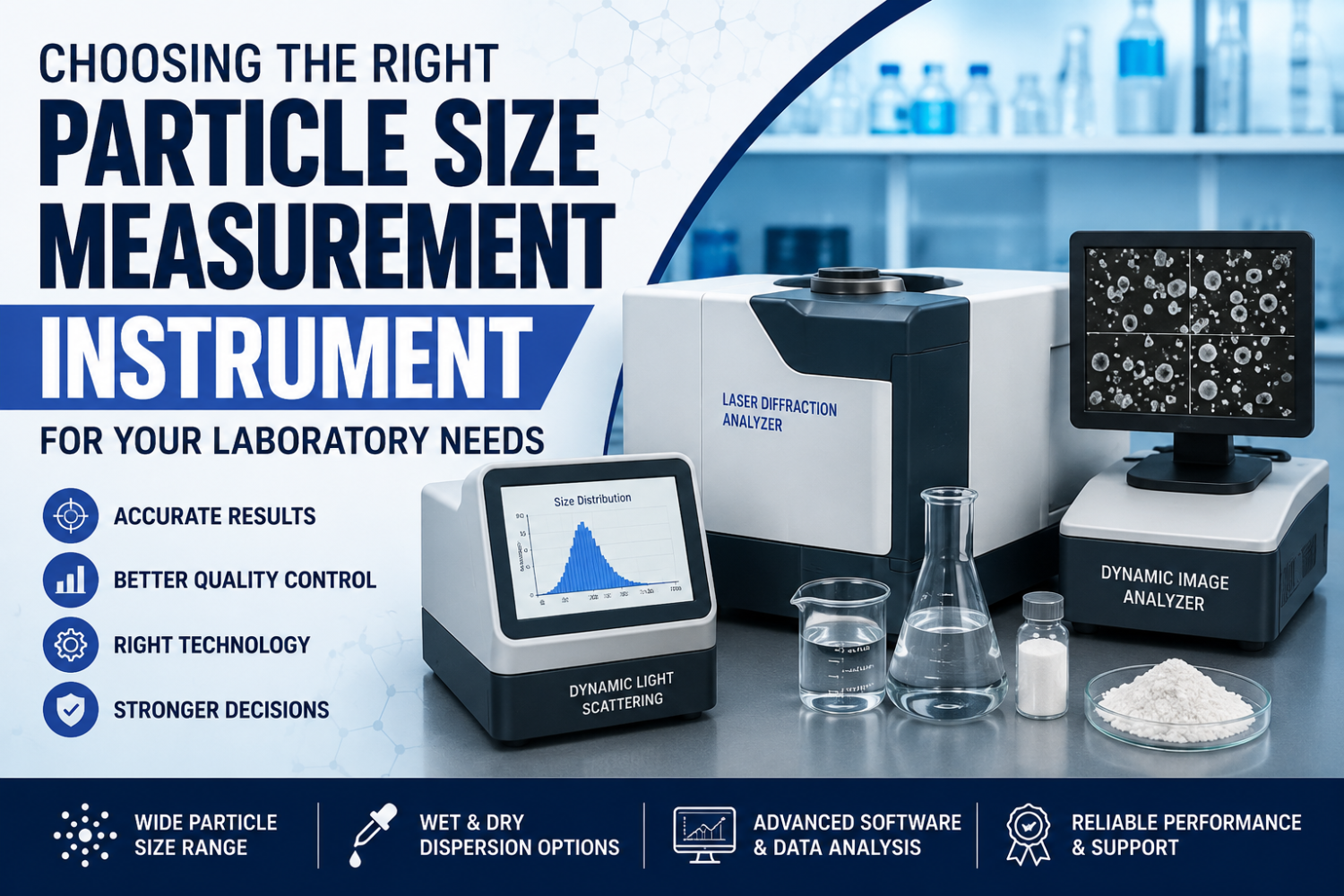
Particle size measurement is a core task in many laboratories because it affects quality control and product performance. If you choose the wrong instrument, you may miss critical data across your required size range. That can lead to unstable processes, failed tests, or inconsistent batches. The right system gives you reliable, repeatable results and helps your team work with confidence. To choose well, you need to understand the material, the measurement goal, and the instrument options available.
Key Highlights
Particle size measurement supports reliable laboratory decisions and stronger quality control applications.
Your choice of particle size analyzer should match sample type, size range, and workflow.
Laser diffraction is widely used because it covers a broad particle size range with good repeatability.
Dynamic image analysis helps when you need particle images, particle shape, and oversized particle checks.
Wet and dry dispersion affect accuracy, speed, and how well a measurement technique fits your material.
Price, calibration, software, and support all shape long-term instrument value.
Understanding Particle Size Measurement in Laboratories
In simple terms, particle size measurement tells you how big the particles in a sample are and how they are spread across a particle size distribution. A size analyzer helps with particle characterization for powders, suspensions, and emulsions used in research and production.
Before you choose an instrument, focus on a few key factors: expected measurement range, sample behavior, and the type of data you need. Some labs only need routine distribution data, while others need shape, agglomerate detection, or nano-scale analysis. These points guide the right fit.
Why Particle Size Matters for Laboratory Analysis
Particle size has a direct effect on product quality. It can influence stability, appearance, processing behavior, and final performance. If your laboratory does not understand size distribution well, small variations can grow into expensive production problems. That is why particle size analysis plays a critical role in routine testing.
The link between particle size and material properties is especially important in pharmaceuticals, chemicals, food, mining, and building materials. In these settings, reliable measurements support quality control and help protect product specifications. Better data also makes it easier to compare batches and spot drift early.
Which particle size measurement techniques are best suited for laboratory applications? That depends on your sample and target range. Laser diffraction works well across a broad range, dynamic light scattering suits nanoparticles in suspension, and image-based systems help when particle shape or individual particles matter.
Common Applications of Particle Size Measurement Instruments
Particle size measurement instruments are used in both research and industrial applications. They help laboratories understand raw materials, maintain batch consistency, and solve process issues before they become larger production losses. Your analytical needs will decide which system gives the most useful data.
Many sectors use these tools because particle behavior affects performance and handling. Food science, pharmaceuticals, chemicals, metallurgy, mining, and nanotechnology all rely on size data. Different particle size analyzers range from simple screening tools to advanced systems with imaging, wet dispersion, or dry dispersion options.
Test sieve analysis is used for simple, traditional size separation.
Laser diffraction is used for broad size distribution measurement from fine to coarse materials.
Dynamic light scattering is used for nanoparticles, colloids, emulsions, and biopharmaceutical samples.
Dynamic image analysis is used when particle shape and oversized particles need review.
Types of Particle Size Measurement Instruments
Laboratories can choose from several types of particle size measurement systems, and each uses different measurement technology. The most common options are laser diffraction, dynamic light scattering, and dynamic image analysis. Sieve analysis and air jet sieve analysis are also used in specific cases.
How do they compare in accuracy and performance? Much depends on sample type, stated size range, and whether you need broad distribution data or detailed particle images. The next sections break down where each technique works best and where its limits appear.
Overview of Laser Diffraction, Dynamic Light Scattering, and Image Analysis
Laser diffraction is the most commonly used method for broad particle size analysis. It measures how a laser beam scatters at different angles and reports particle size distribution as equivalent volume diameter. It offers fast analysis, good repeatability, and real time measurement across a wide range of particle sizes.
Dynamic light scattering uses light scattering caused by Brownian motion. It is best for small particles in suspensions, especially nanoparticles, colloidal systems, and emulsions. Image analysis uses cameras and software to capture particle images, making it useful when shape and individual particle review matter.
Measurement technique | Best use | Main strength | Main limit |
|---|---|---|---|
Laser diffraction | Broad size range samples | Fast, repeatable, wide measurement range | Less direct shape detail |
Dynamic light scattering | Nanoparticles in liquid | High sensitivity for small particles | Best suited to narrow nano-scale work |
Dynamic image analysis | Shape-focused studies | Shows images of particles and shape of particles | Usually higher cost |
Advantages and Limitations of Different Measurement Techniques
No single measurement technique is best for every laboratory. Accuracy and performance depend on whether your sample contains small particles, large particles, agglomerates, or irregular forms. You also need to think about how much detail you want from particle size measurement and whether shape data is important.
Laser diffraction gives strong repeatability and a broad measurement range. Dynamic imaging adds visual insight and can help during troubleshooting. Dynamic light scattering is better when nano-scale particles in suspension are the focus. Sieve-based methods are simpler and lower cost, but they provide less detailed particle characterization.
Choose laser diffraction for broad range routine work and higher throughput.
Choose dynamic imaging when process issues may involve shape or oversized particles.
Choose dynamic light scattering for nano dispersions and colloidal systems.
Choose sieve analysis for basic screening where advanced accuracy is not essential.
What Influences the Choice of Particle Size Analyzer
The choice of particle size analyzer starts with your material and your measurement goal. You should compare size range, expected accuracy, required measurement range, and how often the instrument will be used. A system that looks impressive on paper may still be the wrong fit for your daily routine.
Sample types matter just as much. Powders, suspensions, emulsions, and water-soluble materials all behave differently. That is why dispersion approach, data needs, and throughput must be considered together. These factors usually narrow the shortlist quickly and make the decision more practical.
Sample Type Considerations: Wet vs. Dry Dispersion
Your sample types strongly influence the right dispersion method. Wet dispersion is often used for cohesive powders that form agglomerates. Liquids, surfactants, and ultrasonic energy can help separate particles without changing their primary size. This can improve the quality of the reported size distribution.
Dry dispersion is a better fit for water-soluble materials or powders that must be measured as received. It also supports faster preparation and higher throughput because you do not need to make a suspension. Some laboratories need both options to handle different materials with one instrument.
Use wet dispersion for suspensions, emulsions, and cohesive powders.
Use dry dispersion for bulk powders and water-soluble materials.
Consider hybrid systems if your sample types vary often.
Match the dispersion method to the material, not just convenience.
Key Factors: Accuracy, Size Range, and Performance
When you compare instruments, start with the expected size range of your samples. The stated measurement range should be wider than the actual particle size range you expect to test. A useful margin at both ends helps ensure d10 and d90 values are captured instead of being cut off by instrument limits.
Accuracy is not only about one result. You also want repeatability across multiple runs and different users. In quality control work, stable performance matters because decisions depend on consistent data. Modern analyzers with predefined methods can reduce variation and improve day-to-day reliability.
Performance also includes practical speed. Look at the full cycle: sample dispersion, measurement time, and cleaning. Some systems offer automated loading, higher throughput, and better method control. Those features can be valuable in busy laboratories where many samples move through the instrument each day.
Beginner’s Guide: How to Select the Right Particle Size Measurement Instrument
If you are new to particle size measurement, the process becomes easier when you break it into simple steps. The choice of particle size analyzer should follow your laboratory needs, not just vendor features. Start with the sample, then move to the analytical method, then compare operating demands.
This step-by-step guide answers a common question: what key factors should I consider when choosing a particle size measurement instrument for my laboratory? Focus on size range, dispersion, data type, throughput, and support. Each step helps you move from broad options to the best practical choice.
What You’ll Need to Get Started in a Laboratory in Bangladesh
To get started in a laboratory in Bangladesh, you first need clarity on sample types, test volume, and the level of detail required from the data. That helps you decide whether broad particle size distribution, nano-scale testing, or shape-focused work should come first in your purchasing plan.
Next, review suppliers and product lines that cover multiple needs. Bettersize Instruments offers systems for laser diffraction, dynamic imaging, and nano analysis, which can help laboratories match measurement technology to actual use. Support, software, calibration access, and training are just as important as instrument specifications.
Define your most common sample types before requesting quotations.
Ask whether wet, dry, or both dispersion modes are available.
Confirm service terms, software updates, and training support.
Ignore unrelated website details such as maximum storage duration for cookies when evaluating instruments.
Step-by-Step Guide to Choosing the Best Instrument for Your Needs
Choosing well is easier when you follow a clear order. The choice of particle size analyzer affects product quality, testing confidence, and workflow efficiency. Since particle data plays a critical role in development and quality control, it is worth slowing down before you buy.
Start by defining what you measure now and what you may need later. Then compare technologies, sample handling, and daily operating demands. Do not focus only on measurement time. A fast run means little if preparation, cleaning, or poor method fit slows the whole process.
Identify your particle size range and key reporting values.
Match the instrument to powder, suspension, emulsion, or nano samples.
Decide if you need only size data or also particle shape insight.
Compare total workflow time, not just the test itself.
Review budget, maintenance, and support before making a final choice.
Step 1: Define Your Laboratory’s Requirements
Begin with your laboratory requirements. What materials do you test? Are they dry powders, suspensions, emulsions, or nanoparticles? Do you only need routine batch release data, or do you also investigate defects and process behavior? These answers shape the rest of the selection process.
Your analytical needs should guide the measurement range. If your particles can vary from sub-micron to millimeter scale, a broad-range size analyzer may be necessary. If your work is focused below 1 µm, a nano-focused option will likely be more suitable.
Also think about sample volume and frequency. Some labs process many samples every day, while others handle small quantities of high-value material. That difference matters. It affects whether you need higher throughput, micro-volume capability, or a simpler system with fewer extras and lower operating demands.
Step 2: Evaluate the Measurement Techniques Available
Once your requirements are clear, compare each measurement technique against them. For broad particle size analysis across fine and coarse materials, laser diffraction is usually the strongest general choice. It offers wide coverage, repeatability, and fast routine testing for many laboratory applications.
Dynamic light scattering is the right fit when your work centers on nanoparticles in liquid systems. It uses Brownian motion and scattered light fluctuations to estimate size, making it valuable for colloids, emulsions, and biopharmaceutical studies. Some systems also add zeta potential and molecular weight data for stability work.
Sieve analysis remains useful when you need a traditional, straightforward method for larger particles or preliminary screening. It is simpler and more affordable, but less detailed. So, which particle size measurement techniques are best suited for laboratory applications? The answer depends on range, sample state, and data depth.
Step 3: Compare Features and Specifications of Instruments
After choosing the most suitable analytical method, compare instrument features and specifications carefully. Look beyond headline claims. A wide measurement range matters, but so do repeatability, method control, cleaning time, and compatibility with your usual materials. The best instrument is the one that performs well in your actual workflow.
High resolution options can be valuable when you need to distinguish between single particles and agglomerates. Imaging systems may also help if your laboratory needs shape-related information such as aspect ratio or circularity. In some cases, this added detail is essential for troubleshooting and process improvement.
Check whether the stated measurement range exceeds your expected sample range.
Review if the system supports wet, dry, or both dispersion modes.
Look for high resolution detection if agglomerates are a concern.
Confirm software features that support your analytical method and reporting needs.
Step 4: Assess Price Ranges and Budget Considerations
Budget planning should include both purchase cost and long-term use. The compiled data shows that price ranges can start around $4,000 to $9,000 for entry-level systems, move to $10,000 to $50,000 for mid-range models, and reach $50,000 to over $100,000 for advanced instruments used in demanding laboratory applications.
Measurement technology is a major price driver. Laser diffraction systems with wet and dry dispersion, dynamic image analysis, and advanced nano systems cost more because they offer broader capability, automation, or deeper insight. Simpler methods such as test sieve analysis or air jet sieve analysis are usually less expensive.
Set a budget for software, maintenance, and consumables, not just purchase price.
Link spending to your production processes and testing risk.
Avoid paying for advanced functions you will never use.
Invest more when reproducibility and regulated work are critical.
Step 5: Consider Maintenance, Calibration, and Support
Before you decide, ask about maintenance, calibration, and support. These factors affect uptime, data quality, and total ownership cost. Frequent calibration may be required for some methods, and that should be planned in advance. If service access is weak, even a capable instrument can become frustrating.
Modern analyzers often include software tools, predefined methods, and automation that reduce operator error. That is helpful in busy labs with multiple users. Still, your team may need training to use the system well, especially when switching between sample types or dispersion approaches.
Confirm the calibration schedule and who can perform it.
Ask what routine maintenance is required for wet or dry modules.
Check warranty terms, software updates, and local support availability.
Choose systems with method control to reduce operator error.
Conclusion
Choosing the right particle size measurement instrument is crucial for achieving accurate laboratory results. As we’ve discussed, understanding the various types of instruments and their unique advantages and limitations can significantly impact your analysis. By carefully evaluating your laboratory’s requirements, considering factors like sample type and budget, and comparing the features of available instruments, you can make an informed decision that best suits your needs. Remember, investing the time to choose wisely can enhance the quality of your research and contribute positively to your lab's outcomes. If you're ready to take the next step, consider reaching out for expert advice tailored to your specific laboratory needs.
Frequently Asked Questions
How does sample type affect the choice of particle size analyzer?
Sample type shapes the best particle size analyzer because powders, suspensions, emulsions, and nano dispersions behave differently. The right dispersion method matters. Wet systems suit many cohesive materials, while dry systems fit bulk powders and water-soluble samples. Your measurement technique should always match real sample types.
What are the typical price ranges for particle size measurement instruments?
Typical price ranges for particle size measurement instruments start around $4,000 to $9,000 for entry-level units, rise to $10,000 to $50,000 for mid-range systems, and can exceed $100,000 for advanced models. Your budget should reflect the size analyzer features, measurement technology, and long-term operating costs.
What are the main maintenance requirements for these instruments?
Main maintenance needs include routine cleaning, scheduled calibration, software updates, and checks on dispersion components. Modern analyzers may reduce operator error through automation, but they still need proper upkeep. Reliable support and training are important, especially for laboratories using wet and dry modules regularly.
What are common mistakes to avoid when selecting a particle size measurement instrument?
Common mistakes include choosing a size analyzer with the wrong measurement range, ignoring sample handling needs, focusing only on purchase price, and overlooking training or support. Another issue is underestimating operator error. Key considerations should include sample type, data needs, repeatability, and daily workflow demands.
Recent Posts
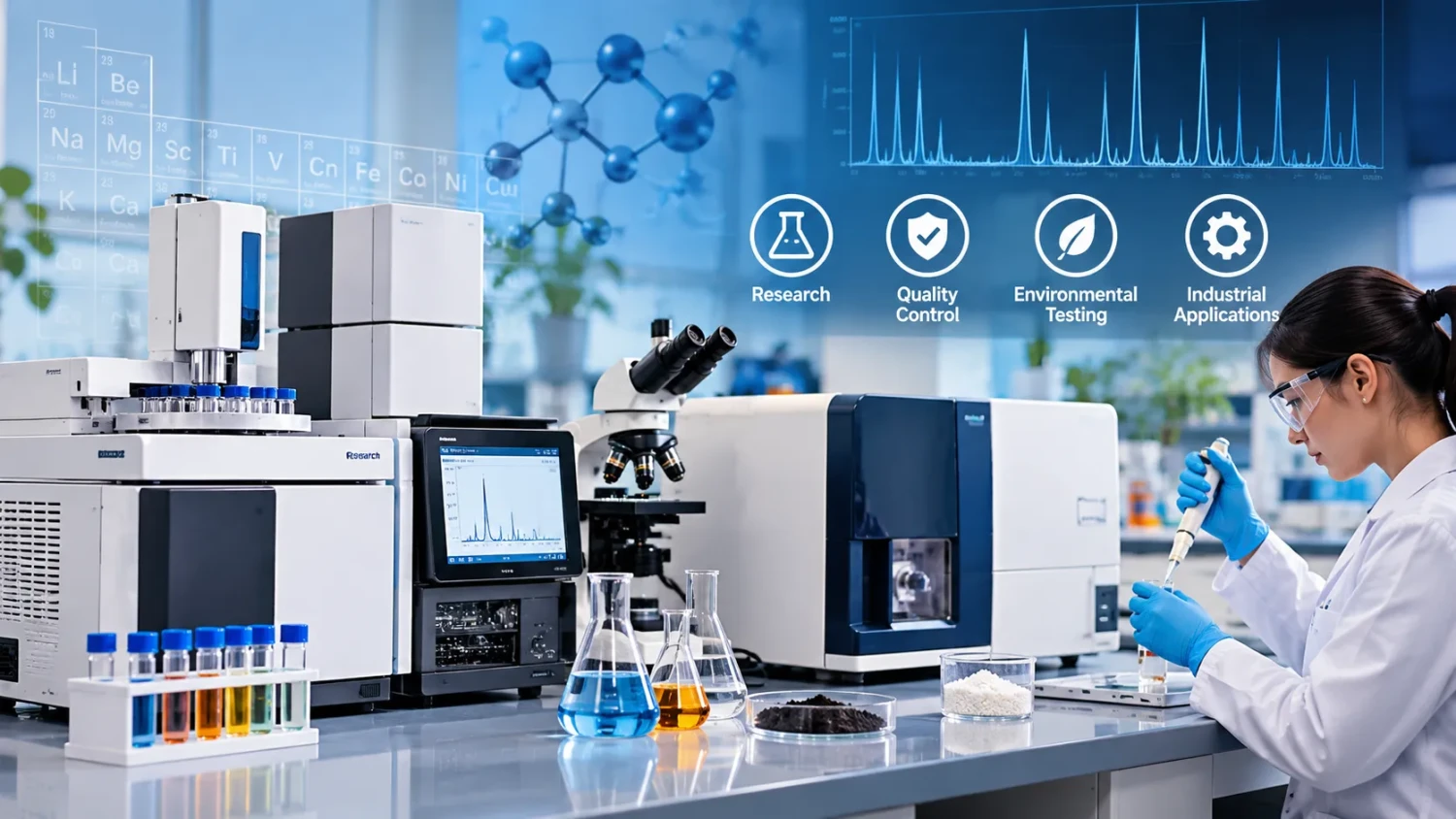
Analytical & Elemental Instruments: Empowering Accurate Analysis for Research, Quality Control, and Industrial Applications

How Viscosity, Rheometer & Texture Analyzer Shape Product Quality in R&D Laboratories?

How Laboratory Heating & Cooling Equipment Improves Accuracy and Efficiency in Testing?

The Role of Laboratory Safety & Environmental Monitoring in Risk Prevention

Health and Hygiene Ware Material Testing: Ensuring Quality, Safety, and Compliance
Advancements in Sample Preparation Equipment for R&D and Quality Control
Essential Biotechnology Lab Items and Their Applications in Modern Research
Optimum Solution– Laboratory & Analytical Instruments Supplier in Bangladesh
Optimum Solution is a leading supplier of laboratory equipment, analytical instruments, and process control solutions in Bangladesh. Since our inception, we have built a strong presence in the industry, serving research labs, universities, pharmaceutical companies, and quality control laboratories nationwide. Through continuous dedication to improving our products and services, Optimum Solution has earned the trust and loyalty of our valued clients.


