
-
 Analytical & Elemental Instruments
-
Biotechnology Lab Items
-
Cardboard and Box Factory Lab Equipment Solution
-
Cleanroom Solution
-
Consumables & Accessories
-
Dosing Pump for Chemicals
-
Electrochemistry & Titration
-
ETP -Effluent Treatment Plant
-
Feed Quality Laboratory
-
Food & Kitchen Lab Items
-
Hygiene Testing Equipment
-
Lab Furniture



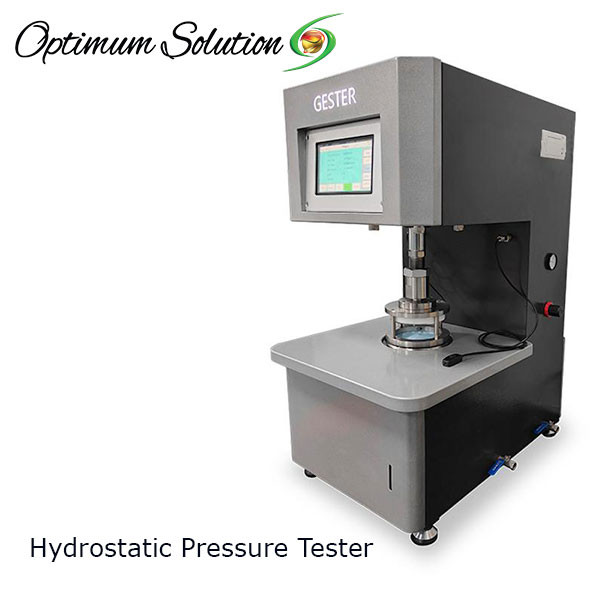

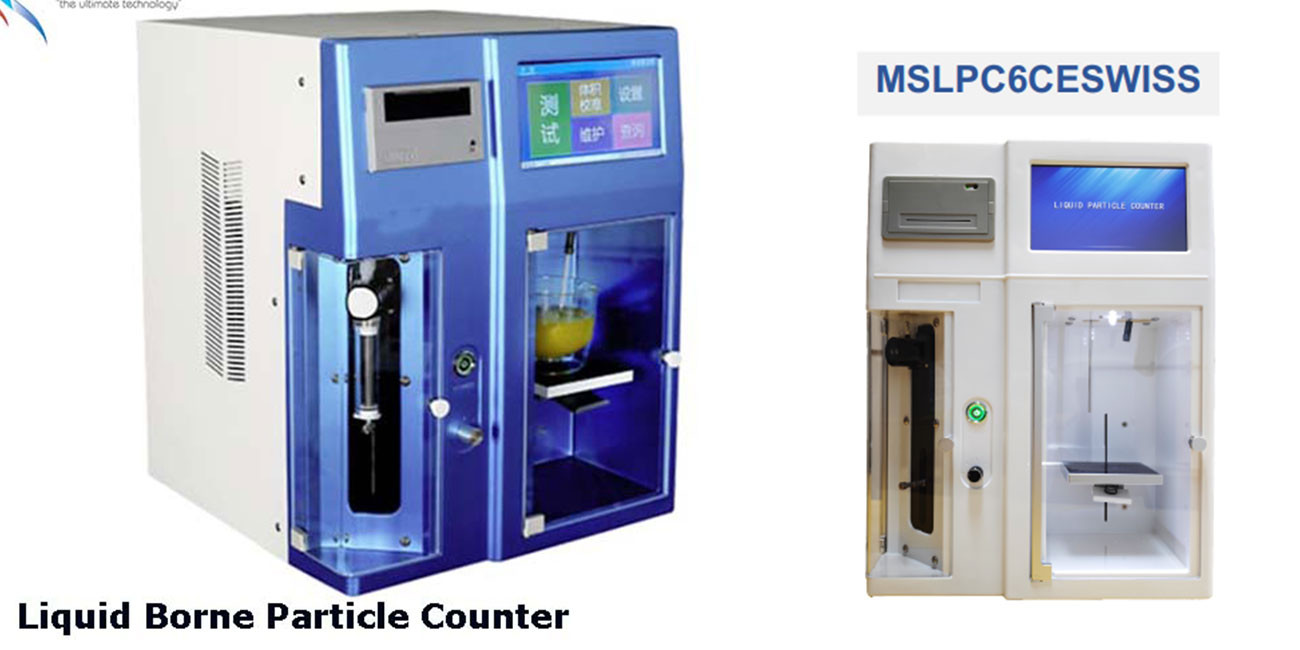
Liquid-Borne Particle Counter Standard Operating Procedure: Principles of Particle Detection, Light Obscuration and Light Scattering Techniques, and Critical Importance in Pharmaceutical Quality Control and Materials Science
A pharmaceutical laboratory is a controlled environment where analytical measurements determine the quality, purity, and safety of drug products and raw materials. The laboratory generates quantitative data that support batch release decisions, stability assessments, and regulatory submissions.
One specialized area within pharmaceutical testing is particle counting in liquid media. Injectable drug products must meet strict limits for subvisible particles. Water for injection and cleaning validation samples require monitoring for particulate contamination. The liquid-borne particle counter is the primary instrument for these measurements.
Role in Drug Development and Quality Assurance
During drug development, particle counting characterizes formulation stability, container-closure interactions, and manufacturing process cleanliness. In quality assurance, particle counters verify that parenteral products comply with pharmacopeial limits before batch release. The instrument also supports cleaning validation by detecting residual particles from manufacturing equipment.
Structure of a Pharmaceutical Laboratory
Laboratory Sections Utilizing Particle Counters
Quality Control (QC) Laboratory – Parenteral Testing Section
Performs subvisible particle testing on injectable products, ophthalmic solutions, and irrigation fluids. Operates liquid-borne particle counters according to validated SOPs.
Quality Assurance (QA) Laboratory
Conducts cleaning validation particle testing for manufacturing equipment. Monitors water for injection and purified water systems.
Research and Development (R&D) Laboratory
Evaluates particle formation in stability samples. Characterizes generic product comparability to reference listed drugs.
Microbiology Laboratory
May use particle counters for endotoxin carrier validation or sterile filtration studies.
Workflow and Laboratory Design Considerations
Particle counting requires a clean environment to prevent extraneous contamination. The instrument placed in a laminar flow hood or clean bench. Samples handled with particle-free technique. Glassware thoroughly rinsed with particle-free water. Workflow: sample receipt, degassing (if required), primary and secondary rinses, measurement, data recording, cleaning.
Analytical Methods in Pharmaceutical Laboratories – Particle Counting
Chemical Analysis Techniques vs. Particle Analysis
Traditional chemical analysis measures molecular composition. Particle analysis measures physical contamination. Both are required for parenteral products. Chemical methods (HPLC, UV-Vis) quantify drug concentration and impurities. Particle counting quantifies solid particulate matter not soluble in the formulation.
Instrumental Methods for Particle Detection
Light Obscuration (Extinction)
The most common method for parenteral particle testing. A laser beam passes through a flow cell containing the sample. Particles passing through the beam block a portion of the light. The reduction in light intensity (obscuration) is proportional to the particle's cross-sectional area. Calibration with polystyrene latex spheres of known diameter allows size assignment.
Light Scattering
Measures light scattered by particles at an angle (typically 90 degrees). More sensitive for smaller particles (below 2 µm) but less commonly used for pharmacopeial testing due to refractive index dependence.
Electrical Sensing Zone (Coulter Principle)
Particles suspended in electrolyte pass through a small aperture with an electric current. Each particle displaces electrolyte, causing a voltage pulse proportional to particle volume. Used primarily for materials science and non-aqueous samples.
Sample Preparation and Method Validation
Sample preparation is critical. Degas samples by gentle stirring or brief vacuum to remove air bubbles that count as particles. Equilibrate samples to room temperature. Rinse sample containers three times with particle-free water before filling. Avoid sonication that can fragment existing particles.
Method validation for particle counting differs from chemical methods. Parameters include:
Suitability: Verify instrument counts for certified standards within specified limits
Rinse blank: Particle count of rinse water must be below pharmacopeial limit
Sample homogeneity: Multiple aliquots from same container must agree
Ruggedness: Different analysts, different days produce comparable results
Laboratory Instrumentation – Liquid-Borne Particle Counter
Key Components and Their Functions
Laser Light Source
Helium-neon laser (632.8 nm) or solid-state laser (780 nm). Provides collimated, monochromatic light beam through the flow cell.
Flow Cell
Rectangular or cylindrical quartz cell with defined path length. Sample flows through under laminar flow conditions. Typical dimensions: 0.5 mm to 2 mm depth.
Photodiode Detector
Positioned opposite the light source for obscuration method. Converts light intensity to electrical signal. Second detector at 90 degrees for scattering method.
Pump or Syringe Drive
Draws sample through flow cell at controlled rate (10-100 mL/min). Precisely measured volume allows particle concentration calculation.
Pulse Height Analyzer
Measures amplitude of each voltage pulse. Compares to calibration curve to assign particle diameter.
Data Processing System
Counts particles in predefined size channels (e.g., ≥10 µm, ≥25 µm). Reports cumulative and differential counts.
Principle of Operation – Light Obscuration
The fundamental relationship follows the Beer-Lambert law extended to particle extinction:
I = I₀ × exp(-N × C × L)
Where:
I = transmitted light intensity with particles
I₀ = incident light intensity
N = number of particles per unit volume
C = extinction cross-section of a particle (function of diameter and refractive index)
L = path length through the flow cell
For particles much smaller than the beam width, each particle causes a momentary reduction. The pulse height (ΔI/I₀) relates to particle projected area. Calibration using spherical standards assumes equivalent circular diameter.
Step-by-step measurement sequence:
Instrument purges with particle-free water until background counts meet specification (typically ≤10 particles per mL ≥10 µm)
Sample container is inverted 20 times to resuspend settled particles
Sample tube inserted, avoiding introduction of air bubbles
Primary rinse: Sample drawn through flow cell and discarded to condition surfaces
Secondary rinse: Second aliquot drawn and discarded
Measurement: Defined volume (typically 5-25 mL) drawn through flow cell
Pulse processing: Each particle generates a pulse counted and sized
Post-measurement rinse: Flow cell flushed with particle-free water
Data reported as counts per container (for small volumes) or counts per mL (for large volumes)
Importance in Pharmaceutical Testing
Parenteral Product Quality
Subvisible particles in injectable products can cause phlebitis, granuloma formation, and embolic events. Pharmacopeial limits (USP <788>) specify NMT 6000 particles per container ≥10 µm and NMT 600 particles per container ≥25 µm for small-volume parenterals (≤100 mL). For large-volume parenterals (>100 mL), limits are NMT 25 particles per mL ≥10 µm and NMT 3 particles per mL ≥25 µm.
Cleaning Validation
After manufacturing equipment cleaning, rinse samples analyzed for particles. Residual drug particles or foreign matter detected by particle counters. Acceptance criteria based on visual cleanliness and particle count limits.
Water System Monitoring
Water for injection (WFI) and purified water systems tested for particles. While pharmacopeias specify conductivity and TOC, particle counting provides real-time contamination detection. Sudden particle increase indicates filter failure or biofilm sloughing.
Container-Closure Integrity
Glass vials, ampoules, and prefilled syringes tested for extractable particles. New container types validated for particle release after washing and sterilization.
Standard Operating Procedure for Liquid-Borne Particle Counter
Pre-Use Procedures
Verify calibration status: Check calibration certificate date. Calibration performed annually or after major maintenance using certified polystyrene latex spheres (typically 10 µm and 25 µm).
Perform system suitability: Analyze certified reference standard. Counts must be within 10% of certified value for each size channel.
Measure background: Run particle-free water through instrument. Background counts must meet acceptance criteria (≤10 particles/mL ≥10 µm, ≤2 particles/mL ≥25 µm).
Check flow rate accuracy: Measure time to draw 10 mL. Flow rate tolerance ±5%.
Sample Measurement Procedure
Sample equilibration: Allow sample to reach room temperature (20-25°C) for 30 minutes.
Sample degassing: If sample contains dissolved gases, degas by gentle stirring under partial vacuum for 30 seconds. Do not sonicate.
Container preparation: Rinse sample container exterior with particle-free water. Avoid touching container neck.
Primary rinse: Draw sample aliquot (equal to measurement volume) through instrument. Discard.
Secondary rinse: Draw second aliquot. Discard.
Measurement: Draw measurement volume (minimum 5 mL for small-volume parenterals, 25 mL for large-volume parenterals). Record particle counts for size channels ≥10 µm and ≥25 µm.
Replicate measurements: For small-volume parenterals, combine contents of multiple containers to achieve required volume. For large-volume parenterals, measure four replicates and average.
Post-measurement rinse: Flush instrument with particle-free water for 1 minute.
Data Interpretation and Acceptance Criteria
USP <788> Criteria for Small-Volume Parenterals (≤100 mL)
≤6000 particles per container ≥10 µm
≤600 particles per container ≥25 µm
USP <788> Criteria for Large-Volume Parenterals (>100 mL)
≤25 particles per mL ≥10 µm
≤3 particles per mL ≥25 µm
Calculation for containers requiring pooling:
For N containers combined to achieve test volume, particle count per container = (total counted particles) / N
Out-of-Specification (OOS) Handling:
If sample exceeds limits, investigate:
Background contamination during measurement
Air bubble interference
Container contamination
Sample degradation (protein aggregation, crystallization)
Instrument malfunction
Maintenance and Calibration
Daily maintenance:
Clean flow cell with particle-free water
Record background counts
Check sample tubing for kinks or deposits
Weekly maintenance:
Clean external surfaces with lint-free wipe
Inspect tubing for discoloration or residue
Run cleaning cycle with 10% nitric acid (for aqueous samples) followed by particle-free water
Annual calibration:
Perform by manufacturer or certified service provider
Calibration across full size range (2 µm to 100 µm)
Verify size accuracy and counting efficiency
Document calibration certificate
Six-month verification:
Analyze certified polystyrene latex spheres (10 µm and 25 µm)
Acceptable range: mean ± 10% of certified count
Size channel boundaries: ±5% of nominal diameter
Regulatory Framework in Bangladesh
Overview of Regulatory Bodies
Directorate General of Drug Administration (DGDA)
Requires parenteral manufacturers to test each batch for subvisible particles. GMP inspectors verify particle counter calibration records, SOP adherence, and OOS investigation procedures.
National Control Laboratory
May perform confirmatory particle testing on imported injectable products. Uses pharmacopeial methods consistent with USP, EP, or JP.
GMP Requirements for Particle Counting
Schedule M requires:
Particle counters calibrated with traceable standards
Written SOP for operation, cleaning, and calibration
Environmental control to prevent extraneous particle introduction
Analyst training and proficiency assessment
Data integrity: electronic records with audit trails where applicable
International Standards
USP <788> Particulate Matter in Injections
Defines light obscuration and microscopic methods. Light obscuration is primary method; microscopic is referee method.
USP <787> Subvisible Particulate Matter in Therapeutic Protein Injections
Special limits for protein products: NMT 6000 particles ≥10 µm per container, NMT 600 particles ≥25 µm per container, plus reporting of ≥2 µm and ≥5 µm particles.
EP 2.9.19 Particulate Contamination: Sub-visible Particles
Equivalent to USP <788> with minor differences in container preparation.
ISO 21501-1: Light Scattering Particle Counter Calibration
Specifies calibration requirements for particle counters.
ISO 14644-1: Cleanrooms and Associated Controlled Environments
Particle counters used for cleanroom classification (airborne, not liquid). Principles overlap.
Importance of Pharmaceutical Laboratories in Bangladesh
Drug Safety and Efficacy
Bangladesh produces over 100 million parenteral units annually. Each batch requires particle testing before release. Without reliable particle counters, subvisible contamination would go undetected, causing patient harm. Particle counting laboratories directly protect the population receiving injectable medications.
Industrial Growth
The parenteral manufacturing sector in Bangladesh has expanded significantly. Export of injectable products to regulated markets requires demonstrated compliance with USP <788>. Laboratories must operate validated particle counters with documented calibration and SOP adherence.
Export Quality Assurance
Exporting to WHO-prequalified markets or EU countries requires particle testing data for each batch. Buyer audits specifically examine:
Particle counter calibration certificates
Background count logs
OOS investigation records
Analyst training documentation
Public Health Impact
Government hospitals receive millions of injectable products from local manufacturers. The DGDA conducts market surveillance testing, including particle analysis. Laboratory capability ensures that public health facilities receive only compliant products.
Materials Science Applications of Liquid-Borne Particle Counters
Beyond pharmaceutical testing, particle counters serve materials science research and industrial quality control.
Slurry and Suspension Characterization
Chemical mechanical planarization slurries used in semiconductor manufacturing require tight particle size distribution control. Particle counters monitor abrasive particle concentration and agglomeration.
Filtration Efficiency Testing
Filters rated for specific pore sizes tested using particle counters. Upstream and downstream particle concentrations measured to calculate log reduction value. Applications in pharmaceutical sterile filtration and water purification.
Ultrapure Water Monitoring
Semiconductor fabrication requires ultrapure water with particle counts below 1 particle per mL ≥0.1 µm. Liquid-borne particle counters with scattering detection provide real-time monitoring.
Wear Particle Analysis
Lubricating oils and hydraulic fluids analyzed for metal wear particles. Particle counters detect early equipment failure before catastrophic breakdown.
Challenges and Future Outlook
Current Challenges in Bangladesh
Instrument availability: Certified liquid-borne particle counters require foreign procurement. Import duties increase costs.
Calibration access: Local calibration laboratories may lack capability for particle counter calibration. Instruments often sent abroad, causing downtime.
Sample matrix interferences: High-viscosity samples, opaque solutions, or protein aggregates require method modification. Light obscuration may overcount or undercount.
Air bubble interference: Dissolved gases in samples produce false counts. Proper degassing procedures not always followed.
Data integrity: Older instruments lack electronic audit trails. Paper records susceptible to transcription errors.
Technological Advancements
Multi-angle light scattering: Distinguishes air bubbles from solid particles based on scattering pattern.
Flow imaging microscopy: Combines particle counting with digital imaging. Identifies particle morphology (fibers, irregular fragments, protein aggregates).
Real-time monitoring: Online particle counters installed in water systems and manufacturing lines. Continuous data without sampling.
Automated sampling systems: Multiple sample positions allow sequential analysis of multiple batches without operator intervention.
Future Opportunities
Local calibration facilities: Establishment of ISO/IEC 17025 accredited particle counter calibration in Bangladesh.
Method development training: Programs for pharmaceutical scientists on protein aggregate characterization and subvisible particle analysis.
Regional proficiency testing: SAARC-wide particle counting proficiency testing schemes for laboratory comparison.
Integration with quality systems: Particle counter data directly entered into laboratory information management systems with automated OOS alerts.
Recent Posts

Analytical & Elemental Instruments: Empowering Accurate Analysis for Research, Quality Control, and Industrial Applications


How Viscosity, Rheometer & Texture Analyzer Shape Product Quality in R&D Laboratories?

How Laboratory Heating & Cooling Equipment Improves Accuracy and Efficiency in Testing?

The Role of Laboratory Safety & Environmental Monitoring in Risk Prevention

Health and Hygiene Ware Material Testing: Ensuring Quality, Safety, and Compliance
Advancements in Sample Preparation Equipment for R&D and Quality Control

Essential Biotechnology Lab Items and Their Applications in Modern Research

Optimum Solution– Laboratory & Analytical Instruments Supplier in Bangladesh
Optimum Solution is a leading supplier of laboratory equipment, analytical instruments, and process control solutions in Bangladesh. Since our inception, we have built a strong presence in the industry, serving research labs, universities, pharmaceutical companies, and quality control laboratories nationwide. Through continuous dedication to improving our products and services, Optimum Solution has earned the trust and loyalty of our valued clients.


