
-
 Analytical & Elemental Instruments
-
Biotechnology Lab Items
-
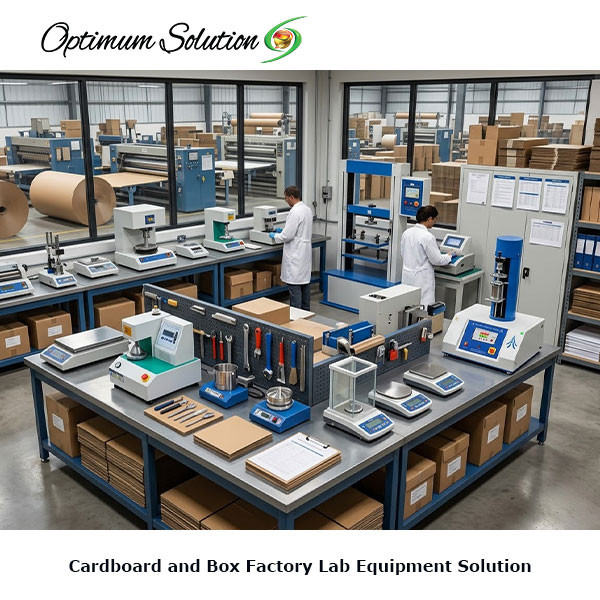
Cardboard and Box Factory Lab Equipment Solution
-
Cleanroom Solution
-
Consumables & Accessories
-
Dosing Pump for Chemicals
-
Electrochemistry & Titration
-
ETP -Effluent Treatment Plant
-
Feed Quality Laboratory
-
Food & Kitchen Lab Items
-
Hygiene Testing Equipment
-
Lab Furniture




Ultra‑pure Water Purifier – Resistivity: 18.2 MΩ·cm – Output: 20‑60 L/h
Inhouse product
-
৳19,995.00
৳20,000.00 -
৳979,995.00
৳980,000.00 -
৳12,995.00
৳13,000.00 -
৳649,995.00
৳650,000.00 -
৳19,495.00
৳19,500.00 -
৳2,999,995.00
৳3,000,000.00



Reviews & Ratings
The numbers below are measured under factory test conditions. Four configuration types are available within the LWP‑S2 Series: Standard, Low TOC, Eliminating Endotoxin, and Synthesizing. All share the same core purification path but differ in final polishing stages.
Technical Specifications
Model identification and type
Model numbers: MSLWP‑S2‑20SWISS, MSLWP‑S2‑20SWISSV, MSLWP‑S2‑20SWISSF, MSLWP‑S2‑20SWISSVF, MSLWP‑S2‑40SWISS, MSLWP‑S2‑40SWISSV, MSLWP‑S2‑40SWISSF, MSLWP‑S2‑40SWISSVF, MSLWP‑S2‑60SWISS, MSLWP‑S2‑60SWISSV, MSLWP‑S2‑60SWISSF, MSLWP‑S2‑60SWISSVF
Type options: Standard / Low TOC / Eliminating endotoxin / Synthesizing
Production and dispensing
Production rate: 20, 40, or 60 litres per hour (depending on series)
Dispensing rate: up to 2 litres per minute
Built‑in pressure tank: 1.8 litres
Ultra‑pure water quality (25°C)
Resistivity: 18.2 MΩ·cm
Conductivity: 0.055 μS/cm
TOC: 5 ppb (Standard, Endotoxin) or 2 ppb (Low TOC, Synthesizing)
Particles (>0.2 μm): <1 per ml
Bacteria: <0.01 CFU per ml
Endotoxin (Endotoxin and Synthesizing models only): <0.001 EU per ml
RNases (Endotoxin and Synthesizing models only): 1 pg per ml
DNases (Endotoxin and Synthesizing models only): 5 pg per ml
Protease (Endotoxin and Synthesizing models only): 0.15 μg per ml
RO1st water quality (reverse osmosis first stage)
Ion rejection rate: 98%–99% (with new RO module)
Organic rejection rate: >99% (MW >300 Dalton)
Particles and bacteria rejection rate: >99%
Feed water requirements
Water source type: tap water
Pressure: 1–6 bar
Temperature: 5–40°C
Conductivity: <2000 μS/cm
Total hardness (as CaCO₃): <300 ppm
TOC: <2000 ppb
Free chlorine: <3 ppm
pH: 4–10
Dissolved CO₂: <30 ppm
Electrical and physical data
Electricity: 100–240 V, 50/60 Hz
Total power: 48 W (20 series), 72 W (40 series), 120 W (60 series)
Dimensions of main host (L × W × H): 273 × 555 × 568 mm
Weight: approximately 21 kg
Scope of application by model type
Standard: Various physical and chemical tests, biochemical analysis, blood tests, micro‑analysis, washing, HPLC, IC, GC, analytical experiments
Low TOC: Atomic absorption/emission spectroscopy, mass spectrum, TOC detection, environmental monitoring, biochip development, trace organic matter analysis
Eliminating endotoxin: High‑sensitivity ICP/MS, PCR, ppt‑level analysis, isotope analysis, molecular biology, life sciences, disease control centers, drug testing institutes, quality inspection institutes, university research and other standard laboratories and various high‑end precision instruments
Synthesizing: Molecular biology, life sciences, genetic research, cell culture, amino acid analysis, protein purification, toxicology research, drug development, medical testing
Key benefits for laboratory researchers
The features above translate directly into measurable gains for any laboratory. Each point below connects a specification to a practical outcome.
Stable and repeatable water quality – The two‑stage purification (RO followed by mixed‑bed ion exchange) delivers ultrapure water at the theoretical maximum resistivity of 18.2 MΩ·cm. There is no conductivity drift between morning and afternoon batches. HPLC mobile phases prepared from this water produce clean, reproducible baselines across weeks of analysis.
Low bacterial and particle counts protect sensitive instruments – The system maintains <0.01 CFU per ml and <1 particle per ml (>0.2 μm). For ICP‑MS and IC, this means fewer clogged nebulisers and cleaner columns. For cell culture, the Eliminating Endotoxin and Synthesizing models add endotoxin removal to <0.001 EU per ml, removing a common source of unexplained cell death.
Fast dispensing saves researcher time – The 2 litres per minute dispensing rate combined with the built‑in 1.8 litre pressure tank means no waiting between flasks. A researcher preparing 4 litres of buffer collects it in two minutes. The tank refills automatically at 20‑60 litres per hour during other tasks.
One system serves multiple water grades – All models produce RO water (first stage) and ultrapure water from the same unit. RO water rinses glassware. Ultrapure water feeds the HPLC or the PCR machine. No need for two separate water systems on the same bench.
Low operating cost from high RO rejection – The RO module removes 98‑99% of incoming ions and >99% of organics and particles. This extends the life of the expensive DI polishing cartridges. Replacement frequency drops, and the cost per litre falls significantly compared to systems with lower rejection rates.
Common frustrations with laboratory water – and how this system solves them
Pain point: Unreliable water quality when feed water changes seasonally.
Tap water conductivity and TOC vary between summer and winter. Some purifiers cannot adapt, and the output drifts. The MASTER SCIENCE LWP‑S2 Series ultra‑pure water purifier (a compact benchtop system with a high‑rejection RO membrane) monitors feed water quality continuously. When RO rejection drops below the specified 98‑99%, the LCD display alerts the user. No hidden degradation, no unexpected failed runs.
Pain point: Endotoxin contamination ruins cell culture and molecular biology experiments.
Standard ultrapure water lacks endotoxin and nuclease removal. A single contaminated batch can kill weeks of work. The same MASTER SCIENCE LWP‑S2 Series ultra‑pure water purifier (an endotoxin‑removing model for life science laboratories) reduces endotoxin to <0.001 EU per ml, RNases to 1 pg/ml, and DNases to 5 pg/ml on the Eliminating Endotoxin and Synthesizing configurations. Media, buffers, and wash solutions prepared from this water support sensitive PCR assays and adherent cell lines without unexplained failures.
Pain point: The system cannot keep up with peak demand in a busy lab.
When multiple researchers draw water at the same time, a slow dispenser creates queues. The MASTER SCIENCE LWP‑S2 Series ultra‑pure water purifier (a 20‑60 L/h benchtop system with a 2 L/min dispensing rate) delivers 2 litres per minute from its built‑in 1.8 litre pressure tank. Four people filling 500 ml bottles each take 15 seconds per bottle. The tank refills at up to 60 litres per hour, so it is ready for the next round in minutes.
Pain point: No proof of water purity for regulatory audits.
Accredited laboratories need documented evidence of water quality at the time of use. The MASTER SCIENCE LWP‑S2 Series ultra‑pure water purifier (a system with a clear LCD display of resistivity, conductivity, and temperature) shows real‑time values. Operators record these numbers in logbooks. Some configurations allow data export. Audit files are complete and defensible.
Pain point: The same water cannot serve both trace metal analysis and PCR.
General analytical water contains trace RNases that degrade RNA. Life science water with endotoxin removal is over‑specified for HPLC. The MASTER SCIENCE LWP‑S2 Series ultra‑pure water purifier (a four‑model series that separates standard, low TOC, endotoxin‑free, and synthesizing outputs) gives laboratories a choice. The Standard model handles HPLC, IC, and GC. The Eliminating Endotoxin model handles PCR, cell culture, and ICP‑MS at ppt levels. One purchase decision covers two distinct application families.
Which laboratories choose this system
Analytical chemistry laboratories running HPLC, IC, GC, or routine UV‑Vis choose the Standard or Low TOC models. The 5 ppb or 2 ppb TOC and 18.2 MΩ·cm resistivity meet all common pharmacopoeia requirements for purified water.
Molecular biology and genomics laboratories choose the Eliminating Endotoxin or Synthesizing models. The removal of RNases, DNases, and endotoxin to sub‑picogram levels ensures that PCR master mixes, gel running buffers, and nucleic acid elution solutions do not introduce contaminants.
Clinical and diagnostic laboratories choose according to their test menu. The Standard model serves clinical chemistry analysers. The Eliminating Endotoxin model serves specialised immunoassays and molecular diagnostic platforms.
University core facilities serving multiple departments often install two systems side by side. One for chemistry users, one for biology users. The identical footprint (273 × 555 × 568 mm) and weight (21 kg) simplify bench planning.
Pharmaceutical quality control laboratories performing compendial testing use the Standard model for USP <643> and <645> compliance. For parenteral product testing, the Eliminating Endotoxin model adds the necessary endotoxin control.
Physical installation
The main host measures 273 mm wide, 555 mm deep, and 568 mm high. It weighs 21 kg, so two people can lift it onto a standard laboratory bench. The unit requires a tap water connection (1‑6 bar pressure, temperature 5‑40°C) and a drain line. Electrical supply is 100‑240 V, 50/60 Hz.
The built‑in 1.8 litre pressure tank is inside the footprint. No external tank is needed. The dispensing nozzle is located on the front panel, accessible from a standing or seated position.
Ordering information
Each unit ships with:
Main purification host with installed RO membrane and initial DI cartridge
Built‑in 1.8 litre pressure tank
LCD display controller
Feed water connection kit
Drain tubing
Product water dispensing nozzle
Power cord with country‑specific plug
Installation guide and user manual
Calibration certificate for resistivity and temperature
The customer specifies the model number when ordering:
MSLWP‑S2‑20SWISS, 40, or 60 – Standard, for analytical chemistry, HPLC, IC, GC, general laboratory use
MSLWP‑S2‑20SWISSV, 40V, or 60V – Low TOC, for atomic spectroscopy, TOC detection, trace organics
MSLWP‑S2‑20SWISSF, 40F, or 60F – Eliminating endotoxin, for PCR, cell culture, ICP‑MS, molecular biology
MSLWP‑S2‑20SWISSVF, 40VF, or 60VF – Synthesizing, for genetic research, protein purification, drug development
Frequently Bought Products
-
৳19,995.00
৳20,000.00 -
৳979,995.00
৳980,000.00 -
৳12,995.00
৳13,000.00 -
৳649,995.00
৳650,000.00 -
৳19,495.00
৳19,500.00 -
৳2,999,995.00
৳3,000,000.00
Optimum Solution– Laboratory & Analytical Instruments Supplier in Bangladesh
Optimum Solution is a leading supplier of laboratory equipment, analytical instruments, and process control solutions in Bangladesh. Since our inception, we have built a strong presence in the industry, serving research labs, universities, pharmaceutical companies, and quality control laboratories nationwide. Through continuous dedication to improving our products and services, Optimum Solution has earned the trust and loyalty of our valued clients.


