
-
 Analytical & Elemental Instruments
-
Automation APSD
-
Automation DDU
-
Biotechnology Lab Items
-
Cardboard and Box Factory Lab Equipment Solution
-
Cleanroom Solution
-
Climatic Aging Chamber
-
Consumables & Accessories
-
Dosing Pump for Chemicals
-
Electrochemistry & Titration
-
Electronics
-
ETP -Effluent Treatment Plant


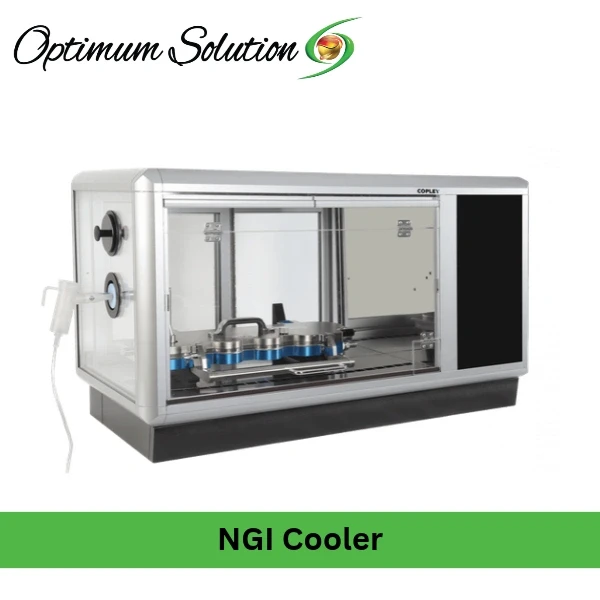
NGI Cooler: Temperature-Controlled Impactor Enclosure – 0 °C to Ambient Range and ±1.5 °C Accuracy
Inhouse product
-
৳19,995.00
৳20,000.00 -
৳12,995.00
৳13,000.00 -
৳979,995.00
৳980,000.00 -
৳649,995.00
৳650,000.00 -
৳19,495.00
৳19,500.00 -
৳2,999,995.00
৳3,000,000.00



Reviews & Ratings
Technical Specifications
The NGI Cooler is a temperature-controlled enclosure from Copley Scientific, designed to cool a Next Generation Impactor to approximately 5 °C during testing. This reduces droplet evaporation from solution-based inhaled products, which would otherwise bias aerodynamic particle size distribution measurements toward artificially small droplet sizes. The unit complies with Ph. Eur. and USP requirements and is recommended by EPAG . The specifications below cover the standard unit; shelves, stands, and qualification documentation are selected separately.
Model/Part Number: NGI Cooler (Catalogue No. 5009)
Temperature Performance
Temperature range: 0 °C to ambient (typically 5 °C to 10 °C)
Temperature accuracy: ±1.5 °C
Cooling time (from ambient to minimum): ≤ 5 minutes
Capacity and Compatibility
Accommodates: NGI or ACI, in open or closed position
Access: Large front and rear hinged doors for easy access
Ports: Twin side access ports for nebuliser (and mixing inlet if used)
Additional space: For cooling other components, such as collection cups, allowing multiple tests in quick succession
Physical and Electrical
Dimensions (W x D x H): 1000 x 500 x 575 mm
Power consumption (maximum): 600 W
Construction: Double-glazed panels for energy efficiency, built-in strip light for visibility
Defrost: Automatic defrost for continuous operation
Qualification
IQ/OQ documentation available (Cat. No. 5011)
Qualification tools available (Cat. No. 5012)
Standard Accessories Included:
NGI Cooler base unit
Power cable
Operating manual
Items Excluded:
NGI Cooler Shelf (for maintaining a second NGI or cup tray at temperature)
NGI Cooler Stand for BRS 200i (raises the cooler to accommodate a breath simulator underneath)
IQ/OQ documentation (Cat. No. 5011)
Qualification tools (Cat. No. 5012)
Calibration certificates
Pre-installation Requirement:
Place the NGI Cooler on a level bench with clearance for the 1000 x 500 mm footprint and access to the front and rear doors. Connect to a grounded power supply matching the nameplate. Allow the unit to reach the set temperature before loading the impactor. If a nebuliser is to be connected, route the tubing through the side access ports before closing the doors.
Why This Enclosure Belongs in a Nebuliser Testing Lab
Aerodynamic particle size distribution testing of nebulised products has a specific failure mode that has nothing to do with the impactor's measurement capability: droplet evaporation. As the nebulised plume passes through the impactor, heat transfer from the impactor body causes solvent to evaporate from the droplets, reducing their size and producing artificially low particle size measurements . The pharmacopoeias recognised this, and the Ph. Eur. and USP monographs now recommend cooling the impactor to approximately 5 °C to reduce the effect .
The NGI Cooler temperature-controlled impactor enclosure delivers that cooling in a controlled, stable way. It holds the impactor at a set temperature between 0 °C and ambient, with ±1.5 °C accuracy, and reaches the set temperature in under five minutes . That rapid pull-down matters because the impactor does not need to be pre-chilled in a refrigerator for 90 minutes before testing; the cooler maintains the temperature throughout the run .
The twin side access ports are the detail that makes the unit practical for nebuliser work. The nebuliser and its tubing pass through the ports, so the device sits outside the cooled chamber while the impactor sits inside. If a mixing inlet is used, the second port accommodates it. The additional internal space for cooling collection cups means the next test's cups can be equilibrating while the current test runs .
For buyers sourcing through OS4U, the configuration questions are whether the NGI Cooler Shelf is needed to maintain a second impactor or cup tray at temperature, whether the Stand for BRS 200i is required for breath simulator work, and whether IQ/OQ documentation is needed for your quality system. The Copley Scientific NGI Cooler page lists the current options.
Key Benefits
Prevents droplet evaporation that biases results
The NGI Cooler temperature-controlled enclosure holds the impactor at approximately 5 °C, reducing solvent evaporation from nebulised droplets. Without cooling, evaporation shrinks droplets and produces artificially low particle size measurements .
Rapid cooling and stable temperature
The chamber reaches its set temperature in under five minutes and holds it within ±1.5 °C . No pre-chilling in a refrigerator, no waiting for equilibration, no temperature drift during the run.
Accommodates NGI or ACI in open or closed position
The chamber is sized to fit a Next Generation Impactor or an Andersen Cascade Impactor, either open or closed. One enclosure covers both impactor formats .
Twin access ports for nebuliser and mixing inlet
Side access ports allow the nebuliser and its tubing to connect to the impactor inside the chamber while the device sits outside. A mixing inlet can be routed through the second port .
Space for cooling collection cups
Additional internal space allows collection cups to be cooled alongside the impactor, so multiple tests can run in quick succession without waiting for cups to equilibrate .
Pharmacopoeial compliance
The NGI Cooler is compliant with Ph. Eur. and USP requirements and is recommended by EPAG for nebuliser testing .
Qualification documentation available
IQ/OQ documentation and qualification tools are available as separate catalogue items for labs that need to qualify the instrument under GxP .
Solving the Problems That Slow Nebuliser Testing Down
Struggling with artificially small droplet sizes? The impactor is held at ~5 °C, reducing evaporation that would otherwise shrink droplets and bias the distribution toward finer sizes .
Losing time to refrigerator pre-chilling? The NGI Cooler reaches set temperature in under five minutes and maintains it throughout the run. No 90-minute refrigerator equilibration .
Worried about temperature drift during a test? ±1.5 °C stability holds the chamber at the set point for the duration of the run .
Running both NGI and ACI formats? The chamber accommodates both impactors, in open or closed position .
Needing to connect a nebuliser and mixing inlet? Twin side access ports route tubing through the chamber wall without compromising the seal .
Running multiple tests in sequence? Additional internal space allows collection cups to be cooled while the current test runs, so the next test can start quickly .
Needing to qualify the instrument under GxP? IQ/OQ documentation and qualification tools are available .
Warranty & Support
We provide a 1-year manufacturer’s warranty covering parts and labor. Technical support, installation assistance, and operational training are also available. Replacement parts and consumables are available throughout the product’s service life.
Request a Quotation or Technical Datasheet
Contact us for more information, customized configurations, and solutions tailored to your specific requirements.
Frequently Bought Products
-
৳19,995.00
৳20,000.00 -
৳12,995.00
৳13,000.00 -
৳979,995.00
৳980,000.00 -
৳649,995.00
৳650,000.00 -
৳19,495.00
৳19,500.00 -
৳2,999,995.00
৳3,000,000.00
Optimum Solution– Laboratory & Analytical Instruments Supplier in Bangladesh
Optimum Solution is a leading supplier of laboratory equipment, analytical instruments, and process control solutions in Bangladesh. Since our inception, we have built a strong presence in the industry, serving research labs, universities, pharmaceutical companies, and quality control laboratories nationwide. Through continuous dedication to improving our products and services, Optimum Solution has earned the trust and loyalty of our valued clients.


