
-
 Analytical & Elemental Instruments
-
Biotechnology Lab Items
-
Cardboard and Box Factory Lab Equipment Solution
-
Cleanroom Solution
-
Consumables & Accessories
-
Dosing Pump for Chemicals
-
Electrochemistry & Titration
-
ETP -Effluent Treatment Plant
-
Feed Quality Laboratory
-
Food & Kitchen Lab Items
-
Hygiene Testing Equipment
-
Lab Furniture




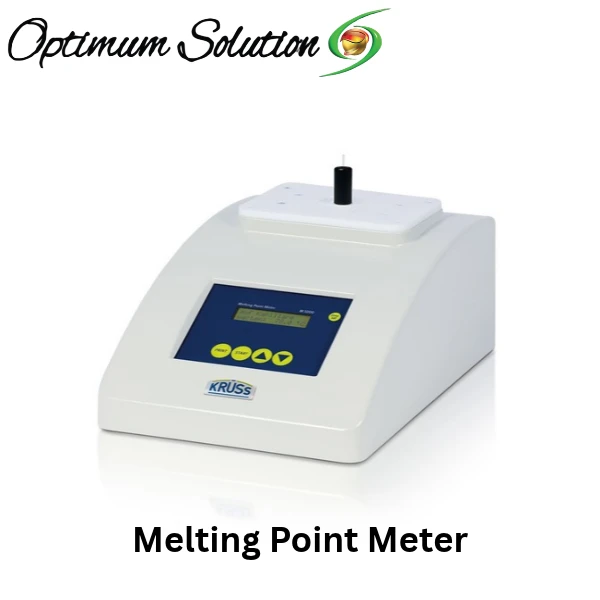
Melting Point Meter M5000: Automatic Melting Point Apparatus – 25–400 °C Range and ±0.3 °C Accuracy
Inhouse product
-
৳19,995.00
৳20,000.00 -
৳979,995.00
৳980,000.00 -
৳12,995.00
৳13,000.00 -
৳649,995.00
৳650,000.00 -
৳19,495.00
৳19,500.00 -
৳2,999,995.00
৳3,000,000.00



Reviews & Ratings
Technical Specifications
The M5000 is a fully automatic melting point meter from A.KRÜSS Optronic, built for powdered substances with melting points up to 400 °C. It determines melting points by transmission measurement through a single capillary, so the result does not depend on an operator watching a sample through a viewing lens. Heating rates from 1 to 5 °C/min are selectable, which makes the instrument usable for known substances and for unknown samples where the melting range is not yet established. The specifications below cover the standard unit; capillaries, calibration standards, and the printer are ordered separately.
Model/Part Number: M5000
Measurement Performance
Measurement principle: transmission measurement through capillary
Measurement range: 25–400 °C
Measurement accuracy: ±0.3 °C (25–200 °C); ±0.5 °C (200–400 °C)
Resolution: 0.1 °C
Heating rates: 1, 2, 3, 4, 5 °C/min, selectable
Preheating rate: to 200 °C approx. 4.0 min; to 300 °C approx. 9.0 min
Capillary intakes: 1
Capillary diameter: 1.4 mm
Sample volume: low sample volume required
Operation and Display
Operation: membrane keypad, easy to clean
Display: LCD
Languages: German and English
Alarm: signal on reaching the melting point
Data display: digital visualization of all important data
Cooling: automatic fast cooling via integrated fan
Interfaces and Physical Specifications
Interface: RS-232
Printer compatibility: CBM910 matrix printer via RS-232
IP code: IP20
Power supply: 90–264 V
Dimensions (W x H x D): 220 x 150 x 340 mm
Weight: 4.1 kg
Standard Accessories Included:
M5000 melting point meter base unit
Protective cover
100 capillary tubes (80 mm length, 1.4 mm diameter)
Power cable
Operating manual
Items Excluded:
Capillary guide for easier insertion
Calibration standards (USP or PSS grade vanillin, phenacetin, sulfanilamide, caffeine available separately)
Printer CBM910, interface cable, ink ribbon, and paper roll
Additional capillary tubes (100-piece tins available separately)
Pre-installation Requirement:
Place the instrument on a rigid, level bench with clearance for the capillary intake and access to the keypad and display. Connect to a grounded power supply within the 90–264 V range. Allow the unit to reach ambient temperature before first use if stored in a colder environment. Run a calibration check with a certified standard before the first measurement series. Confirm the fan cooling vents are unobstructed.
Why This Melting Point Meter Fits Routine Quality Work
Melting point determination is one of the simplest identity and purity checks in a pharmaceutical or chemical lab, and one of the easiest to run inconsistently. An operator watching a sample through a viewing lens decides when melting begins and ends, and two operators rarely agree to the tenth of a degree. The M5000 melting point meter removes that judgment: transmission measurement detects the phase change automatically, and the result is the same regardless of who loaded the capillary.
The range covers most pharmaceutical and chemical substances in routine use, from 25 °C up to 400 °C. Accuracy holds at ±0.3 °C below 200 °C and ±0.5 °C above, which is within the tolerance most pharmacopoeia identity tests require. The selectable heating rates matter for unknown samples: start slow near the expected range, then adjust, rather than running the full range at one rate and hoping the transition is captured cleanly.
For buyers sourcing through OS4U, the configuration questions are whether USP or PSS grade calibration standards fit your quality system, whether the CBM910 printer belongs in the order for paper records, and whether the capillary guide is worth adding for faster loading. The KRÜSS automatic melting point meter page lists the current accessory range.
Key Benefits
Automatic determination without operator judgment
The M5000 automatic melting point apparatus detects the melting transition by transmission through the capillary, so the result does not depend on how an operator interprets the first drop or the meniscus. Two analysts running the same sample get the same number.
Accuracy across the full range
±0.3 °C accuracy from 25 to 200 °C and ±0.5 °C from 200 to 400 °C, with 0.1 °C resolution. That is within the tolerance most pharmacopoeia identity tests allow, without a separate high-accuracy instrument for higher-melting substances.
Heating rates that suit known and unknown samples
Five selectable heating rates from 1 to 5 °C/min. Known substances run at a standard rate; unknown samples can be started slowly near the expected range and adjusted, rather than being forced through one fixed ramp.
Fast preheating and cooling
Preheating to 200 °C takes about 4 minutes and to 300 °C about 9 minutes. After the run, the integrated fan cools the instrument quickly, so the next sample does not wait on ambient cooling.
Records without a PC
The LCD shows all important measurement data, and the alarm signals on reaching the melting point. Results can be sent to a CBM910 matrix printer via RS-232 for a paper record, which suits labs that still file hard-copy results.
Low sample volume
Melting point determination needs only a small sample in the 1.4 mm capillary. For expensive or limited substances, that matters.
Solving the Problems That Slow Melting Point Work Down
Getting different results from different analysts? Transmission measurement detects the melting transition automatically. The displayed value does not depend on an operator's reading of a viewing lens.
Wasting time waiting for the instrument to cool between samples? The integrated fan cools the instrument automatically after each run. The next capillary can be loaded sooner.
Struggling with unknown substances and no reliable range? Five selectable heating rates from 1 to 5 °C/min let you start slowly near an expected range and adjust, rather than running one fixed ramp.
Needing a paper record without a connected PC? Results export to a CBM910 matrix printer via RS-232. The LCD shows the measurement data directly on the instrument.
Worried about calibration traceability? USP-certified and PSS-grade standards for vanillin, phenacetin, sulfanilamide, and caffeine cover the typical working range, each with a defined melting range.
Running samples in short supply? The 1.4 mm capillary needs only a small sample volume. The instrument ships with 100 capillaries, and additional tins are available.
Warranty & Support
We provide a 1-year manufacturer’s warranty covering parts and labor. Technical support, installation assistance, and operational training are also available. Replacement parts and consumables are available throughout the product’s service life.
Request a Quotation or Technical Datasheet
Contact us for more information, customized configurations, and solutions tailored to your specific requirements.
Frequently Bought Products
-
৳19,995.00
৳20,000.00 -
৳979,995.00
৳980,000.00 -
৳12,995.00
৳13,000.00 -
৳649,995.00
৳650,000.00 -
৳19,495.00
৳19,500.00 -
৳2,999,995.00
৳3,000,000.00
Optimum Solution– Laboratory & Analytical Instruments Supplier in Bangladesh
Optimum Solution is a leading supplier of laboratory equipment, analytical instruments, and process control solutions in Bangladesh. Since our inception, we have built a strong presence in the industry, serving research labs, universities, pharmaceutical companies, and quality control laboratories nationwide. Through continuous dedication to improving our products and services, Optimum Solution has earned the trust and loyalty of our valued clients.


