
-
 Analytical & Elemental Instruments
-
Biotechnology Lab Items
-
Cardboard and Box Factory Lab Equipment Solution
-
Cleanroom Solution
-
Consumables & Accessories
-
Dosing Pump for Chemicals
-
Electrochemistry & Titration
-
ETP -Effluent Treatment Plant
-
Feed Quality Laboratory
-
Food & Kitchen Lab Items
-
Hygiene Testing Equipment
-
Lab Furniture



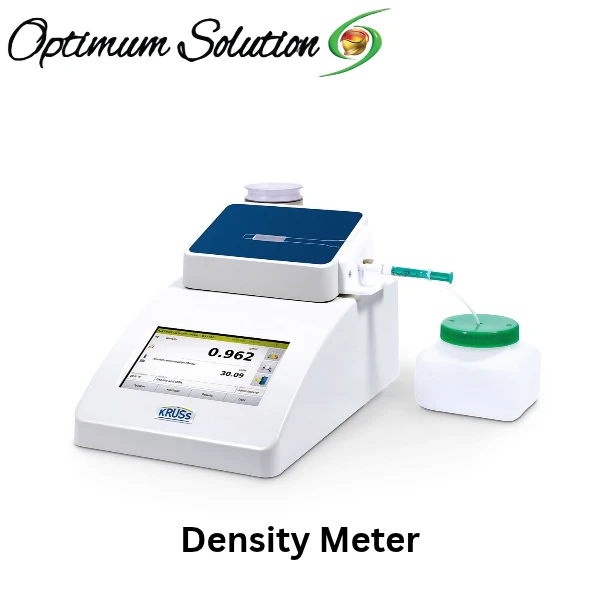
Digital Density Meter DS7700-M: Oscillating U-Tube Analyzer – 0–3 g/cm³ Range and ±0.001 g/cm³ Accuracy
Inhouse product
-
৳19,995.00
৳20,000.00 -
৳979,995.00
৳980,000.00 -
৳12,995.00
৳13,000.00 -
৳649,995.00
৳650,000.00 -
৳19,495.00
৳19,500.00 -
৳2,999,995.00
৳3,000,000.00



Reviews & Ratings
Technical Specifications
The DS7700-M is a benchtop digital density meter from A.KRÜSS Optronic, part of the DS7000 series manual sample supply line. It uses oscillating U-tube technology with a borosilicate glass oscillator, and samples are injected manually through a Luer syringe. The viewing window lets you confirm bubble-free filling during injection, and internal Peltier control holds the sample at 10–40 °C. Minimum sample volume is 0.9 ml, and a measurement completes in about 3 seconds after temperature equalisation . The specifications below cover the standard unit; the DS7800-M variant offers ±0.0001 g/cm³ accuracy if your method needs it.
Model/Part Number: DS7700-M
Measurement Performance
Measurement principle: oscillating U-tube, borosilicate glass oscillator
Measurement range: 0–3 g/cm³
Measurement accuracy: ±0.001 g/cm³
Resolution: confirm against the FRITSCH datasheet for your configuration
Measurement period: 3 seconds after temperature equalisation
Minimum sample volume: 0.9 ml
Pressure range (relative): 0–9 bar
Sample supply: manual via Luer syringe
Bubble check: viewing window during injection
Temperature Control
Temperature control: integrated Peltier
Temperature control range: 10–40 °C
Temperature control accuracy: ±0.01 °C
Temperature measurement accuracy: ±0.02 °C
Temperature measurement resolution: 0.01 °C
Scales and Methods
Pre-installed scales: density (g/cm³), relative density, Brix (%Brix), alcohol concentration (Vol.-%), sulfuric acid concentration (% by weight)
User-defined scales: unlimited
Methods: over 10,000 possible
Adjustment: automatic, menu-guided, with air pressure sensor and tempered calibrating agents
Data Integrity and Compliance
Audit trail: available
User management: available
Measured value stabilization: available
Standards referenced: GMP/GLP, 21 CFR Part 11, pharmacopoeias (USP, BP, JP, Ph. Eur.), FDA, ISO, HACCP, OIML, ASTM, ICUMSA, NIST
Materials and Construction
Sample contact parts: borosilicate glass, PTFE
Suitable samples: almost all liquids, emulsions, and pastes
Operation and Interfaces
Display: 7.0-inch capacitive touchscreen, 800 x 480 pixels, wipeable
Languages: 6 selectable
Input options: touchscreen, keyboard, mouse, barcode scanner
Interfaces: 1x USB, 1x RS-232, 1x Ethernet, LIMS
Physical and Electrical
Dimensions (W x H x D): 220 x 220 x 430 mm
Weight: 5.3 kg
Operating voltage: 100–240 V, 47–63 Hz
Power consumption (measurement mode): 25 W
Power consumption (maximum): 120 W
Standard Accessories Included:
DS7700-M density meter base unit with glass U-tube oscillator
Drying unit with 3/2-way valve (DS7060)
Luer filling nozzle and Luer syringes
Tube set for manual sample supply
Waste container with lid
Power cable
Operating manual
Test report
Items Excluded:
Calibration standards (isooctane, n-nonane, ultrapure water, dichlorotoluene available separately)
Additional syringes and consumables
Barcode scanner
Printer for report output
Pre-installation Requirement:
Place the instrument on a rigid, level bench with clearance for the touchscreen and syringe access. Connect to a grounded power supply within the 100–240 V range. Allow the unit to reach ambient temperature before first use if stored in a colder environment. Perform the automatic adjustment with tempered calibrating agents before the first measurement. Confirm the drying unit is connected and the waste container is in place.
Why This Density Meter Fits Labs With Expensive or Limited Samples
Automated density meters earn their price when sample volume is high. When it is not, the DS7700-M digital density meter takes a different approach: manual Luer syringe injection, a 0.9 ml minimum sample, and the same oscillating U-tube measurement principle used across the DS7000 series. You lose the autosampler. You keep the accuracy, the Peltier control, and the chemistry-resistant wetted parts.
The manual format suits more than cost control. Low to high viscosity samples go through the Luer syringe, and the viewing window lets you watch the fill and confirm there are no bubbles before the measurement starts. For pastes and emulsions that would clog a peristaltic pump, that direct control matters. Cleaning follows the same manual logic: inject a suitable solvent until residue dissolves, then let the attached drying unit clear the U-tube.
For buyers sourcing through OS4U, the configuration question is whether the DS7700-M's ±0.001 g/cm³ accuracy covers your method or whether the DS7800-M's ±0.0001 g/cm³ is required, and whether the standard manual set includes the tube and syringe sizes your samples need. The KRÜSS manual sample supply page lists the current set contents and calibration standards.
Key Benefits
Accuracy without the automation premium
The DS7700-M laboratory density meter delivers ±0.001 g/cm³ accuracy with a 3-second measurement. For labs that run modest sample volumes or handle samples too viscous for automated pumps, the manual format removes cost without removing measurement quality.
Small sample, direct control
A 0.9 ml minimum sample volume and a Luer syringe give you direct control over filling. The viewing window confirms bubble-free injection before the reading starts, which matters when a bubble would mean a wasted run on a limited sample.
Peltier control inside the instrument
Internal Peltier control holds the sample at 10–40 °C with ±0.01 °C accuracy, and temperature measurement resolves to 0.01 °C. You are not waiting for ambient equilibration or connecting an external bath.
Scales that cover more than density
Density, relative density, Brix, alcohol concentration, and sulfuric acid concentration are pre-installed, with unlimited user-defined scales. A single instrument covers quality checks that might otherwise need a separate Brix refractometer or alcohol meter.
Chemistry-resistant wetted parts
Borosilicate glass and PTFE contact the sample. That combination handles almost all liquids, emulsions, and pastes, including samples that would attack metal or standard polymer tubing.
Compliance documentation built in
Audit trail, user management, and conformity with 21 CFR Part 11, GMP/GLP, and the major pharmacopoeias. The DS7700-M carries the data integrity features regulated labs need without moving to a higher-tier model.
Solving the Problems That Slow Density Measurement Down
Struggling with expensive samples that make automated purge cycles wasteful? Manual Luer injection with a 0.9 ml minimum sample means you use only what the measurement needs. No automated rinse sequence consuming additional sample.
Handling viscous pastes and emulsions that clog pumps? Manual syringe injection pushes the sample through directly. The viewing window confirms the fill is clean before the measurement starts.
Getting bubble-contaminated readings? The viewing window is there for exactly that reason. You see the fill, you confirm it is bubble-free, and only then does the measurement run.
Worried about temperature drift affecting density? Peltier control holds the sample at the set temperature, and the measurement completes in 3 seconds after equalisation. Temperature is controlled, not assumed.
Needing multiple concentration scales on one instrument? Density, relative density, Brix, alcohol, and sulfuric acid concentration are pre-installed, with user-defined scales available. One instrument covers the concentration checks.
Concerned about aggressive samples attacking the flow path? Borosilicate glass and PTFE contact the sample. The DS7700-M handles chemically challenging liquids without a separate configuration.
Warranty & Support
We provide a 1-year manufacturer’s warranty covering parts and labor. Technical support, installation assistance, and operational training are also available. Replacement parts and consumables are available throughout the product’s service life.
Request a Quotation or Technical Datasheet
Contact us for more information, customized configurations, and solutions tailored to your specific requirements.
Frequently Bought Products
-
৳19,995.00
৳20,000.00 -
৳979,995.00
৳980,000.00 -
৳12,995.00
৳13,000.00 -
৳649,995.00
৳650,000.00 -
৳19,495.00
৳19,500.00 -
৳2,999,995.00
৳3,000,000.00
Optimum Solution– Laboratory & Analytical Instruments Supplier in Bangladesh
Optimum Solution is a leading supplier of laboratory equipment, analytical instruments, and process control solutions in Bangladesh. Since our inception, we have built a strong presence in the industry, serving research labs, universities, pharmaceutical companies, and quality control laboratories nationwide. Through continuous dedication to improving our products and services, Optimum Solution has earned the trust and loyalty of our valued clients.


