
-
 Analytical & Elemental Instruments
-
Automation APSD
-
Automation DDU
-
Biotechnology Lab Items
-
Cardboard and Box Factory Lab Equipment Solution
-
Cleanroom Solution
-
Climatic Aging Chamber
-
Consumables & Accessories
-
Dosing Pump for Chemicals
-
Electrochemistry & Titration
-
Electronics
-
ETP -Effluent Treatment Plant



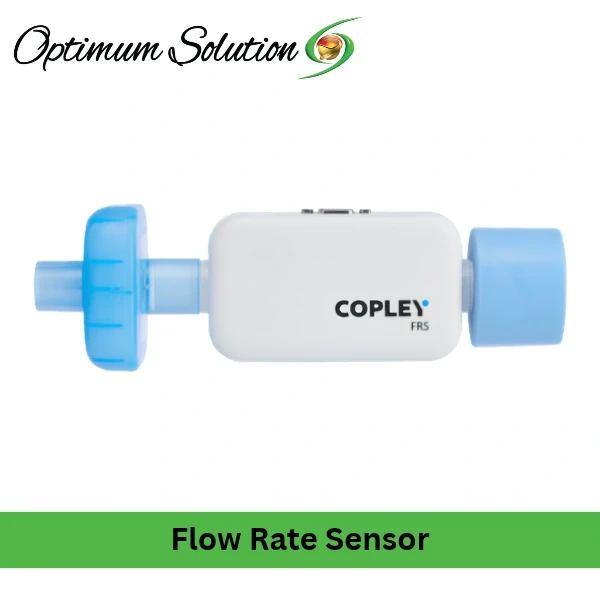
Flow Rate Sensor FRS: Inhaler Testing Flow Meter – ±200 StdL/min Range and ±1.75% Accuracy
Inhouse product
-
৳19,995.00
৳20,000.00 -
৳12,995.00
৳13,000.00 -
৳979,995.00
৳980,000.00 -
৳649,995.00
৳650,000.00 -
৳19,495.00
৳19,500.00 -
৳2,999,995.00
৳3,000,000.00



Reviews & Ratings
Technical Specifications
The FRS is a thermal MEMS flow rate sensor from Copley Scientific, built for inlet flow rate measurement in delivered dose uniformity (DDU) testing and aerodynamic particle size distribution (APSD) measurement of orally inhaled and nasal drug products. It measures bi-directional airflow from -200 to +200 StdL/min with a resolution of 0.1 StdL/min, and calculates volumetric flow from built-in temperature and pressure sensors. The sensor is designed to pair with a Copley Flow Controller, and the reading displays on the connected Breath Actuation Controller or Critical Flow Controller and appears in their reports. The specifications below cover the standard unit; inlet filters and calibration certificates are ordered separately.
Model/Part Number: FRS (catalog number 8100)
Flow Measurement
Operation principle: thermal (MEMS)
Standard flow rate range: -200 to +200 StdL/min
Standard flow rate resolution: 0.1 StdL/min
Standard flow rate accuracy: typically ±1.75% of reading; maximum ±2.5% of reading or ±0.2 StdL/min, whichever is greater
Flow resistance: < 4 kPa at 200 StdL/min
Bi-directional airflow measurement: yes
Volumetric flow calculation: yes, from built-in temperature and pressure sensors
Volumetric mode: flow rate calculated from live temperature and pressure conditions
Standard mode: flow rate calculated from pre-set temperature and pressure conditions
Connectivity and Reporting
Compatible controllers: Breath Actuation Controller BAC 100i/-R; Critical Flow Controller TPK 200iX/-R
External device interface: BAC, TPK, or PC
Reporting: flow rate and calibration data via RS-232
Display: flow rate reading shown on the BAC or TPK screen and included in BAC/TPK reports
Power
Power supply: 5 V DC, mains power supply provided
Standard Accessories Included:
FRS Flow Rate Sensor base unit (catalog number 8100)
Mains power supply
Operating manual
Items Excluded:
Inlet filters (required for operation; pack of 12, catalog number 8106, ordered separately)
In-line adapter kit (catalog number 8105)
ITW holder (catalog number 8139)
Re-calibration certificate (catalog number 8110)
Flow controller (BAC 100i/-R or TPK 200iX/-R), ordered separately
Calibration certificates beyond the standard factory documentation
Pre-installation Requirement:
Install the FRS in line with the flow controller and the inhaler testing apparatus, with the inlet filter fitted at the sensor inlet. Confirm the airflow direction matches the bi-directional measurement setup. Connect the RS-232 interface to the BAC, TPK, or PC as appropriate, and connect the 5 V DC mains power supply. Allow the sensor to reach ambient temperature before the first measurement if it has been stored in a different environment. Confirm the flow controller recognises the sensor before the first test run.
Why This Sensor Belongs in an Inhaler Testing Lab
Flow rate is the variable that decides whether an inhaler test means anything. In DDU and APSD testing, the inlet flow rate sets the particle entrainment and deposition profile, and a flow rate that drifts or reads inaccurately changes the result without changing the sample. The FRS flow rate sensor measures bi-directional airflow from -200 to +200 StdL/min with a resolution of 0.1 StdL/min, and it calculates volumetric flow from built-in temperature and pressure sensors rather than assuming standard conditions.
The pairing with Copley flow controllers is what makes it practical. The flow rate reading appears on the BAC or TPK screen and in the BAC/TPK reports, so the sensor does not add a separate readout to the bench. The RS-232 interface sends flow rate and calibration data for deeper analysis, and the low flow resistance of under 4 kPa at 200 StdL/min means the sensor does not distort the flow it is measuring.
For buyers sourcing through OS4U, the configuration questions are the inlet filter supply, whether the in-line adapter kit and ITW holder belong in the order, and whether a re-calibration certificate should be scheduled with the purchase. The Copley Flow Rate Sensor FRS page lists the current accessories and controller compatibility.
Key Benefits
Bi-directional measurement in one sensor
The FRS flow rate sensor for inhaler testing measures from -200 to +200 StdL/min in both directions. Breath actuation testing and critical flow testing share one sensor rather than needing separate instruments.
Volumetric and standard modes
Volumetric mode calculates flow from live temperature and pressure conditions; standard mode uses pre-set conditions. The mode matches the test requirement, and the built-in T and P sensors support the calculation.
Accuracy that holds across the range
Typically ±1.75% of reading, with a maximum of ±2.5% of reading or ±0.2 StdL/min, whichever is greater. At low flow rates, the ±0.2 StdL/min floor keeps the accuracy specification meaningful.
Low flow resistance
Under 4 kPa at 200 StdL/min. The sensor measures the flow without adding enough resistance to change it, which matters in a test where the flow profile is the variable under control.
Reading appears where the operator already looks
The flow rate displays on the BAC or TPK screen and appears in the BAC/TPK reports. No separate readout, no additional data reconciliation.
Data output for analysis
Flow rate and calibration data via RS-232, with rapid data output for in-depth analysis. The sensor supports the record trail the test method requires.
Designed for the Copley controller platform
The FRS is designed for use with the BAC 100i/-R or TPK 200iX/-R. The sensor and controller are matched, so setup does not require compatibility testing.
Solving the Problems That Slow Inhaler Flow Testing Down
Getting flow readings that drift during a test sequence? The thermal MEMS sensor with volumetric calculation from live T and P conditions gives a flow reading tied to actual conditions. The reading does not depend on assumed standard conditions.
Needing both breath actuation and critical flow testing? Bi-directional measurement from -200 to +200 StdL/min covers both directions. One sensor serves both controller types.
Worried the sensor changes the flow it measures? Flow resistance is under 4 kPa at 200 StdL/min. The sensor is designed to measure the flow without distorting it.
Reading flow rate from a separate display and reconciling later? The flow rate appears on the BAC or TPK screen and in the BAC/TPK reports. No separate readout to reconcile.
Needing data for deeper analysis? Flow rate and calibration data via RS-232, with rapid output. The data supports the analysis the test method requires.
Worried about sensor contamination? An inlet filter is required and fits at the sensor inlet. The filter protects the sensor from particles, and replacement filters are available in packs.
Budgetary Price and Final Price Calculation
Copley Scientific does not publish a budgetary price for the FRS flow rate sensor on its website, brochures, or distributor listings. The product is quotation-based, which is standard for specialised pharmaceutical testing equipment. No price figure is stated here because a published figure does not exist.
To obtain the budgetary price and complete the requested calculation:
Contact Copley Scientific or their regional distributor and request a budgetary quotation for catalog number 8100 (FRS Flow Rate Sensor).
Once the budgetary price is received, multiply it by 300 to obtain the final price.
The related catalog numbers for the quotation request are: 8100 (FRS Flow Rate Sensor), 8105 (FRS In-line Adapter Kit), 8139 (ITW Holder for FRS), 8106 (Pack of 12 Inlet Filters), and 8110 (Re-calibration Certificate).
Warranty & Support
We provide a 1-year manufacturer’s warranty covering parts and labor. Technical support, installation assistance, and operational training are also available. Replacement parts and consumables are available throughout the product’s service life.
Request a Quotation or Technical Datasheet
Contact us for more information, customized configurations, and solutions tailored to your specific requirements.
Frequently Bought Products
-
৳19,995.00
৳20,000.00 -
৳12,995.00
৳13,000.00 -
৳979,995.00
৳980,000.00 -
৳649,995.00
৳650,000.00 -
৳19,495.00
৳19,500.00 -
৳2,999,995.00
৳3,000,000.00
Optimum Solution– Laboratory & Analytical Instruments Supplier in Bangladesh
Optimum Solution is a leading supplier of laboratory equipment, analytical instruments, and process control solutions in Bangladesh. Since our inception, we have built a strong presence in the industry, serving research labs, universities, pharmaceutical companies, and quality control laboratories nationwide. Through continuous dedication to improving our products and services, Optimum Solution has earned the trust and loyalty of our valued clients.


