
-
 Analytical & Elemental Instruments
-
Biotechnology Lab Items
-
Cardboard and Box Factory Lab Equipment Solution
-
Cleanroom Solution
-
Climatic Aging Chamber
-
Consumables & Accessories
-
Dosing Pump for Chemicals
-
Electrochemistry & Titration
-
Electronics
-
ETP -Effluent Treatment Plant
-
Feed Quality Laboratory
-
Food & Kitchen Lab Items


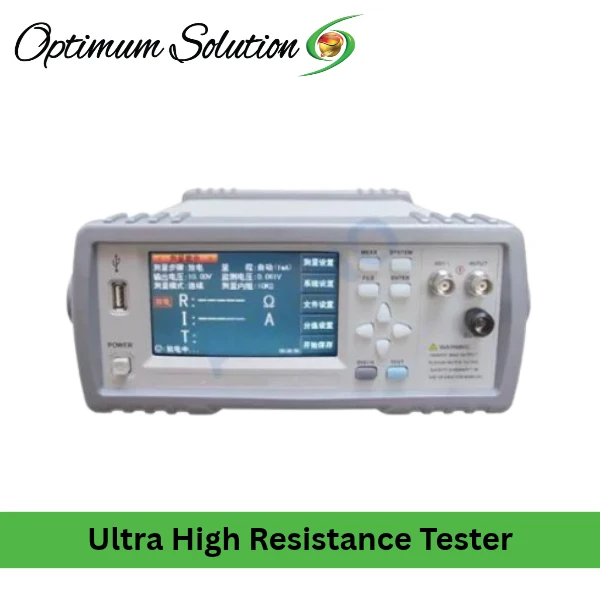
Programmable Ultra High Resistance Tester AT19: Insulation Resistance Meter – 10–1000 V Test Range and 100 kΩ–10 TΩ Measurement
Inhouse product
-
৳19,995.00
৳20,000.00 -
৳12,995.00
৳13,000.00 -
৳979,995.00
৳980,000.00 -
৳649,995.00
৳650,000.00 -
৳19,495.00
৳19,500.00 -
৳2,999,995.00
৳3,000,000.00



Reviews & Ratings
Technical Specifications
The AT19 is a programmable ultra high resistance tester from AVENO, built for insulation resistance measurement on electronic components, dielectric materials, wires, cables, and equipment. It applies a test voltage from 10 to 1000 V and measures resistance from 100 kΩ to 10 TΩ, with programmable charging time and measurement delay up to 999 seconds each. The instrument includes a voltage measurement function, six current ranges with internal resistance specified per range, and standard RS232C, USB HOST, USB DEVICE, and HANDLER interfaces. The specifications below cover the standard unit.
Model/Part Number: AT19
Test Voltage and Resistance
Test voltage range: 10–1000 V
Insulation resistance test range: 100 kΩ–10 TΩ
Voltage test range: 1 V–1000 V
Accuracy (resistance): ±2% when V ≥ 10 V and I > 10 nA
Accuracy (resistance): ±5% when V < 10 V and I ≤ 10 nA
Accuracy (voltage): 1% ±1 V when V ≥ 10 V
Accuracy (voltage): 10% ±0.1 V when V < 10 V
Current limit: 10 mA
Current Test Ranges
Range 1: 100 μA–1 mA, internal resistance 10 kΩ
Range 2: 10 μA–100 μA, internal resistance 10 kΩ
Range 3: 1 μA–10 μA, internal resistance 10 kΩ
Range 4: 100 nA–1 μA, internal resistance 10 kΩ
Range 5: 10 nA–100 nA, internal resistance 1 MΩ
Range 6: 1 nA–10 nA, internal resistance 1 MΩ
Timing and Speed
Charging time: 0–999 s, programmable
Measurement delay: 0–999 s, programmable
Testing speed (high): single measurement ≤ 30 ms
Testing speed (low): single measurement ≤ 60 ms
Interfaces and Power
Standard interfaces: RS232C, USB HOST, USB DEVICE, HANDLER
Power supply: 90–121 V AC (60 Hz) or 198–242 V AC (50 Hz)
Physical Specifications
Dimensions (W x H x D): 235 x 105 x 360 mm
Brand: AVENO
Origin: China
Standards Referenced
EN 71-1
ISO 8124-1
GB 6675-2
ASTM F963
Certification
CE
ISO 9001
ISO 17025
Standard Accessories Included:
AT19 programmable ultra high resistance tester base unit
Power cable
Operating manual
Items Excluded:
Test leads and probes (selected by application)
Calibration certificates
PC software for automated data logging
Handler interface cables for production line integration
Pre-installation Requirement:
Place the instrument on a rigid, level bench with clearance for the rear interfaces and access to the front panel. Connect to a grounded power supply within the specified range: 90–121 V AC at 60 Hz or 198–242 V AC at 50 Hz. Allow the instrument to warm up before critical measurements if it has been stored in a different environment. Select the current range appropriate to the expected resistance before applying test voltage, and confirm the current limit setting matches the device under test.
Why This Tester Belongs in a Component and Materials Lab
Insulation resistance is a slow measurement hiding inside a fast one. The resistance itself appears in milliseconds, but the reading only means something after the sample has charged to the test voltage, and that charging time depends on the sample's capacitance. The AT19 programmable ultra high resistance tester makes that time explicit: charging time and measurement delay each run to 999 seconds, programmable per test. You set the charge time your sample needs, the instrument waits, and the resistance is recorded after the sample has settled rather than before.
The 100 kΩ to 10 TΩ range covers the span from a failing insulation to a healthy dielectric in one instrument. Six current ranges, each with its internal resistance specified, let the instrument match the measurement to the expected current. Accuracy holds at ±2% above 10 nA and ±5% below, which is the range where high-resistance measurements become sensitive to setup.
The voltage measurement function from 1 V to 1000 V means the instrument can also confirm the test voltage actually applied to the sample, rather than assuming the setpoint reached the electrodes. For labs testing capacitors, dielectric materials, cables, and electronic components, that closes the loop between what was set and what was measured.
For buyers sourcing through OS4U, the configuration questions are test lead selection for your sample geometry, whether HANDLER interface integration with a production line is needed, and whether calibration certificates should be included. The AVENO AT19 product page lists the current accessories.
Key Benefits
Programmable charging for real resistance readings
The AT19 programmable ultra high resistance tester lets you set charging time and measurement delay each up to 999 seconds. For high-capacitance samples, the reading is taken after the sample has charged, not while it is still charging. That is the difference between a stable resistance and a number that drifts.
Range that covers failing and healthy insulation
100 kΩ to 10 TΩ in one instrument. The same tester reads a shorted component and a good dielectric without changing instruments or adding a range extender.
Test voltage up to 1000 V, programmable from 10 V
The 10–1000 V test voltage range covers low-voltage component testing and higher-voltage dielectric tests. You set the voltage the standard or the component specification requires.
Voltage measurement confirms what was applied
The voltage test function reads 1 V to 1000 V with specified accuracy. You confirm the voltage at the sample rather than assuming the setpoint reached the electrodes.
Six current ranges with specified input resistance
Each range carries its internal resistance: 10 kΩ on ranges 1 through 4, and 1 MΩ on ranges 5 and 6. The instrument matches the measurement to the expected current rather than forcing one range across all samples.
Fast and slow measurement modes
High-speed mode completes a single measurement in 30 ms or less; low-speed mode in 60 ms or less. For production screening, high-speed mode keeps pace. For lab measurements where noise matters, low-speed mode is available.
Interfaces for lab and production
RS232C, USB HOST, USB DEVICE, and HANDLER interfaces. The HANDLER interface supports production line integration, and the USB and RS232C interfaces support lab data collection.
Solving the Problems That Slow Insulation Testing Down
Struggling with readings that drift on high-capacitance samples? Programmable charging time up to 999 seconds lets you charge the sample before the measurement is taken. The reading reflects the settled resistance, not the transient.
Needing both low-resistance and ultra-high-resistance measurements? The 100 kΩ to 10 TΩ range covers both. No second instrument for the high end.
Worried the applied voltage differs from the setpoint? The voltage measurement function reads 1 V to 1000 V directly at the sample, confirming the voltage that reached the electrodes.
Getting inconsistent results because the current range does not match the sample? Six current ranges with specified internal resistance let you match the range to the expected current. Accuracy is specified per range.
Needing fast production screening and careful lab measurement on one instrument? High-speed mode at ≤ 30 ms per measurement and low-speed mode at ≤ 60 ms are both available, selected per test.
Integrating with a production line? HANDLER interface support allows the instrument to run as part of an automated test station. RS232C and USB interfaces handle lab data collection.
Warranty & Support
We provide a 1-year manufacturer’s warranty covering parts and labor. Technical support, installation assistance, and operational training are also available. Replacement parts and consumables are available throughout the product’s service life.
Request a Quotation or Technical Datasheet
Contact us for more information, customized configurations, and solutions tailored to your specific requirements.
Frequently Bought Products
-
৳19,995.00
৳20,000.00 -
৳12,995.00
৳13,000.00 -
৳979,995.00
৳980,000.00 -
৳649,995.00
৳650,000.00 -
৳19,495.00
৳19,500.00 -
৳2,999,995.00
৳3,000,000.00
Optimum Solution– Laboratory & Analytical Instruments Supplier in Bangladesh
Optimum Solution is a leading supplier of laboratory equipment, analytical instruments, and process control solutions in Bangladesh. Since our inception, we have built a strong presence in the industry, serving research labs, universities, pharmaceutical companies, and quality control laboratories nationwide. Through continuous dedication to improving our products and services, Optimum Solution has earned the trust and loyalty of our valued clients.


