
-
 Analytical & Elemental Instruments
-
Biotechnology Lab Items
-
Cardboard and Box Factory Lab Equipment Solution
-
Cleanroom Solution
-
Consumables & Accessories
-
Dosing Pump for Chemicals
-
Electrochemistry & Titration
-
ETP -Effluent Treatment Plant
-
Feed Quality Laboratory
-
Food & Kitchen Lab Items
-
Hygiene Testing Equipment
-
Lab Furniture



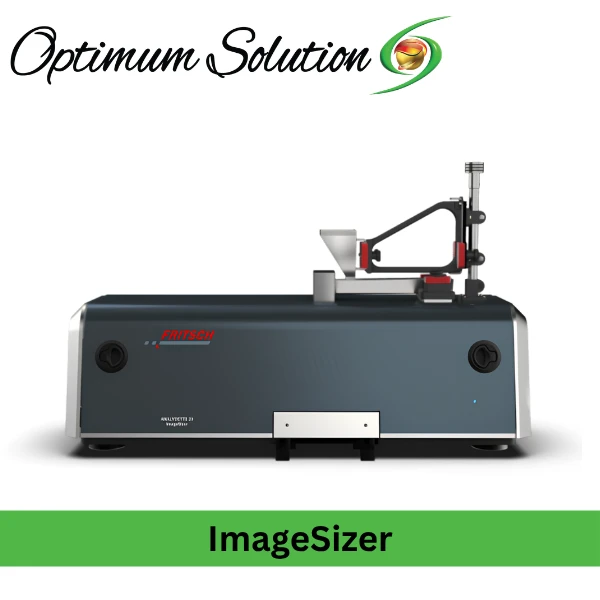
Dynamic Image Analyzer ANALYSETTE 28 ImageSizer: Particle Size and Shape Analyzer – 20 μm–20 mm Dry Range and 5 μm–3 mm Wet Range
Inhouse product
-
৳19,995.00
৳20,000.00 -
৳979,995.00
৳980,000.00 -
৳12,995.00
৳13,000.00 -
৳649,995.00
৳650,000.00 -
৳19,495.00
৳19,500.00 -
৳2,999,995.00
৳3,000,000.00



Reviews & Ratings
Technical Specifications
The ANALYSETTE 28 ImageSizer is a dynamic image analysis system from FRITSCH, built for labs that need particle shape data alongside particle size. A single 5-megapixel industrial camera with telecentric lenses covers the full range, and the sealed, heavy-duty lens design holds optical alignment in a working lab. Dry measurement covers 20 μm to 20 mm for powders and bulk solids; wet measurement covers 5 μm to 3 mm for powders, suspensions, and emulsions. Most runs finish in under 5 minutes, with up to 75 images per second. The specifications below cover the base unit; lenses, wet dispersion unit, and ultrasonic box are ordered separately by application.
Model/Part Number: ANALYSETTE 28 ImageSizer
Measuring Performance
Measuring principle: dynamic image analysis
Dry measuring range: 20 μm–20 mm (powders and bulk solids)
Wet measuring range: 5 μm–3 mm (powders, suspensions, emulsions)
Camera: single high-performance industrial camera, 5 megapixels
Image rate: up to 75 images per second
Measuring time: under 5 minutes, variable by image count or particle count
Lenses: telecentric, hermetically sealed against dust and moisture, heavy-duty opto-mechanical setting
Illumination: extra-strong LED, homogeneous field; adjustable exposure time saved in the SOP
Particle capture: large and small particles in one image, displayable, editable, and deletable
Standard compliance: meets ISO 13322-2 for dynamic image analysis
Software and Evaluation
Software: ImageSizing Software ISS
SOPs: predefined for typical tasks; user-defined SOPs with feeder, dispersion, and camera parameters
Shape parameters: sphericity vs. Minimum Feret Diameter, aspect ratio vs. porosity, convexity vs. particle cross section, plus an extensive morphological library
Sieve correlation: function to align image analysis results with sieve analysis classes
Data display: each particle as a data point in FRITSCH Cloud and FRITSCH Gallery
Reporting: configurable report generator
Interface: USB to computer
Physical Specifications
Footprint, weight, and power rating: confirm with the current FRITSCH datasheet for your configuration
Standard Accessories Included:
ANALYSETTE 28 ImageSizer base unit with USB interface
Computer with pre-installed ImageSizing Software ISS, monitor, keyboard, and mouse (computer hardware not included for deliveries to CIS countries)
Power cable
Operating manual
Items Excluded:
Lenses (selected by desired measuring range, ordered separately for dry or wet use)
Wet dispersion unit
Ultrasonic box
Printers for measurement reports
Reference materials and spare parts
Pre-installation Requirement:
Place the base unit and computer on a rigid, level bench with clearance for the dry feeder or wet dispersion unit and sample access. Confirm the bench can carry the combined weight of the unit and the selected dispersion accessory. Connect via USB and supply a grounded power connection matching the nameplate. Avoid direct sunlight or strong ambient light on the measuring zone, since the LED illumination is calibrated for consistent exposure. If wet measurement is planned, provide a water supply and drain or a closed circulation setup. Install and check the ISS software before the first run.
Measuring principle: dynamic image analysis
Dry measuring range: 20 μm–20 mm (powders and bulk solids)
Wet measuring range: 5 μm–3 mm (powders, suspensions, emulsions)
Camera: single high-performance industrial camera, 5 megapixels
Image rate: up to 75 images per second
Measuring time: under 5 minutes, variable by image count or particle count
Lenses: telecentric, hermetically sealed against dust and moisture, heavy-duty opto-mechanical setting
Illumination: extra-strong LED, homogeneous field; adjustable exposure time saved in the SOP
Particle capture: large and small particles in one image, displayable, editable, and deletable
Standard compliance: meets ISO 13322-2 for dynamic image analysis
Software: ImageSizing Software ISS
SOPs: predefined for typical tasks; user-defined SOPs with feeder, dispersion, and camera parameters
Shape parameters: sphericity vs. Minimum Feret Diameter, aspect ratio vs. porosity, convexity vs. particle cross section, plus an extensive morphological library
Sieve correlation: function to align image analysis results with sieve analysis classes
Data display: each particle as a data point in FRITSCH Cloud and FRITSCH Gallery
Reporting: configurable report generator
Interface: USB to computer
Footprint, weight, and power rating: confirm with the current FRITSCH datasheet for your configuration
ANALYSETTE 28 ImageSizer base unit with USB interface
Computer with pre-installed ImageSizing Software ISS, monitor, keyboard, and mouse (computer hardware not included for deliveries to CIS countries)
Power cable
Operating manual
Lenses (selected by desired measuring range, ordered separately for dry or wet use)
Wet dispersion unit
Ultrasonic box
Printers for measurement reports
Reference materials and spare parts
Place the base unit and computer on a rigid, level bench with clearance for the dry feeder or wet dispersion unit and sample access. Confirm the bench can carry the combined weight of the unit and the selected dispersion accessory. Connect via USB and supply a grounded power connection matching the nameplate. Avoid direct sunlight or strong ambient light on the measuring zone, since the LED illumination is calibrated for consistent exposure. If wet measurement is planned, provide a water supply and drain or a closed circulation setup. Install and check the ISS software before the first run.
Why This Analyzer Replaces the Microscope and the Sieve Stack
A microscope gives you shape data on a handful of particles. A sieve stack gives you size classes with no shape information at all. The ANALYSETTE 28 ImageSizer dynamic image analyzer sits between them and takes the useful parts of both: automated image capture at up to 75 frames per second, shape parameters for every recorded particle, and results in under five minutes.
The single-camera design is what makes it practical. One 5 MP camera with telecentric lenses covers the whole range, so large and small particles appear in the same image. You can display, edit, or delete individual particles before evaluation, which matters when an agglomerate would otherwise distort the distribution. Exposure time saves into the SOP, so the next operator gets the same image quality without tuning anything.
For buyers sourcing through OS4U, the configuration question is lens range and dispersion mode: dry feeder for free-flowing powders, wet dispersion unit for suspensions and emulsions, and the ultrasonic box if agglomerates need breaking. The FRITSCH ANALYSETTE 28 ImageSizer page lists the full accessory range.
Key Benefits
Shape and size from the same image
The ANALYSETTE 28 ImageSizer particle size and shape analyzer reports sphericity, aspect ratio, convexity, and other morphological parameters alongside the size distribution. For non-spherical materials, that is information a sieve stack cannot produce and a laser diffraction instrument cannot see.
One camera, two ranges
Dry measurement covers 20 μm to 20 mm, wet measurement covers 5 μm to 3 mm, and both run on the same 5 MP camera and telecentric lens set. You are not moving between instruments to cover a wide sample portfolio.
Results in under five minutes
Image capture runs at up to 75 images per second, and the run length adjusts to the number of images or particles you specify. Most samples finish inside five minutes with the result available immediately on screen.
SOPs that hold the method steady
Predefined SOPs cover typical measurement tasks, and user-defined SOPs store feeder, dispersion, and camera parameters including exposure time. A validated method can be recalled exactly, which is what makes results reproducible between operators.
A working alternative to sieve analysis
No weighing, no stack assembly, no sieve cleaning, no sieve recalibration, no replacement sieve purchases. The software includes a sieve correlation function so the transition from sieve classes to image analysis does not break existing specifications.
Data that supports quality decisions
Every particle appears as a data point in FRITSCH Cloud and FRITSCH Gallery, shape parameters are drawn from an extensive morphological library, and the report generator presents results in your format. The system meets ISO 13322-2 for dynamic image analysis.
Solving the Problems That Slow Particle Analysis Down
Struggling to describe particle shape, not just size? Shape parameters come from the same image set as the size distribution. Sphericity, aspect ratio, convexity, and porosity relationships are reported per particle, not estimated from a bulk method.
Spending too much time on sieve stacks? The ImageSizer replaces weighing, assembly, shaking, and cleaning with a single automated run under five minutes. Sieve correlation keeps results aligned with existing sieve-based specifications.
Getting unrepresentative results from too few particles? Up to 75 images per second means far more particles are measured than a manual microscope count. You set the image count or particle count, and the system records to that target.
Worried about lens alignment drifting in a working lab? The telecentric lenses are hermetically sealed against dust and moisture with a heavy-duty opto-mechanical setting, so optical performance holds without frequent adjustment.
Measuring suspensions and emulsions? The wet dispersion unit extends the system to 5 μm–3 mm for powders, suspensions, and emulsions, with an ultrasonic box available for agglomerate breakdown.
Need results you can hand to a customer or auditor? Particle-level data points, morphological parameters, SOP records, and configurable reports give you a documented result rather than a screenshot.
Warranty & Support
We provide a 1-year manufacturer’s warranty covering parts and labor. Technical support, installation assistance, and operational training are also available. Replacement parts and consumables are available throughout the product’s service life.
Request a Quotation or Technical Datasheet
Contact us for more information, customized configurations, and solutions tailored to your specific requirements.
Frequently Bought Products
-
৳19,995.00
৳20,000.00 -
৳979,995.00
৳980,000.00 -
৳12,995.00
৳13,000.00 -
৳649,995.00
৳650,000.00 -
৳19,495.00
৳19,500.00 -
৳2,999,995.00
৳3,000,000.00
Optimum Solution– Laboratory & Analytical Instruments Supplier in Bangladesh
Optimum Solution is a leading supplier of laboratory equipment, analytical instruments, and process control solutions in Bangladesh. Since our inception, we have built a strong presence in the industry, serving research labs, universities, pharmaceutical companies, and quality control laboratories nationwide. Through continuous dedication to improving our products and services, Optimum Solution has earned the trust and loyalty of our valued clients.


