
-
 Analytical & Elemental Instruments
-
Automation APSD
-
Automation DDU
-
Biotechnology Lab Items
-
Cardboard and Box Factory Lab Equipment Solution
-
Cleanroom Solution
-
Climatic Aging Chamber
-
Consumables & Accessories
-
Dosing Pump for Chemicals
-
Electrochemistry & Titration
-
Electronics
-
ETP -Effluent Treatment Plant



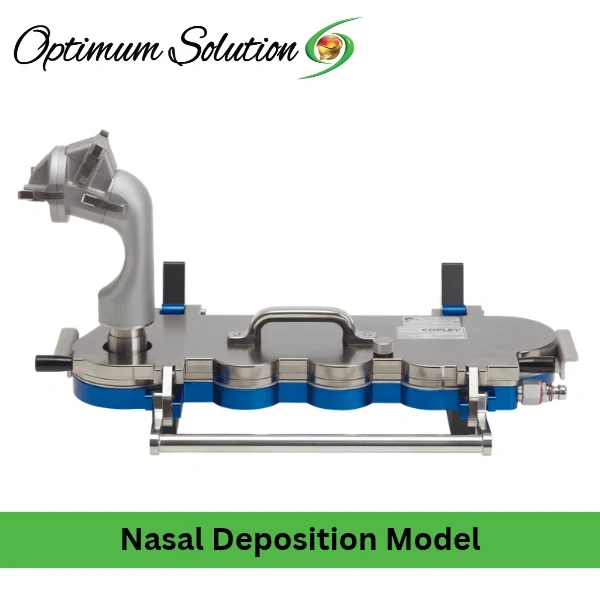
Alberta Idealised Nasal Inlet AINI: Nasal Drug Deposition Model – Four-Region Resolution and Aluminium Construction
Inhouse product
-
৳19,995.00
৳20,000.00 -
৳12,995.00
৳13,000.00 -
৳979,995.00
৳980,000.00 -
৳649,995.00
৳650,000.00 -
৳19,495.00
৳19,500.00 -
৳2,999,995.00
৳3,000,000.00



Reviews & Ratings
Technical Specifications
The Alberta Idealised Nasal Inlet (AINI) is a realistic nasal cast model from Copley Scientific, developed by Professor Finlay at the University of Alberta. It enables representative testing of drug deposition within the nasal airways for nasally inhaled products, with a four-region resolution that allows location-specific drug recovery and assay. The geometry is derived from CT and MRI scans of multiple patient populations, producing an idealised anatomy that represents a range of adult nasal tracts. The specifications below cover the standard unit.
Model/Part Number: Alberta Idealised Nasal Inlet (AINI)
Regions Represented
Vestibule (nostril)
Turbinates
Olfactory region
Nasopharynx
Construction and Handling
Material: Aluminium, for durability and dimensional reproducibility
Internal geometry: Smooth and uniform, facilitating internal coating and uniform passage between regions
Assembly: Four separable parts with quick-release clips for fast internal coating and drug recovery
Seals: Leak-free testing ensured by sealing gaskets
Chemical compatibility: Compatible with a range of solvents used for drug recovery
Certificates: Supplied complete with mensuration and test certificates
Geometry Development
Based on CT and MRI scans of multiple patient populations
Supplemented by direct observation of living subjects and archival literature data
Clinically validated geometry that mimics regional deposition behaviour
Applications
Attachment to an external filter for direct investigation of regional deposition and measurement of respirable mass
Interfacing with a cascade impactor (NGI, ACI, or FSI) for representative measurement of the aerodynamic particle size distribution of the respirable fraction
Demonstration of bioequivalence in generic nasal product development
Standard Accessories Included:
AINI nasal cast with four separable regions
Mensuration and test certificates
Operating manual
Items Excluded:
Leak test cap and inlet adapter (for leak testing)
DFM 2000 flow meter adapter
Nosepiece adapter for passive/powder nasal devices
Tooling charge for powder device nosepiece adapter
External filter or cascade impactor (NGI, ACI, FSI)
Calibration certificates
Pre-installation Requirement:
No installation is required. Before first use, confirm the four regions assemble securely with the quick-release clips and that the seals are intact. Perform a leak test using the appropriate leak test cap and adapter if required by your method. Coat the internal surfaces with the appropriate coating solution (such as Brij 35/glycerol/ethanol) before testing to reduce particle bounce, following the method specified for your product. Connect to the external filter or cascade impactor inlet using the appropriate adapter.
Why This Nasal Cast Belongs in an Intranasal Drug Testing Lab
Nasal drug products are designed to deposit in the nasal cavity, not in the lungs. The fraction that passes through the nose and reaches the lower airways represents a safety concern, and the regional distribution within the nose determines whether the drug reaches the target tissue. Testing this with a simple straight tube inlet cannot capture the complex deposition behaviour of the nasal airways. The AINI nasal deposition model was developed to address that gap, using an idealised geometry derived from real patient anatomy that mimics regional deposition behaviour in each part of the nasal tract .
The four-region resolution is what makes the AINI useful beyond a pass/fail check. The vestibule, turbinates, olfactory region, and nasopharynx can each be separated and assayed individually, so you know not just how much drug deposited in the nose, but where. For products targeting the turbinates (a highly vascularised area relevant to systemic delivery and vaccination) or for assessing olfactory deposition (relevant to nose-to-brain delivery), that regional data is the difference between a representative test and an average .
The aluminium construction matters for reproducibility. A model machined from aluminium holds its dimensions across repeated cleaning, coating, and assembly cycles in a way that 3D-printed or polymer models may not. The quick-release clips and leak-free seals support the workflow: coat the internal surfaces, assemble, test, disassemble, recover the drug from each region, clean, and repeat. The smooth internal geometry facilitates uniform coating and consistent passage between regions .
For buyers sourcing through OS4U, the configuration questions are which adapters are needed for your specific nasal device and flow meter setup, whether the leak test kit should be included, and whether the AINI will be used with an external filter or a cascade impactor. The Copley Scientific AINI product page lists the current accessory options.
Key Benefits
Four-region resolution for location-specific data
The AINI nasal cast model separates into vestibule, turbinates, olfactory region, and nasopharynx. Each region can be individually assayed, so you know where the drug deposited, not just how much stayed in the nose.
Clinically validated geometry
The idealised geometry was developed from CT and MRI scans of multiple patient populations and validated against in vivo gamma scintigraphy data . The deposition behaviour it produces is representative of real nasal airways.
Aluminium construction for dimensional stability
Machined from aluminium, the AINI holds its dimensions across repeated coating, assembly, testing, and cleaning cycles. Dimensional reproducibility is what makes results comparable between runs and between labs.
Quick-release clips for efficient workflow
The four regions separate quickly for coating and drug recovery. The workflow of coat, assemble, test, disassemble, recover, and clean does not become a bottleneck in a busy testing schedule.
Leak-free seals for valid results
Sealing gaskets ensure that the drug deposition measured in each region reflects what actually deposited there, not what leaked past an imperfect seal.
Chemical compatibility with recovery solvents
The aluminium construction and seals are compatible with a range of solvents used for drug recovery. The choice of recovery solvent can be matched to the formulation and assay method without concern for material compatibility.
Interfaces with filters or cascade impactors
The AINI can be attached to an external filter for direct regional deposition measurement, or interfaced with an NGI, ACI, or FSI for aerodynamic particle size distribution measurement of the respirable fraction . One model supports both safety assessment (what passes through) and regional deposition characterisation.
Solving the Problems That Slow Nasal Product Testing Down
Struggling to assess where drug deposits in the nose? The four-region resolution (vestibule, turbinates, olfactory, nasopharynx) allows location-specific recovery and assay. You get a regional deposition profile, not a single "nose" value.
Worried about particle bounce biasing results? The smooth internal geometry facilitates uniform coating with Brij/glycerol solutions, and the aluminium surface accepts the coating consistently. Coating reduces particle bounce and improves deposition realism.
Needing to measure both regional deposition and respirable fraction? The AINI attaches to an external filter for regional deposition and respirable mass, or interfaces with a cascade impactor for APSD of the respirable fraction. One model covers both assessments.
Concerned about model-to-model variability? Aluminium construction with mensuration certificates ensures dimensional reproducibility. The idealised geometry is defined and consistent, unlike anatomical casts that vary between productions.
Running passive nasal powder devices? Nosepiece adapters are available for passive/powder devices, creating an airtight seal between the AINI and the test setup for flow-rate testing .
Needing to demonstrate bioequivalence? The clinically validated geometry and regional deposition data support bioequivalence demonstrations for generic nasal products .
Warranty & Support
We provide a 1-year manufacturer’s warranty covering parts and labor. Technical support, installation assistance, and operational training are also available. Replacement parts and consumables are available throughout the product’s service life.
Request a Quotation or Technical Datasheet
Contact us for more information, customized configurations, and solutions tailored to your specific requirements.
Frequently Bought Products
-
৳19,995.00
৳20,000.00 -
৳12,995.00
৳13,000.00 -
৳979,995.00
৳980,000.00 -
৳649,995.00
৳650,000.00 -
৳19,495.00
৳19,500.00 -
৳2,999,995.00
৳3,000,000.00
Optimum Solution– Laboratory & Analytical Instruments Supplier in Bangladesh
Optimum Solution is a leading supplier of laboratory equipment, analytical instruments, and process control solutions in Bangladesh. Since our inception, we have built a strong presence in the industry, serving research labs, universities, pharmaceutical companies, and quality control laboratories nationwide. Through continuous dedication to improving our products and services, Optimum Solution has earned the trust and loyalty of our valued clients.


